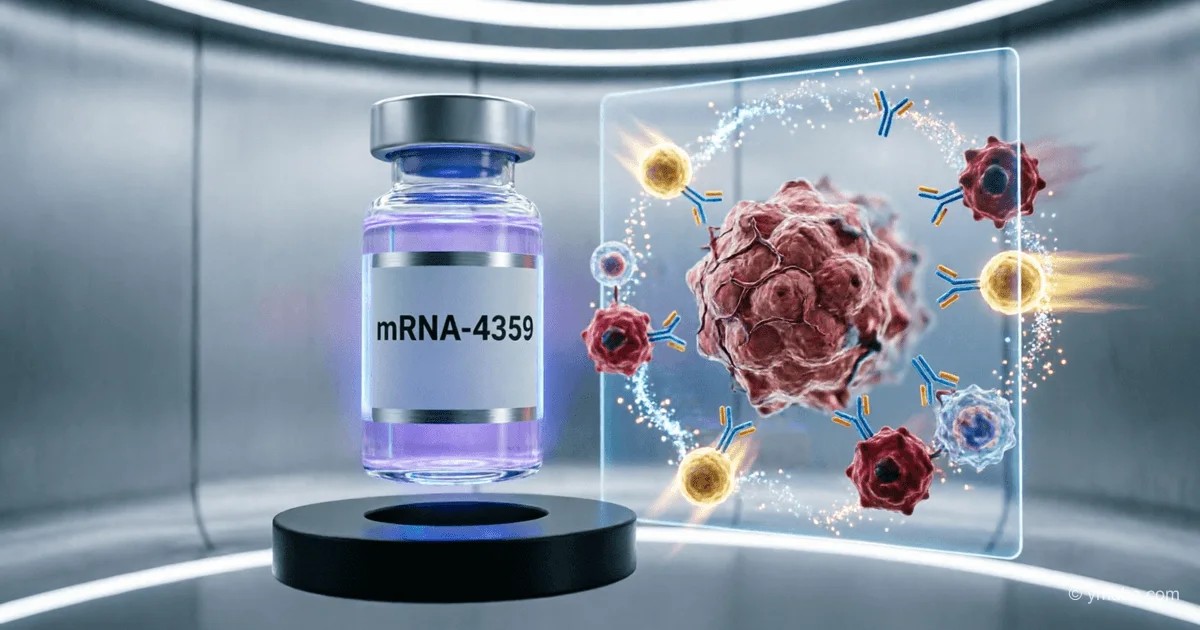
Moderna Reports Tumor Reduction in 83% of Melanoma Patients
Moderna's experimental mRNA vaccine mRNA-4359 in combination with Keytruda showed high efficacy in a Phase I/II clinical trial. In 10 out of 12 participants with advanced melanoma, tumor size decreased by at least 30%, and in two patients, the tumor disappeared completely.
mRNA Vaccine Against Melanoma: How Moderna Is Changing the Oncology Landscape
Introduction
"The encouraging data appear competitive with approved first-line therapy options, offering a differentiated approach with an off-the-shelf product," Jefferies analysts assessed the results presented by Moderna at the American Association for Cancer Research (AACR) annual conference in April 2026.
These data concern the experimental mRNA therapy mRNA-4359, which in combination with Keytruda (pembrolizumab) demonstrated impressive results in patients with locally advanced or metastatic melanoma who had not received prior treatment. The overall response rate was 83%, and in two of the twelve participants, the tumor disappeared completely.
This news marks not just another success in cancer immunotherapy. It represents a fundamentally new approach to treatment—using mRNA technology not for infection prevention, as with COVID vaccines, but to mobilize the immune system against the body's own cancer cells.
Event Details and Timeline
Mechanism of Action: How mRNA-4359 Works
mRNA-4359 is not a preventive vaccine but a therapeutic one. Its goal is not to prevent cancer but to force the immune system to attack existing tumors.
The drug encodes fragments of two proteins—PD-L1 and IDO1—that cancer cells use to suppress the immune response. By introducing mRNA encoding these antigens, the vaccine trains T cells to recognize and attack cells expressing PD-L1 and IDO1—both the cancer cells themselves and immunosuppressive cells in the tumor microenvironment.
"While other checkpoint inhibitors reactivate general T-cell activity, mRNA-4359 targets two critical immune evasion pathways, helping generate new T cells specifically aimed at the tumor," explains Kyle Holen, Head of Development for Therapeutics and Oncology at Moderna.
Key Study Results
In the dose-expansion cohort of the Phase 1/2 study (NCT05533697), 12 patients with locally advanced or metastatic melanoma who had not received prior therapy were enrolled. Participants received a combination of mRNA-4359 (intramuscularly every three weeks) and pembrolizumab (400 mg intravenously every six weeks).
Results as of the data cutoff on December 1, 2025 (median follow-up 54.2 weeks):
| Endpoint | Result |
|----------|--------|
| Overall Response Rate (ORR) | 83% (10 out of 12) |
| Complete Response (CR) | 2 patients (17%) |
| Partial Response (PR) | 8 patients (67%) |
| Disease Control Rate (DCR) | 92% (11 out of 12) |
| Median Time to Response | 6 weeks |
Median duration of response and median progression-free survival were not reached at the time of analysis.
PD-L1-Independent Efficacy
Importantly, responses were observed regardless of PD-L1 expression in tumors:
- Among patients with PD-L1-positive tumors (TPS ≥1%): ORR 88% (2 CR, 5 PR)
- Among patients with PD-L1-negative tumors (TPS <1%): ORR 67% (2 PR)
This is clinically significant because PD-L1-negative patients traditionally respond worse to checkpoint inhibitor therapy.
From Resistant to First-Line: Evolution of Development
It is important to understand that the current data are not the first success of mRNA-4359. Previously, at the ESMO congress in October 2025, Moderna presented results of the same combination in 29 patients with melanoma resistant to checkpoint inhibitors (CPI-R/R). In this group of patients, who had received a median of 3 prior lines of therapy (range 1 to 8), the ORR was 24% and DCR was 60%.
The fact that efficacy rose to 83% in the first-line population is logical and predictable: the earlier treatment begins, the better the patient's immune system can respond. This also confirms the combination's potential as a first-line therapy.
Regulatory Status
The U.S. Food and Drug Administration (FDA) granted the combination of mRNA-4359 and pembrolizumab Fast Track designation for the treatment of checkpoint inhibitor-resistant unresectable or metastatic melanoma with PD-L1-positive tumors. This status accelerates the development and review of drugs for serious conditions with unmet medical needs.
Impact and Significance
For Oncology: A New Paradigm of Personalized Therapy
Until now, the main direction of mRNA vaccine development in oncology was personalized neoantigen therapy—where a vaccine is created individually based on each patient's tumor mutations. This approach, which Moderna is developing jointly with Merck under the name V940 (mRNA-4157), has shown promising results in melanoma, reducing the risk of recurrence by 49% compared to immunotherapy alone.
However, the personalized approach has limitations: it requires time for sequencing and manufacturing, which can be critical for patients with rapidly progressing tumors.
mRNA-4359 offers a fundamentally different model: off-the-shelf immunotherapy targeting universal antigens—PD-L1 and IDO1—that are expressed by many tumor types. This makes the approach more scalable, faster, and potentially applicable to a wide range of cancers.
Jefferies analysts compared the efficacy of mRNA-4359 with existing first-line melanoma therapy standards:
| Drug/Combination | ORR | CR |
|------------------|-----|-----|
| mRNA-4359 + pembrolizumab | 83% | 17% |
| Opdualag (BMS) | 43% | 16% |
| Libtayo + fianlimab (Regeneron) | 57% | N/A |
"The encouraging data appear competitive with approved first-line therapy options," Jefferies analysts summarize.
For Moderna: Diversification Beyond COVID
For Moderna, whose revenues sharply declined after the COVID-19 pandemic ended, success in oncology is critical for business diversification. Analysts expect the company to aim for a potential launch by 2028.
However, investors remain cautious: financial models show that the success of mRNA-4359 will not fundamentally change Moderna's financial position in the short term. Key factors remain the approval of vaccines against respiratory syncytial virus (RSV) and influenza, as well as the company's ability to return to profitability.
For Patients: Hope Where There Was Once a Dead End
The results are especially significant for patients with PD-L1-negative tumors. Traditionally, this group responds worse to checkpoint inhibitor immunotherapy, limiting their therapeutic options. The efficacy of the mRNA-4359 and pembrolizumab combination in PD-L1-negative patients (67% ORR) opens a new window of opportunity for this patient category.
Moreover, the study showed that treatment induces the emergence of new T-cell receptor clones, which are also found in the tumors of responding patients as early as three weeks after the first dose. In most responding patients (4 out of 5), a reduction in circulating tumor DNA (ctDNA) of more than 95% was observed by week six of treatment.
Reactions from Key Players
Moderna is actively advancing the development. David Berman, Moderna's Chief Development Officer, stated: "This study evaluating mRNA-4359 in combination with pembrolizumab as a first-line therapy option reflects our ambition to demonstrate the potential of mRNA technology across the entire cancer patient journey."
The analyst community views the data as competitive but remains cautious. Jefferies notes the differentiated off-the-shelf product approach but warns that larger studies are needed to confirm these impressive early results.
The scientific community shows cautious optimism. David H. Pinato, lead author of the study from Imperial College London, emphasizes: "mRNA-4359 has the potential to reconfigure the tumor microenvironment to overcome immunotherapy resistance. These results are encouraging and support the decision to continue research."
Forecast and Conclusions
The data presented at AACR 2026 are only from a Phase 1/2 study involving just 12 patients. Despite the impressive numbers, caution is needed, and results must be replicated in larger randomized trials.
Nevertheless, several factors make this breakthrough particularly significant:
- Mechanistic rationale: The observed activation of antigen-specific T cells and the emergence of new T-cell receptor clones confirm the drug's mechanism of action.
- PD-L1 independence: Efficacy in PD-L1-negative patients opens a path to treating a group that previously had limited options.
- Platform potential: Success with PD-L1 and IDO1 targets sets a precedent for developing similar off-the-shelf mRNA therapies against other universal tumor antigens.
Near-term prospects:
- Patient enrollment in expanded Phase 2 cohorts is expected to confirm results.
- The study of mRNA-4359 in non-small cell lung cancer (NSCLC) is ongoing.
- The target timeline for potential market entry is 2028.
Long-term questions:
- Can the mRNA-4359 and pembrolizumab combination outperform existing first-line therapy standards in a randomized trial?
- Will the drug be effective in other tumor types expressing PD-L1 and IDO1?
- What will the therapy cost, and will it be accessible to patients?
The main takeaway from this news: mRNA technology, proven effective in fighting the pandemic, is finding a second wind in oncology. And while personalized vaccines represent the "high fashion" of the future, mRNA-4359 is a potentially mass-market, accessible, and rapid immunotherapy tool that could change treatment standards not only for melanoma but also for other types of cancer.
— Editorial Team









