Monetary vs. Fiscal Policy: Key Differences Explained
In economic management, two primary tools exist to influence a nation's economic trajectory: monetary policy and fiscal policy. While often mentioned in the same breath, they are fundamentally different in their execution, their architects, and their impact on the public. For anyone trying to understand economic news or government actions, the core question is what is the difference between monetary and fiscal policy, and how do these distinct approaches interact to shape our financial reality?
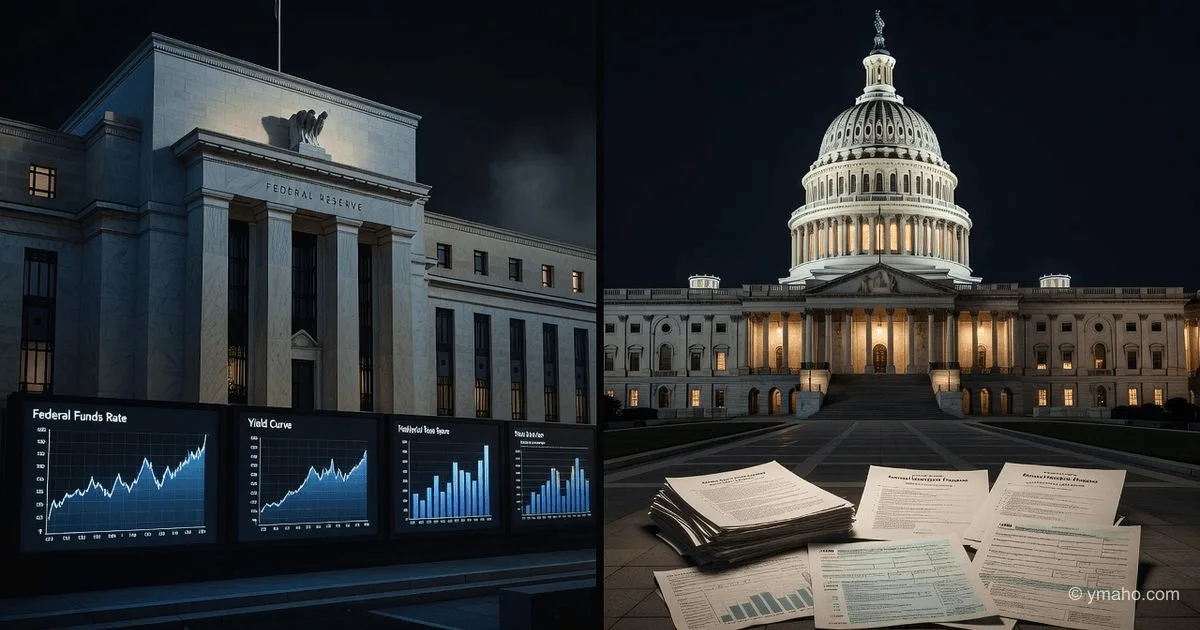
Monetary policy is controlled by a nation's central bank and manages the economy by influencing interest rates and the money supply. Fiscal policy is the domain of the government (legislative and executive branches) and involves adjusting taxation and public spending. The key difference lies in who controls them and the speed at which they act: monetary policy is quicker to implement but is a blunt instrument, while fiscal policy can be targeted but is subject to slower political processes.
At a Glance
| Criteria | Monetary Policy | Fiscal Policy |
|---|---|---|
| Authority | Central bank (e.g., the Federal Reserve in the U.S.) | Government (Congress and the Administration in the U.S.) |
| Primary Tools | Interest rates, open market operations, reserve requirements | Government spending, taxation, transfer payments |
| Main Objective | Price stability, full employment (dual mandate in the U.S.), and stable economic growth | Influence aggregate demand, achieve social goals, manage public resources |
| Decision Speed | Can be implemented rapidly; central banks can act between scheduled meetings | Slower legislative process; requires political debate and approval |
| Implementation Lag | Long and variable lag; effects may take 18 months or more to materialize | Shorter implementation lag; spending can impact the economy relatively quickly once enacted |
| Targeting Ability | A "blunt instrument"; generally affects the entire economy | Can be highly targeted to specific sectors, industries, or demographics |
| Political Influence | Typically insulated from political pressure to ensure long-term stability | Inherently political; decisions are a product of the legislative and executive processes |
| Key Limitation | Zero lower bound; interest rates cannot be cut meaningfully below zero | Deficit and debt concerns; can be constrained by market pressure or fiscal rules |
Monetary Policy Deep Dive: The Central Bank's Lever
Monetary policy is the process by which a central bank, like the Federal Reserve, manages the supply of money and the cost of borrowing to achieve macroeconomic objectives. The Federal Reserve's "dual mandate" is to promote maximum employment and price stability . The primary tools used are adjustments to short-term interest rates and operations on the central bank's balance sheet.
Strengths
The primary advantage of monetary policy is its speed and independence. The Federal Open Market Committee (FOMC), which meets eight times a year, can adjust policy swiftly and is insulated from short-term political pressures . Nobel Laureate Finn Kydland highlighted that central bank independence is a "commitment mechanism" that helps protect monetary policy from political cycles, leading to more benign outcomes . This independence allows the central bank to make unpopular but necessary decisions, such as raising rates to curb inflation, without fear of electoral repercussions .
Weaknesses
Monetary policy is widely considered a blunt tool. When the Federal Reserve raises interest rates to cool an overheating economy, it raises borrowing costs for everyone, from homebuyers to large corporations, without distinguishing between sectors that need cooling and those that do not . Another significant constraint is the zero lower bound—once interest rates are near zero, the central bank's conventional tools are exhausted. In such scenarios, they must turn to unconventional measures like quantitative easing . Furthermore, the effects of monetary policy are subject to a long and variable time lag, typically taking 18 months or more to fully transmit through the economy .
Ideal Use Case
Monetary policy is most effective during periods of normal economic cycles to manage inflation or to provide a quick, broad-based stimulus to avoid a liquidity crisis. It is the first line of defense for stabilizing financial markets.
Real-World Application: Taming Inflation
A textbook example of monetary policy in action is the Federal Reserve's response to the post-pandemic inflation surge in 2022 and 2023. As inflation rose sharply from 2021 levels, the Fed responded by raising its benchmark interest rate by 525 basis points from March 2022 to July 2023 to cool demand and bring inflation back toward its 2% target .
Fiscal Policy Deep Dive: The Government's Toolbox
Fiscal policy refers to the use of government spending and taxation to influence the economy. It is determined by a country's legislative and executive branches, making it an inherently political and often slower process than monetary policy . The government can use its budget to either stimulate activity (expansionary policy) or cool it down (contractionary policy).
Strengths
The most important advantage of fiscal policy is its ability to be targeted. The government can direct spending to specific infrastructure projects, provide tax credits for particular industries (such as electric vehicles), or send direct stimulus checks to households. This precision is something monetary policy cannot replicate . Additionally, unlike the long lag of monetary policy, fiscal policy can have a faster impact once legislation is passed. For instance, if the government sends checks to households, that money can be spent immediately, boosting demand . Automatic stabilizers—such as unemployment insurance and SNAP benefits—are a powerful form of fiscal policy that acts without new legislation, expanding support as the economy weakens .
Weaknesses
The primary weakness of fiscal policy is its slow legislative process. A new stimulus bill can take months to negotiate, pass, and implement . It is also subject to political gridlock and can be used for political gain, potentially leading to suboptimal economic outcomes . Nobel Laureate Thomas Sargent noted that "the central bank's a sideshow" compared to the "huge ability" of fiscal policy to affect an economy through taxes and expenditures, but this power comes with the risk of creating large budget deficits and accumulating unsustainable debt, which can be constrained by market pressure or fiscal rules .
Ideal Use Case
Fiscal policy is most effective during severe recessions when monetary policy has reached its limits (the zero lower bound) or to address targeted economic weaknesses. It is also the primary tool for achieving long-term social and economic goals, such as funding infrastructure and education.
Real-World Application: COVID-19 Pandemic Response
The COVID-19 pandemic serves as a powerful illustration of fiscal policy. In March 2020, the U.S. government passed the CARES Act, a $2.2 trillion fiscal stimulus package that included direct payments to individuals, expanded unemployment benefits, and loans to businesses . This fiscal action worked in tandem with the Federal Reserve's monetary policy (which cut rates to near zero) to prevent a credit freeze and maintain household income during the economic shutdown .
Cost & Accessibility
| Aspect | Monetary Policy | Fiscal Policy |
|---|---|---|
| Direct Cost | Primarily affects the cost of borrowing; higher rates increase costs for debtors, lower rates decrease them. | Directly impacts the government budget, creating a deficit or surplus. |
| Implementation Cost | Low; does not require a direct legislative outlay. | High; requires legislative negotiation and can be expensive. |
| Resource Allocation | Indirectly influences investment decisions via interest rates. | Directly allocates resources to specific sectors (e.g., defense, education). |
| Fiscal Capacity | Not tied to available funds; the central bank can create money. | Tied to tax revenues and borrowing capacity; subject to debt limits. |
How to Decide: Which Policy is More Effective?
Choosing between monetary and fiscal policy is not a matter of one being universally superior. It depends on the economic context.
Choose Monetary Policy If...
- The primary problem is an overheating economy and inflation is the main concern.
- A quick, broad-based response is needed without waiting for a political process.
- The goal is to stabilize financial markets or influence the cost of credit.
- The government is politically constrained from raising taxes or cutting spending.
Choose Fiscal Policy If...
- The economy is in a deep recession and interest rates are already near zero, rendering monetary policy ineffective.
- The specific sectors (e.g., infrastructure, green energy) need targeted support.
- A rapid boost to aggregate demand is required; spending can take effect more quickly than monetary transmission.
- Long-term supply-side issues, such as infrastructure or education, are the primary obstacles to growth.
Verdict
There is no single winner in the comparison of monetary vs. fiscal policy; they are complementary, not competing, forces. Monetary policy is the swift, expert-driven tool of the central bank, ideal for managing inflation and providing financial stability. Fiscal policy is the more powerful, democratic, but slower tool of the government, essential for targeted investment, social welfare, and deep recessions.
The most effective economic management occurs when both policies are coordinated. As Nobel Laureate Christopher Sims noted, if there are unused resources, "the government can hire people and start building things quite promptly" . This coordinated approach, seen during the COVID-19 pandemic, can prevent a collapse and lay the groundwork for a sustainable recovery . Based on the Federal Reserve's own analysis, the long-term perspective of independent monetary policy is most effective when combined with the targeted power of fiscal policy to create a resilient economic framework .
Frequently Asked Questions
What is the difference between monetary and fiscal policy in simple terms?
Monetary policy is what a country's central bank does to manage the economy, primarily by changing interest rates to influence how much money is in the system. Fiscal policy is what the government does, using its power to tax and spend to directly impact the economy .
Which is faster, monetary or fiscal policy?
Monetary policy is faster to decide and implement. Central banks can meet and change policy rates almost instantly, but it takes a long time (often 18 months or more) for these changes to ripple through the whole economy. Fiscal policy is slower to pass into law, but once government spending is approved, its effects on the economy can be seen more quickly .
Why is monetary policy independent from politics?
Central banks like the Federal Reserve are insulated from political influence to ensure they can make unpopular but necessary decisions for long-term economic stability. This independence allows them to focus on their mandates, such as controlling inflation, without being swayed by election cycles or short-term political pressures .
What happens when monetary and fiscal policy are used together?
When used in a coordinated way, the two policies can reinforce each other. For example, during the 2020 pandemic, the Federal Reserve cut interest rates to stabilize financial markets while the government provided fiscal stimulus to maintain household incomes. This combination was designed to prevent a financial collapse and a severe depression .
Can fiscal policy create inflation?
Yes, especially if the economy is already at or near full capacity. If the government injects a large amount of money into the economy through spending or tax cuts without a corresponding increase in the supply of goods and services, it can lead to too much money chasing too few goods, causing prices to rise (inflation) .
— Editorial Team