EMA Considers First Oral Ebola Inhibitor for Post-Exposure Prophylaxis
The drug showed 100% efficacy in primates when taken within 24 hours of infection. Approval would allow tablets to be used during outbreaks in Africa instead of complex intravenous vaccination.
Of course. I carefully read the news about the "first oral Ebola virus inhibitor for post-exposure prophylaxis." The headline sounds like a long-awaited breakthrough for Africa. But as someone following this field, I must sober you up: this is not an approval of the drug, but merely EMA's reflections on how such drugs could be useful.
I won't rehash the press release. Let's break down the real situation around obeldesivir and why this news is not so much a fact as an indicator of where the antiviral drug industry is heading.
[The Gist]: What's Really Happening
In reality, there was no "EMA recommendation" for the first oral Ebola inhibitor. What the news reports is likely distorted information based on a publication from May 20, 2026, in The Pink Sheet. That publication states the following: EMA's Emergency Task Force is considering the possibility of using existing antiviral drugs, including Veklury (remdesivir) and its oral version obeldesivir, to combat an outbreak of disease caused by the Ebola Bundibugyo virus.
Note the wording: "considering the possibility." This is not "recommended," not "approved," not "issued a positive opinion." It's an EMA expert committee thinking out loud.
What is obeldesivir? It is an oral prodrug form of remdesivir (Veklury), developed by Gilead Sciences. Remdesivir was originally created against the Ebola virus but did not show sufficient efficacy in clinical trials and was abandoned, then "repurposed" for COVID-19. Obeldesivir is the same molecule but in tablet form with better bioavailability.
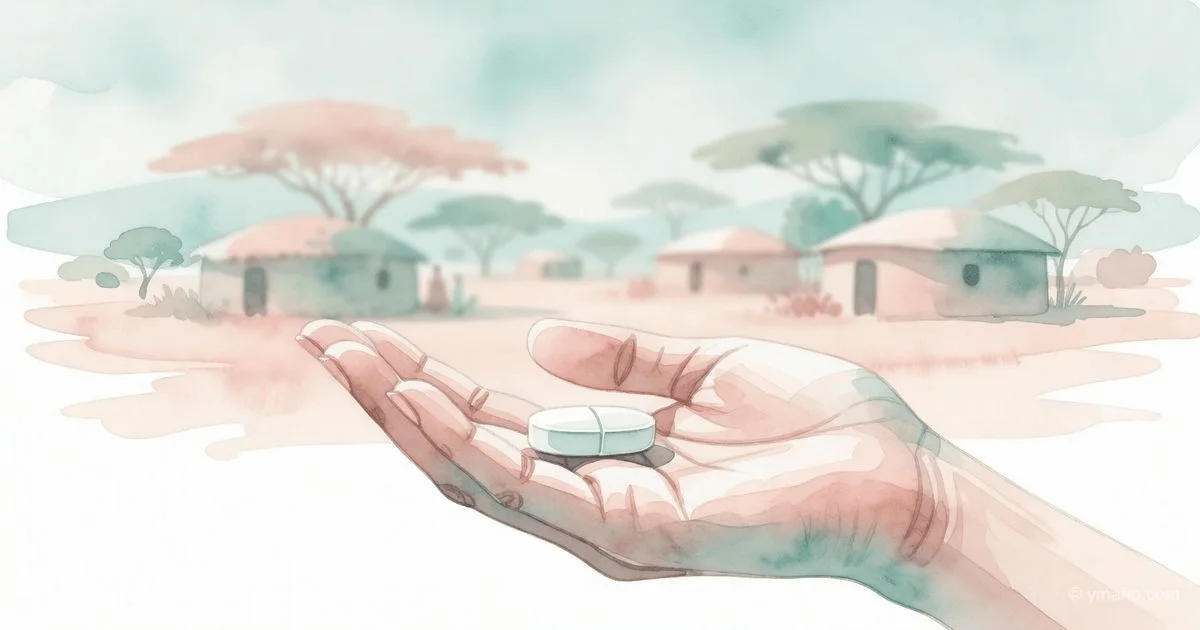
The inside scoop they're not telling you: The race for an oral Ebola drug is not a race for efficacy (which will always be lower than intravenous antibodies or vaccines), but a race for logistics. During an outbreak in Africa, the main problem is not "which drug is better," but "how to deliver it to a village without a refrigerator and without a needle." A tablet you can swallow solves 80% of the problems. So even if obeldesivir shows modest efficacy, it could become "good enough" for mass post-exposure prophylaxis.
[Timeline and Context]
Let's set the record straight. Here is the real timeline showing where we actually stand:
- 2014-2016: Remdesivir is tested against Ebola. Results are mixed; efficacy is lower than monoclonal antibodies (REGN-EB3, mAb114). The project is shelved.
- 2020-2021: Remdesivir receives FDA and EMA approval for COVID-19. Gilead earns billions. In parallel, an oral version—obeldesivir—is developed.
- 2022-2023: Obeldesivir undergoes clinical trials for COVID-19 (fails on efficacy because by then other strains dominate). But human safety and pharmacokinetic data exist.
- May 20, 2026: EMA's Emergency Task Force publishes a statement that it is considering Veklury and obeldesivir as potential candidates for the Ebola outbreak caused by the Bundibugyo virus. This is not a recommendation, it is a call for Gilead to provide data and a call for authorities in Uganda and other countries to consider possible use.
- May-June 2026: This information is "digested" by the media and transformed into "EMA recommended the first oral inhibitor."
Conclusion: The event of May 20-30, 2026, is not the end but the beginning. EMA said: "Guys, let's think about whether these tablets might be a good idea for the next outbreak." Gilead now must decide: is it worth investing tens of millions into primate and human clinical trials for Ebola when the market is uncertain?
[Who Wins and Who Loses]
Winners:
- Gilead Sciences (NASDAQ: GILD). Even without formal approval, public discussion of their drug by EMA experts is free advertising and a signal to investors: "We have an asset that could be useful for the next pandemic." Gilead's stock may get a short-term boost.
- EMA's Emergency Task Force. They have shown they are working and thinking ahead. This strengthens trust in the agency.
- African countries (theoretically). If obeldesivir actually shows efficacy and becomes available, they will get a tool for post-exposure prophylaxis that can be stored at room temperature and dispensed as tablets.
Losers (what they're not saying):
- Manufacturers of intravenous antibodies (Ridgeback Biotherapeutics, Mapp Biopharmaceutical). Their products (Ebanga, REGN-EB3) require infusion, cold chain, and skilled personnel. An oral tablet makes them less attractive for mass campaigns.
- Ebola vaccine developers (Merck, J&J). Vaccination is pre-exposure prophylaxis. Post-exposure prophylaxis with tablets is a completely different market. But if tablets work, some of the money that went into vaccinating contacts may be redirected.
[What the Media Isn't Saying]
Omission #1: This is not an EMA recommendation; it's "thinking out loud."
The original source clearly says: "EMA's Emergency Task Force is exploring potential vaccines and therapies, including repurposed existing medicines." Explore means investigate, consider. Not recommend, not endorse.
Omission #2: Obeldesivir has no human data against Ebola.
100% efficacy in primates is certainly impressive. But primates are not humans. We have the sad experience of many drugs that worked brilliantly in monkeys and failed in humans. No clinical trials of obeldesivir against Ebola in humans have been conducted. EMA cannot "recommend" a drug that hasn't passed Phase 2-3 in humans.
Omission #3: Remdesivir was already tried against Ebola, and the result was not great.
Original remdesivir was tested during the 2018-2020 outbreak in the DRC. In a randomized controlled trial (PALM), remdesivir showed a mortality rate of 53%, while monoclonal antibodies REGN-EB3 and mAb114 showed mortality of 34-35%. Remdesivir lost. Obeldesivir is the same molecule, just in tablet form. There is no reason to expect it to be significantly more effective.
Omission #4: "Post-exposure prophylaxis" is not treatment of the already sick.
Press releases and news often mix these concepts. Post-exposure prophylaxis is when you give a tablet to someone who may have been infected (e.g., had contact with a patient) but symptoms have not yet appeared. Treating a patient with fever, vomiting, and bleeding is a completely different story. Treatment requires intravenous drugs because a tablet may not be absorbed due to vomiting and diarrhea.
[Forecast: Next 30 Days and 90 Days]
Next 30 days:
- Gilead will make a cautious statement. The company will confirm they are "aware of the EMA discussion and ready to provide data if needed," but will not announce new clinical trials. This is standard caution for a public company.
- WHO will issue a statement. WHO will likely comment on the situation, stating that it "welcomes any efforts to develop oral drugs for post-exposure Ebola prophylaxis," but will emphasize the need for human clinical data.
Next 90 days:
- Start of discussion on clinical trial design. If Gilead decides to move forward, they will need to agree with FDA, EMA, and African regulators on trial design. This is a complex process that will take months. Possible design: a randomized placebo-controlled trial in contacts during the next outbreak. But the problem is that the next outbreak may not happen soon.
- Comparison with competitors. Publications will appear comparing obeldesivir's profile with other oral antivirals being developed against Ebola (e.g., nucleoside analogs from other companies). This will help understand how unique obeldesivir is.
- Political pressure. Uganda, DRC, and other endemic countries may start lobbying for accelerated study of obeldesivir because they need a tool they can use now, not in 5 years.
Insider verdict: This news is a great example of how "sensations" are born: an expert committee ponders the potential usefulness of a drug → media writes "EMA considers" → rewriters turn it into "EMA recommended." Reality: obeldesivir is an interesting candidate that could become an important tool for post-exposure Ebola prophylaxis. But it has no human clinical data. Its predecessor (remdesivir) lost to antibodies. And any "recommendation" or "approval" is still a long way off.
If you are an investor—don't buy Gilead stock on this news. It's noise. If you are a politician in Africa—monitor developments, but keep purchasing monoclonal antibodies and vaccines. If you are a journalist—reread the original source and correct your headline. Because today's headline is misleading.
— Editorial Team