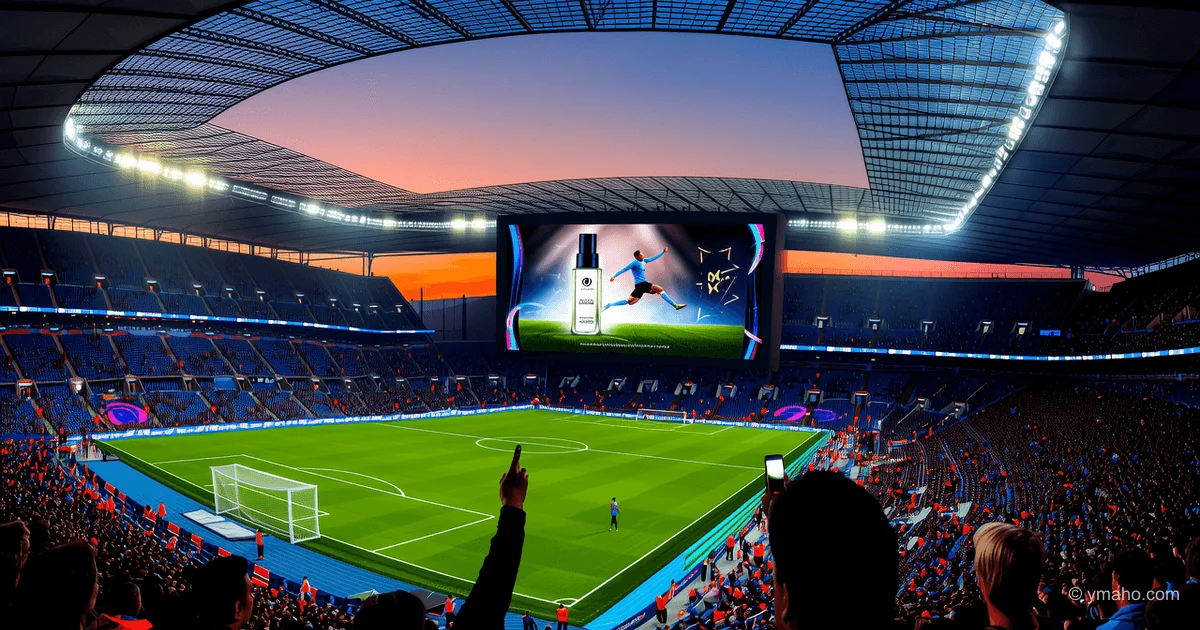
Paula's Choice Becomes Official Sponsor of the FIFA World Cup 2026
Paula's Choice has partnered with the FIFA World Cup 2026 to highlight skin resilience under intense conditions, launching a campaign and a short film about fan emotions.
When Skincare Becomes a Sports Sponsor: What's Really Behind the Paula's Choice and FIFA Deal
The Bottom Line: What's Actually Happening
On May 12, 2026, Paula's Choice announced its status as the official skincare sponsor of the FIFA World Cup 2026, kicking off June 11 in Mexico City. At first glance, it's a beautiful crossover story about a beauty brand deciding to play on the big sports field. But I see a completely different narrative here.
This isn't sponsorship in the usual sense. It's an operation to capture a new audience that none of the competitors even considered as a target. Paula's Choice is a "component brand" built on formula transparency and a scientific approach. Its audience has historically been female-skewed, educated, aged 25-45. And now they're going where 5 billion viewers of both genders, all ages, and all income levels gather. This isn't a campaign for existing customer loyalty—it's recruiting new ones who never thought of skincare as a category for themselves.
CEO Faiz Ahmad's phrase: "We see skincare as part of a high-performance mindset"—this isn't a marketing metaphor, it's a strategic pivot. The brand is redefining skincare from a "beauty routine" into "gear for life under pressure." And the World Cup is the perfect stage for that message.
Timeline and Context
The story of this decision didn't start yesterday. Paula's Choice has been systematically building sports authenticity:
- 2024: The brand signed its first sports ambassador—rugby player and Olympic medalist Ilona Maher.
- April 2026: A contract with Azzi Fudd, the first pick in the WNBA draft, who signed with the Dallas Wings.
- Concurrently: A partnership with the NWSL Seattle Reign—a women's football team.
Meanwhile, parent company Unilever underwent a tectonic shift. In April 2026, the corporation announced plans to sell its food division to McCormick & Company for $15.7 billion and transform into a pure beauty-and-personal-care machine. In this architecture, Paula's Choice is one of 23 "power brands" in the prestige portfolio, alongside Hourglass, K18, and Dermalogica.
Now look at the calendar: Unilever is an official sponsor of the FIFA World Cup 2026. Dove, Lynx, Sure, and Radox have already launched limited-edition lines for the tournament. Paula's Choice is a late but loud entry into this lineup. Their campaign "Proud Supporter of Your Skin" and the 30-second film "The Beautiful Game" are not standalone initiatives but part of a giant cross-brand activation.
Who Wins and Who Loses
Paula's Choice wins—that's obvious. But the scale of the win is bigger than it seems. The brand gains access to an audience that was unreachable through classic beauty channels. Men who never set foot in Sephora will see Paula's Choice in a context they understand. Women fans who didn't follow skincare influencers will discover the brand through sports. For Unilever, this is a test balloon: can prestige skincare work in a sports context? If yes, K18 and Dermalogica will follow.
Unilever wins—strategically. The sale of the food business means beauty and personal care must generate enough growth to compensate for losing 26% of revenue from food. The World Cup, with its billions of viewers, is the perfect accelerator. Every dollar invested in sponsorship works for the entire new corporate strategy.
Niche competitors lose. The Ordinary, Drunk Elephant, Glossier—none of them can afford a deal of this scale. They'll stay in their digital ecosystems while Paula's Choice occupies the physical world of stadiums and sports media. This creates a gap that's hard to close.
Sports pure-player brands lose. Why don't Nike or Adidas have a skincare line? Because sports has always been about external gear. Paula's Choice is redefining the rules: your skin is also gear. This opens the door for other beauty brands, and sports giants might lose part of the high-margin lifestyle segment.
What the Media Isn't Saying
Insight #1: This isn't about football. It's about men who don't buy skincare.
Most coverage focuses on the crossover effect and creative campaign. But the real story is demographic. The men's skincare market is growing, but penetration remains low. Men don't go to Sephora. Men don't watch beauty YouTube. Men watch sports. The FIFA World Cup is the world's largest platform for reaching a male audience with the message "skincare is normal."
Look at Unilever's mechanics: Lynx (Axe) launches limited-edition deodorants, Dove Men+Care creates a special Active Comfort line, Sure releases cooling sprays. All the group's male brands are activated. Paula's Choice adds scientific legitimacy to this mix. A man might start with Lynx and end up with a Paula's Choice serum—and that's part of a single consumer journey that Unilever controls entirely.
Insight #2: Paula's Choice is a longevity company, not a skincare company.
In March 2026, the brand launched CellularYouth Longevity Serum—the result of five years of development, aimed at supporting NAD+ and cellular regeneration. VP R&D Tim Faller directly talks about "a new frontier of longevity skincare that delivers immediate results while paving the way for younger-looking skin in the long term."
Connect this to the World Cup. The tournament's audience isn't just current consumers but future ones. A person who buys a Paula's Choice moisturizer at the airport on the way to a match today will be buying a $65 longevity serum in three years. FIFA is the top of the funnel for a product with a consumption cycle spanning decades.
Insight #3: Women's sports is the Trojan horse.
Paula's Choice's PR narrative actively highlights female ambassadors—Maher, Fudd, Seattle Reign. This looks like social responsibility. But the commercial logic is harsher: women's sports are growing exponentially, and the viewing audience for women's tournaments is precisely those women aged 25-45 who are already core consumers of Paula's Choice. Women's sports aren't charity. They are the most effective way to strengthen the core audience while publicly positioning as a progressive brand.
Forecast: Next 30 Days and 90 Days
30 days (by June 13, 2026):
The tournament starts June 11. In the next month, we'll see:
- Mass placement of "The Beautiful Game" in digital and outdoor on key markets—USA, Europe, Latin America. The LA activation will become the main content hub.
- A sharp spike in search traffic for "Paula's Choice men" and "Paula's Choice sunscreen"—the brand will record the first signs of male audience expansion.
- Competitors will try to react: expect emergency collaborations of other skincare brands with sports influencers, but without the scale of FIFA, these will be local blips.
90 days (by August 2026):
- Unilever will announce initial data: what percentage of Paula's Choice buyers during the tournament are new customers who never purchased the brand before. This number will determine whether the "beauty + sports" model becomes permanent for the Prestige portfolio.
- Paula's Choice will launch a dedicated men's line or mini-collection. Sports authenticity requires a product extension, otherwise the momentum will fizzle.
- The longevity narrative will get an upgrade: the "stress + skin + sports" connection will become the foundation for a new phase of CellularYouth positioning.
- Other Unilever Prestige brands—K18, Dermalogica—will receive a mandate to explore sports partnerships. 2027 could be the year beauty finally enters territory previously occupied only by drinks, fast food, and gear.
Conclusion. Paula's Choice didn't just buy sponsorship. It redefined what a skincare brand is. In a world where Unilever is exiting the food business for beauty and personal care, betting on sports is not an experiment. It's a signal to the market: the beauty industry is growing up, leaving cosmetics stores and going where its new audience lives—to stadiums, to billions of eyes glued to the game. Those who understand this now will dictate the rules in five years. The rest will stay in their Instagram bubbles.
— Editorial Team









