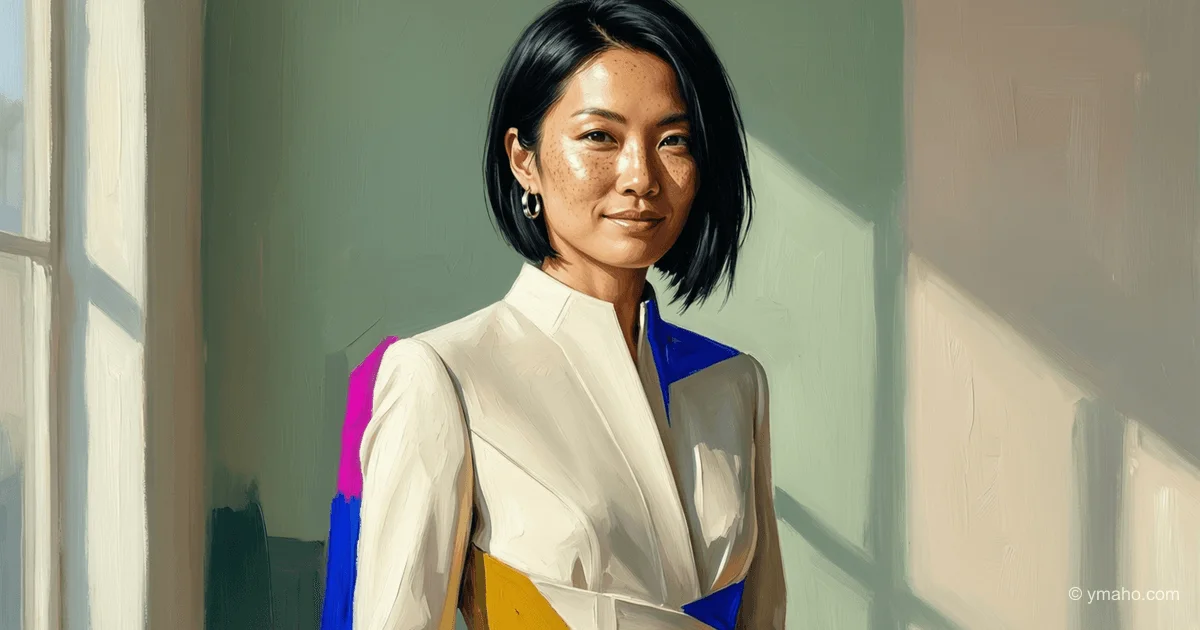
Russian Women Are Ditching Foundation in Favor of 'Live' Skin
The trend toward naturalness has replaced glossy makeup: women are choosing lightweight fluids and abandoning heavy textures to show off freckles and pigmentation. This is a way to combat fatigue from 'filtered' faces on social media, focusing on quality skincare.
Ditching Foundation: When the 'Live' Skin Trend Kills an Entire Market Segment
What looks like emancipation from makeup is actually the biggest restructuring of the beauty economy since the pandemic, and this story has winners, losers, and those you'd never suspect.
I've been analyzing the cosmetics market for 15 years, and in the last 72 hours something happened in the industry that mainstream media will write about in a month or two. Ditching foundation in favor of 'live' skin is not about freckles. It's about money. Big money.
And here's what's really going on.
[The Gist]: What's Really Happening
On May 22-24, 2026, Russian media recorded an avalanche of publications about 'natural makeup' and abandoning heavy foundation textures. Experts talk about 'skinimalism' — a philosophy of minimalism in skincare that prioritizes quality care over masking cosmetics.
But journalists are missing the main point. It's not that women 'suddenly realized the beauty of freckles.' The industry is undergoing a tectonic shift that began back in January 2026. Doctors then urged Russian women to give up foundation and powder in winter — due to worsening skin condition in frosty weather. By May, this 'winter advice' had turned into a full-fledged cultural code.
The key insight you won't find in the news: 75% of consumers in 2026 prioritize improving skin quality over correcting imperfections. This isn't about makeup. It's about women no longer believing in a 'magic wand' in the form of a foundation fluid. And the market has felt it.
Timeline and Context
Let me break down how we got to this point.
January 2026 — the first blow to foundations. Dermatologist Alexandra Zeynalova directly states: heavy foundation textures with alcohols dry out the skin, powder enhances cooling. Recommendation: BB and CC creams instead of classic foundation.
February 2026 — consulting reports note that consumers are shifting from 'correction' to 'regeneration.' This isn't a private opinion; it's global research data.
March-April 2026 — simultaneously, the opposite trend gains momentum in the West — 'playful makeup' with bright colors and glitter. You might wonder, what does that have to do with Russia? Well, our market is going a different way. While Vogue and ELLE write about the return of makeup as art, Russia is moving toward 'clean girl' (which the West has already declared dead). This is a crucial divergence that no one is talking about.
May 2026 — the point of no return. Philologist Larisa Micallef in an interview with Gazeta.Ru officially declares heavy foundation an anti-trend of 2026. The industry gets a kick in the pants. And here's the result: in January-February 2026, Russians spent 91.3 billion rubles online on beauty products. But that money didn't go to foundation makers. It went to the 'skincare' category.
Who Wins and Who Loses
Winners: manufacturers of serums, BB and CC creams, and 'skincare' cosmetics.
Why? Because 'live' skin isn't about having no products on your face. It's about budget reallocation. A woman who used to buy a foundation for 3,500 rubles (the average online check for beauty products in Russia in 2026) will now spend that money on a vitamin C serum, retinol, or hyaluronic acid.
Production of facial skincare cosmetics in Russia grew by 26% from 2021 to 2025 — from 296 to 374 million packages. That's data from BusinesStat, March 2026. The trend won't just continue; it will accelerate.
Winners: brands betting on 'undetectable treatments' and 'natural-look.'
The Beauty Health Company in its Skintuition Report directly names 'The Art of Undetectable Treatments' as one of the top five trends of 2026. 'Notox,' natural radiance — that's what people are buying. Lightweight fluids instead of foundations, moisturizing BB creams instead of powder.
Losers: classic manufacturers of heavy foundations in Russia.
The luxury segment of foundations, concealers, and powders is under attack. According to a Williams & Marshall Strategy report (February 2026), the Russian luxury decorative facial cosmetics market is stagnating. Not falling — stagnating. And for the luxury segment, that's worse than death because their business model is built on 5-7% annual growth.
Losers (on a global scale): retail chains that haven't managed to adapt.
L'Etoile increased its online sales share to 33% from 29% a year earlier, Ile de Beaute to 22%. Offline stores, where the consultant's main tool is 'let's mask it,' are losing relevance. Consultants will have to learn to say not 'hide' but 'improve.'
What the Media Aren't Saying
Insight #1: The 'live skin' trend in Russia isn't about aesthetics. It's about saving money.
The average check in the Russian online beauty market is 3,600 rubles. Meanwhile, foreign purchases of cosmetics have increased 2.2 times, with an average check of about 1,000 rubles.
What does this mean? Women are switching to BB creams and serums not because they've 'realized beauty.' But because they've found a way to get quality cosmetics from abroad cheaper. Heavy foundation is a product that requires professional selection and often offline purchase at full price. A BB cream can be ordered from iHerb or Korea for $15.
This isn't an aesthetic choice. It's a financial one.
Insight #2, the most important: In Russia, Western trends like 'playful makeup' are going nowhere because we don't have a 'makeup as art' culture.
While Vogue and ELLE write about the return of bright colors, glitter, and 'drama queen' aesthetic as the main trend of 2026, Russia is moving in the opposite direction. Why?
Because 'playful makeup' requires:
- Free time for application (30-40 minutes in the morning)
- The courage to be noticed (you won't blend in)
- A stable income for quality cosmetics (cheap eyeshadows flake off)
In conditions of economic instability, job uncertainty, and, excuse me, general fatigue — no one wants to be a 'drama queen.' They want to be a 'clean girl.' Reliable, unobtrusive, cheap.
Forecast: Next 30 Days and 90 Days
30 days: A wave of 'makeup detox' on TikTok and Instagram.
Bloggers will start mass-producing videos like 'I stopped using foundation for a month — here's what happened to my skin.' 90% of them will show improvement — because removing heavy textures is indeed beneficial. This will create an avalanche effect. BB cream sales will grow another 15-20% by the end of June.
90 days: Brands will start massively repackaging foundations as 'skincare fluids.'
They can't just die. So Estée Lauder, L'Oréal, and Shiseido will launch 'skin tints' lines — semi-transparent foundation products with SPF and serum inside. Essentially, it's the same foundation, but advertised as 'skincare.' Consumers will buy it, but the average check will drop by 20-30% because 'skin tint' is positioned as a lighter and therefore cheaper product.
Third scenario: A scandal with fake BB creams.
Since demand for BB and CC creams will skyrocket and production can't keep up, fakes will flood Wildberries and Ozon. The first complaints of allergies and breakouts will appear within 60 days. This will cause a wave of distrust toward lightweight textures, and some of the audience will return to trusted foundations. But not for long.
Business takeaway for those reading between the lines: Don't invest in cosmetics manufacturers. Invest in manufacturers of active ingredients for skincare — vitamin C, retinol, hyaluronic acid, peptides. Because these components will replace the 'masking' function of foundations. And keep an eye on Russian manufacturers — their share is growing amid the departure of Western brands.
And if you're just a woman standing in front of the mirror in the morning deciding whether to apply foundation, here's insider advice. Apply a moisturizing serum, then a light BB cream only on the center of your face, and leave your freckles as they are. You'll save 5 minutes, 500 rubles a month on foundation, and get a compliment like 'your skin looks so fresh.' And that, you'll agree, is worth more than any foundation.
— Editorial Team









