First Tanker Breaks Through Strait of Hormuz Blockade: What It Means for Global Oil Prices
For the first time since the U.S. blockade began, an oil tanker has successfully navigated the Strait of Hormuz—the narrow chokepoint through which one-fifth of the world’s seaborne oil flows. If congestion builds here, your gasoline prices could skyrocket within days.
The Pakistani tanker Shalamar delivered 450,000 barrels of oil from the United Arab Emirates, overcoming obstacles erected by the U.S. Located between Iran and Oman, this strait serves as the main artery of global energy, and any disruption here instantly impacts gas stations from New York to Sydney. Why does this matter even if you live thousands of miles away? Because oil is the lifeblood of the global economy, and any wound along this route is felt acutely everywhere.
Why Is This Strait More Critical Than It Seems?
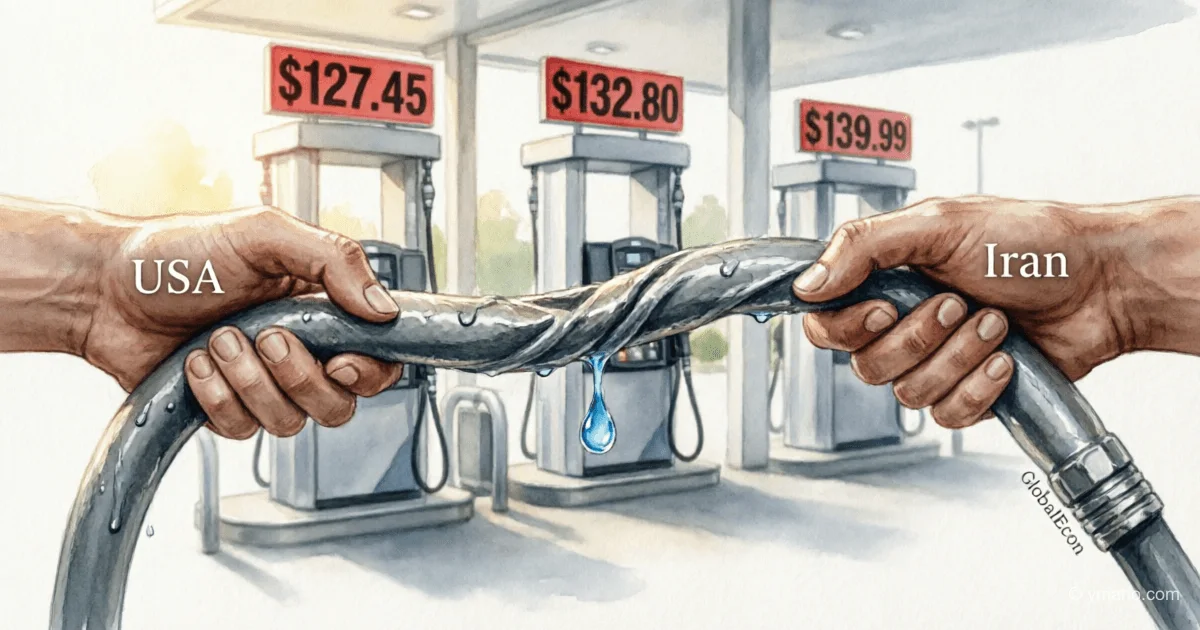
Imagine a garden hose supplying water to an entire neighborhood. Pinch it, and pressure drops for everyone. The same applies to the Strait of Hormuz: this 30-kilometer-wide passage handles 20% of all seagoing oil shipments. To put that in perspective, total Russian oil exports amount to roughly 7 million barrels per day, whereas the strait previously handled up to 21 million.
In March, 1.7 million barrels of Iranian oil passed through daily. That flow has now nearly halted. The U.S. imposed the blockade on April 12, announcing it would detain vessels paying duties to Iran. Now, exiting the Persian Gulf requires approval from both Tehran and Washington—much like needing permits from two hostile neighbors just to haul cargo out of your driveway.
This unprecedented demand has paralyzed logistics. Before the blockade, 30 to 40 tankers transited the strait daily; now, only a handful make it through. Iran, which was exporting 1.7 million barrels per day prior to March, is forced to store its crude in port. For the global market, this is akin to several Canadian-sized oil fields suddenly vanishing overnight.
How Is the Blockade Being Tested?
Over the past week, several tankers have challenged the restrictions, attempting to prove the strait remains open for “clean” oil:
- April 14: Three vessels that had docked at Iranian ports transited the strait despite the blockade announcement
- April 15: The tanker Agios Fanourios I, bound for Iraq, cleared the strait after a failed attempt over the weekend
- April 17: Sanctioned tankers Alicia and RHN (accused by the U.S. of transporting Iranian oil) managed to pass through
Yet these successes remain rare and unpredictable. The Shalamar, a Pakistani tanker, initially turned back on Sunday following collapsed peace talks, but managed to reach Das Island in the UAE just hours later.
Experts note that even non-Iranian oil is now moving with significant difficulty. The dual-permit requirement creates a regulatory catch-22: if Iran denies clearance, the U.S. can detain the vessel for lacking American approval, and vice versa. Insurance firms have already raised premiums for ships operating in the region, adding another 50 cents per barrel to oil costs.
What Matters
- Global Vulnerability: One in five barrels of worldwide oil relies on this 30-kilometer strait
- Prices Under Pressure: Halting 1.7 million barrels per day is equivalent to losing a month’s worth of Norwegian oil production
- Dual Permits: An unprecedented requirement paralyzing logistics and extending delivery timelines
- Talks Paused: Tensions escalated after the April 16 meeting fell through, though both sides remain open to dialogue
- UAE Oil Steadies Markets: As seen with the Shalamar, non-Russian crude continues to flow, helping to cushion the crisis
What does this mean for everyday consumers? If tensions in the strait persist, gasoline prices across Europe and Asia could jump 5–10% in the coming weeks. This will strain household budgets and drive up freight costs—from your local grocery runs to pizza deliveries. The silver lining: as long as oil from the UAE and Saudi Arabia keeps flowing, a full-blown crisis can be avoided. However, every new incident in the strait will keep markets on edge and prices volatile.
— Editorial Team









