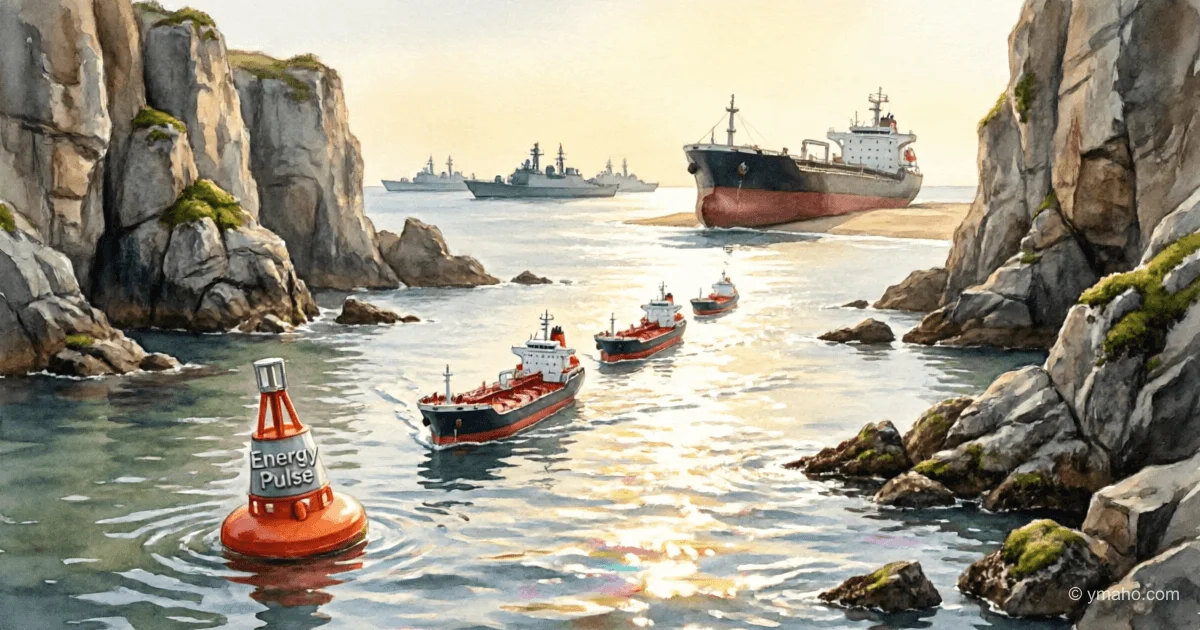
The Strait of Hormuz Is Open, But Not for Everyone: How Uncertainty in the Persian Gulf Hits Your Wallet
Imagine if the main road to your house suddenly closed, then reopened—but only for cars with manual transmissions. Would you drive it? That’s exactly what’s happening with the Strait of Hormuz, a critical chokepoint for a third of global oil shipments. If things go wrong here, gas prices won’t just spike in Europe—they’ll hit your pump too.
Why This Chokepoint Matters More Than You Think
The Strait of Hormuz is a narrow waterway between Iran and Oman. Roughly 20% of the world’s seaborne oil passes through it. To put that in perspective: if global trade were a circulatory system, this strait would be the main artery. When tanker attacks hit here in 2019, oil prices jumped 15% in a single week. Today’s situation echoes that period, but with new complications.
Iran has declared the strait open to all vessels, but with a catch: ships must follow a designated route hugging the Iranian coastline. Think of it like being allowed onto a highway, but only permitted to drive on the shoulder. Large oil tankers simply can’t navigate the shallow waters near Larak Island. It’s like trying to run a semi-truck down a bicycle trail.
The International Chamber of Shipping labeled Iran’s announcement “a cautious ray of hope,” but immediately followed up by noting that without clear rules and international oversight, it’s largely symbolic. After all, during the Iran-Iraq War in the 1980s, this same stretch of water saw the “Tanker War,” where nearly every second vessel was targeted. While Tehran promises safety today, an anonymous official publicly warned that the waterway could be shut down again if the U.S. maintains its naval blockade.
Fog Over the Oil Market
In response, the U.S. issued warnings about potential mine hazards in the strait. The result is a vicious cycle: Iran says “open,” the U.S. warns “minefield,” and the market is left guessing who to trust. Consequently, oil prices—which initially dipped to $89 a barrel following the reopening news—are now swinging wildly again. It’s akin to hearing a store has reopened, only to see police officers with K-9 units blocking the entrance. Are you walking in?
Key factors disrupting steady shipping:
- The designated route is too narrow for large tankers
- Lack of international safety monitoring
- Iran’s threats to close the strait amid any conflict with the U.S.
- U.S. warships stationed at the strait’s entrance
- Mine concerns without concrete evidence
Maritime carriers are currently stuck in a standoff. Insurers have already hiked premiums for vessels transiting the Hormuz. This directly impacts freight costs, affecting everything from plastic toys to winter tires. A 10% jump in shipping rates translates straight to higher shelf prices. Imagine paying $550 instead of $500 for your daily commute just because the route got flagged as “high-risk.”
What You Need to Know
- The oil artery is running below capacity: Reopening the strait isn’t a return to normal—it’s a temporary workaround with heavy restrictions.
- Gas prices are tied to headlines: Every update out of the Persian Gulf triggers market volatility right now.
- Insurance costs = your money: Consumers foot the bill for shipping risks through inflated retail prices.
- Geopolitics is closer than you think: U.S.-Iran tensions impact more than just the region; they directly affect your wallet.
- No single regulator: Without international oversight, the strait will remain a powder keg.
Why This Isn’t Just a Regional Issue
Many assume: “That’s somewhere else in Asia; it doesn’t concern us.” But picture this: your neighborhood plumbing gets repaired, but only cold water flows. Hot water disappears everywhere because the system is interconnected. Oil works the same way. Eighty percent of Russia’s crude travels by sea, and Europe sources a third of its oil through Hormuz. Even if you’re in Brazil or Canada, your country relies on stable energy pricing.
When a ship ran aground in the Suez Canal in 2021, global trade lost $10 billion a day. The Strait of Hormuz is three times more critical for oil. There are no “local” incidents here—any bottleneck in this narrow passage instantly becomes a global crisis. This is especially true now, given that global oil inventories are at their lowest since the pandemic began two years ago.
So, what does this mean for everyday consumers? First, gas could jump 5–10% in the coming weeks as markets brace for fresh disruptions. Second, retail prices will climb as freight costs rise. Third, such crises accelerate the shift toward electric vehicles and renewable energy—you might soon see more charging stations popping up in your city. The bottom line: even if you’ve never set foot in the Persian Gulf, its instability is already heading straight to your fuel tank.
— Editorial Team









