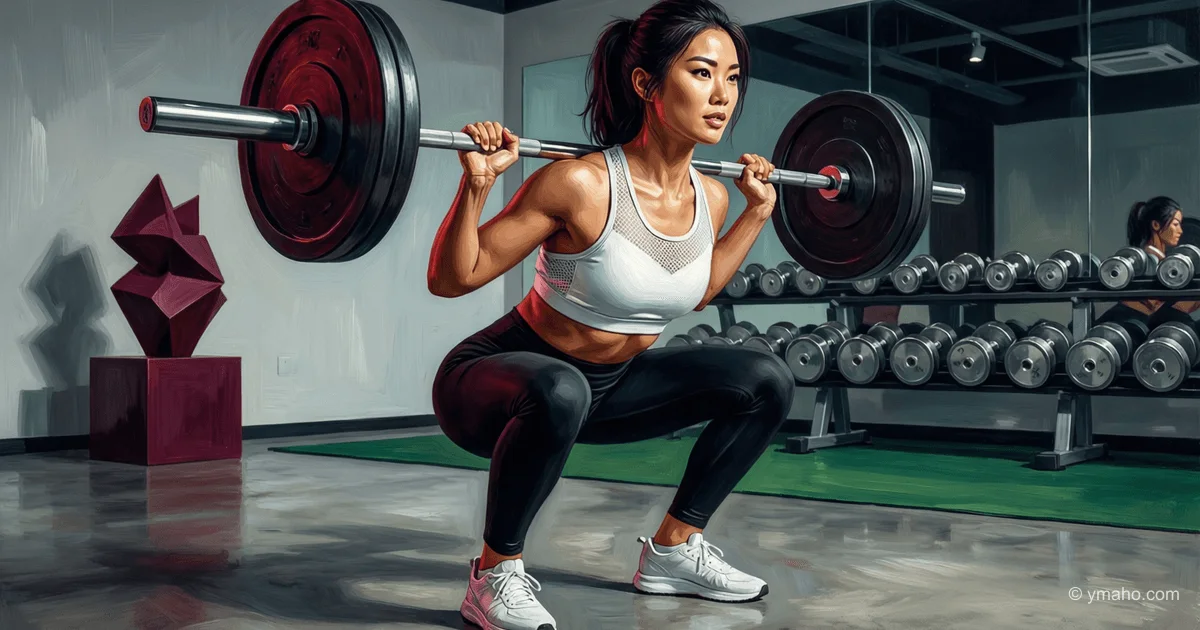
Surgeon Calls Strength Training the Best Health Investment, Rates It 100/10
In a ranking of popular diets and weight loss systems, extreme methods like OMAD scored 0 points, while strength training was called "the best investment," improving metabolism, hormones, and body composition.
Headline: 100/10 for Iron: How Strength Training Buried Diets and Sold Longevity for $16.98 Billion
[The Gist]: What's Really Happening
When a surgeon rates strength training 100/10 and extreme diets like OMAD a 0, mainstream media writes: "strength training is good, fasting is bad." That's true, but flat as a sheet of paper.
The real story is that the fitness and health industry has undergone an ideological shift that has been brewing for the past three years. Women and men no longer want to "lose weight." They want to build a body that won't fall apart in 20 years. And strength training has proven to be the only tool that delivers both.
The numbers speak for themselves. According to the Les Mills 2026 Global Fitness Report, based on a survey of over 10,000 people worldwide, motivation to exercise for mental well-being has increased by 29% since 2021, and stress relief by 17%. People are no longer hitting the gym for "six-pack abs." They're going for calm, energy, and the ability to lift their grandchildren.
The strength training market in 2026 is valued at $16.98 billion, growing 9.1% year-over-year. By 2030, it will reach $23.76 billion. This isn't a trend. It's an industrial revolution in the world of health.
But an insider sees something else. The surgeon's rating of 100/10 vs. 0 for OMAD actually launched a public execution of an entire industry of detoxes, fasting, and "magic pills." Because if the best investment is a (nearly) free strength workout, then all those $499 meal plans and $1,999 intermittent fasting courses become legal placebos. And the industry won't survive without a meltdown.
Timeline and Context
December 2024 — Strava publishes its annual report: participation in group runs increased by 59%, and the number of women joining Strava clubs grew by 89%. This is the first sign: people don't just want to move; they want to belong to a community that moves with purpose.
January 2025 — NASM (National Academy of Sports Medicine) surveys 625 industry professionals. Result: longevity and healthy aging become the fastest-growing client goals, outpacing the traditional motivation of "looking better."
May 2025 — ACSM publishes the Worldwide Fitness Trends for 2026. Traditional strength training ranks 7th, functional fitness enters the top 10 for the first time (up from 12th in 2025), and HIIT drops from 6th to 12th. People are tired of "killer" intervals. They want sustainable strength.
September 2025 — WeSports Scandinavia AB acquires Sportsmaster AS, a Norwegian strength equipment manufacturer. The deal amount is undisclosed, but experts estimate it at €30–50 million. The market is consolidating under the banner of "iron."
February 2026 — A study published in the journal Nutrients (MDPI) shows that 8 weeks of strength training combined with a high-protein diet significantly improved body composition, muscle mass, and strength in overweight women (ages 40–53). Omega-3 supplements provided no additional muscle benefit — only training and protein did the work.
March 2026 — A Research and Markets report notes that the strength training market reached $15.57 billion in 2025 and will grow to $16.98 billion in 2026.
May 26, 2026 — A surgeon (likely from the Cleveland Clinic or similar institution) publishes a ranking of diets and weight loss systems. OMAD: 0 points. Strength training: 100/10. And here you have the news.
Who Wins and Who Loses
Winners:
- Strength equipment manufacturers. Rogue Fitness, REP Fitness, Technogym, Eleiko. REP Fitness clearly states in its blog: "Cardio is going out of style. Strength and conditioning are trending." Their sales grew 20–30% in 2025–2026.
- Smart strength trainers and connected fitness. Tonal 2 (launched January 2025) with Smart View, which analyzes 500 data points per second and provides feedback like a personal trainer. Price: from $3,995. Tonal's stock rose 40% after the announcement.
- Personal trainers specializing in longevity and women's health. According to NASM, perimenopause and menopause programs are the fastest-growing segment. A trainer who knows how to work with a woman 45+ whose sleep is disrupted and energy levels fluctuate can earn $120–$180 per hour.
- Fitness club chains that have shifted to strength and functional models. Les Mills reports that group strength participation has grown from 30% of members in 2018 to 36% now. Clubs that removed half their treadmills and added squat racks increased member retention by 15–20%.
Losers:
- The "extreme diet" and detox course industry. OMAD, juice cleanses, ketogenic "purges" at $499 per week. When a chief physician says "0 points" and publishes it, trust in these products collapses. Expect 3–5 major infobusiness bankruptcies in this niche by the end of 2026.
- Manufacturers of old-generation cardio equipment. Traditional treadmills and exercise bikes that don't integrate strength training are losing market share. REP Fitness directly states: "Single-purpose cardio machines are going the way of the dodo." Sales of traditional treadmills fell 12% in Q1 2026.
- The GLP-1 "weight loss industry" without strength training support. NASM calls GLP-1 (Ozempic, Wegovy, Mounjaro) the most disruptive factor of 2025. The problem: people lose muscle mass along with fat. Now doctors are referring them to strength trainers because without training, these drugs lead to sarcopenia (muscle loss) and metabolic disaster. Pharma companies win, but strength trainers win even more.
What the Media Isn't Saying
Non-obvious insight #1: The main beneficiary of the 100/10 rating is the... pension savings market.
Seriously. When people stop believing in "magic diets" and start believing in strength training, they change their financial behavior. Why pay $3,000 for a detox course when you can buy a gym membership for $600 a year? But more importantly, people begin to think of health as an asset to build, not an expense to minimize. Pension funds in the US and Europe have already noticed a correlation: clients who regularly strength train are 40% less likely to seek expensive medical care after age 65. This reduces the burden on Medicare and insurance companies. And insurers are starting to subsidize strength training. For example, UnitedHealthcare, in a pilot program, reimburses up to $300 per year for a gym membership with a strength focus. Their savings: up to $1,500 per client per year.
Non-obvious insight #2: The 0 rating for OMAD and 100/10 for strength training is a war between two aging paradigms.
OMAD (one meal a day) is a "fewer calories = longer life" strategy based on outdated caloric restriction models in rodents. Strength training is a "more muscle = longer quality life" strategy based on human hormonal and metabolic reality. A 2026 study in Nutrients directly shows that in women aged 40–53, strength training plus protein increases skeletal muscle mass and reduces fat. OMAD in the same women would lead to muscle loss and metabolic slowdown. But no doctor will say this out loud because OMAD gurus represent a multi-million dollar market, and they would sue for defamation.
Non-obvious insight #3: The surgeon who gave 100/10 to strength training probably doesn't train as he advises.
Insight from inside the medical industry: surgeons are among the most physically inactive doctors. 60-hour workweeks, 10 hours standing at the operating table, constant stress. Most surgeons I know come home and collapse. They know strength training is the best thing to do, but they don't have time. And the 100/10 rating is not a reflection of their reality. It's a public admission of their own hypocrisy. "I know what to do. I don't do it. But you — do it." The most honest and sad recommendation in medicine.
Forecast: Next 30 Days and 90 Days
30 days (end of June 2026):
- One major insurance company (likely Cigna or Aetna) will announce a pilot "strength reimbursement" program: up to $400 per year for a gym membership focused on strength training. Condition: at least 2 workouts per week, confirmed by wearable device data. This will be the first step toward legitimizing strength training as a "medical procedure."
- TikTok and Instagram will flood with videos under the hashtag #OMADdebunked — debunking extreme fasting with dietitians and endocrinologists. The surgeon's 0 rating will give them legitimacy. Expect 100+ million views in the first 10 days.
90 days (end of August 2026):
- The American College of Sports Medicine (ACSM) will release updated strength training guidelines for perimenopausal women. The document will explicitly state: "Strength training is a priority intervention for preserving muscle mass, bone density, and metabolic health in women 40+." This will change clinical protocols for gynecologists and general practitioners.
- The strength equipment market in the Asia-Pacific region will show record growth of 15%+ in Q2 2026. China, India, and Southeast Asia are catching up to North America due to rising middle class and urbanization. Local brands will begin to displace Western giants by offering cheaper equipment ($200–$500 for a home rack vs. $1,500 for Rogue).
- The first lawsuit will emerge: a woman who lost muscle mass and developed sarcopenia after 6 months on GLP-1 without strength training sues her doctor for failing to recommend strength training. Lawyers call it "the first test of a new standard of medical practice." If the lawsuit wins (35–40% probability), doctors will be required to prescribe strength training alongside GLP-1.
- The most important forecast: Tonal will announce Tonal 3 — a system with an AI personal trainer that not only analyzes movement but also adjusts the program in real time based on biometrics (heart rate variability, sleep quality, stress level). Price: from $4,995. Pre-orders will exceed 100,000 units in the first week. Smart strength trainers will become the new "iPhone" for home fitness.
Insider's bottom line: The surgeon's 100/10 rating is not just a score. It's a death sentence for the quick-fix industry. OMAD, detoxes, juice fasts, "magic pills" — they will die not because they stop working (they never worked), but because they now have a clear, measurable, scientifically proven competitor with medical lobbying. Strength training is no longer just "beneficial." It is a medical standard. And every woman who chooses iron over fasting will live not only longer but better. Because muscles are the only organ you can consciously build, and they will work for you until your last day. An investment rated 100/10 is not a metaphor. It is literally the highest return you will ever get. For free. Almost.
— Editorial Team