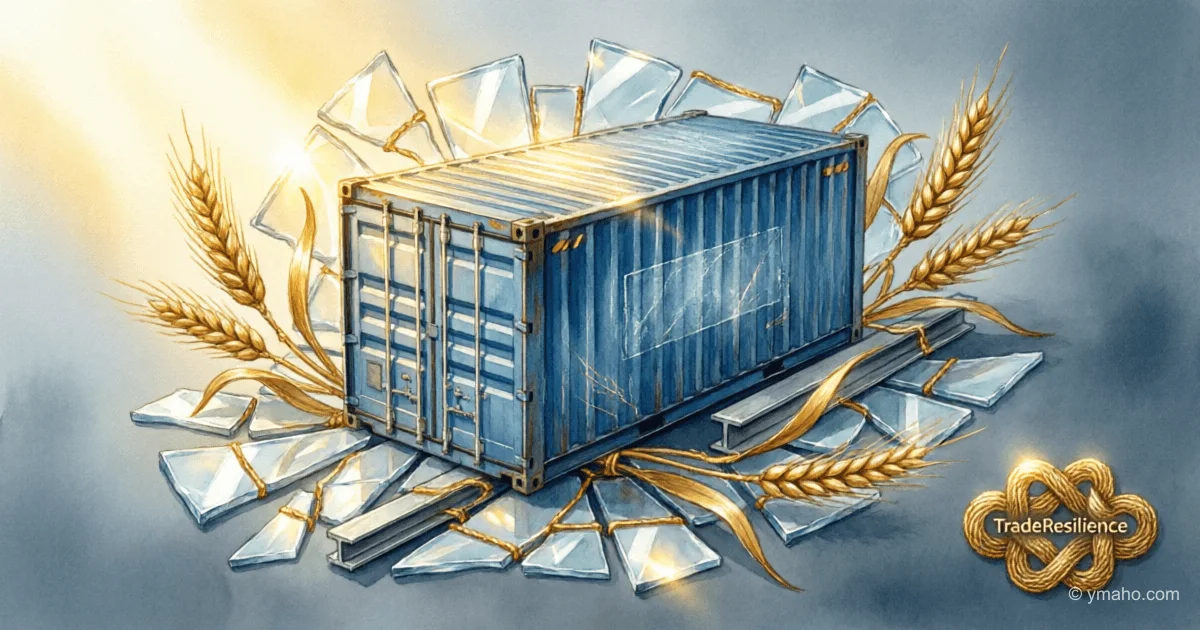
How Ukrainian Ports Survive Under Fire and Why It Matters for Your Wallet
Imagine your delivery truck getting hit by shelling every day but still managing to drop off packages. That’s exactly what Ukrainian ports are doing: despite strikes roughly every five days, they moved 21 million tons of cargo in the first quarter of 2026. Why should you care? Because this steady flow prevented another global spike in bread and metal prices, keeping groceries and building materials more affordable for everyday consumers.
How Is This Possible With Strikes Every Five Days?
Deputy Prime Minister Oleksii Kuleba reported that Ukrainian ports faced 18 attacks over three months—averaging one every five days. Picture trying to build a house, only to have a chunk of the foundation blown out every week. Ukrainian crews have mastered the art of rapid repair, fixing damaged cranes, piers, and warehouses almost overnight. In just one quarter, 193 infrastructure sites and 25 civilian vessels were hit, yet operations never missed a beat.
The bulk of the cargo is grain: 11.6 million tons. To put that in perspective, that’s enough wheat to fill 800,000 trucks lined up end-to-end from Kyiv to London. They also shipped 1.2 million tons of metal—enough to construct 15 Eiffel Towers. Container traffic saw particularly impressive growth, jumping 43% year-over-year. TEUs—the standard unit for measuring container ship capacity—are up to 63,000, setting a wartime record for Ukraine.
Global Ripple Effects: From Grain to Steel
Ukraine supplies one out of every ten tons of wheat exported worldwide. Had the ports shut down like they did in 2022, bread prices in Egypt, Turkey, and Bangladesh would have skyrocketed. But thanks to the “Black Sea humanitarian corridor” launched in September 2023, 190 million tons of cargo have been moved over two and a half years—a volume heavier than all passenger cars registered in Germany. Of that total, 110 million tons is grain, which has helped stave off hunger across dozens of nations.
Here’s how that stability translates to the real world:
- Food prices haven’t spiked like they did in 2022
- European steel mills receive raw materials without supply chain disruptions
- Container shipping lines are expanding Black Sea routes, driving down the cost of moving goods globally
Key Takeaways
- Ukrainian ports are operating at 98% of their target capacity despite ongoing strikes
- A new attack hits roughly every five days, yet damage is repaired at lightning speed
- Grain accounts for 55% of total cargo, metal makes up 6%, and container volumes are growing at record rates
- Agricultural exports generated $4 billion from January to February 2026, up 9.3%
- Corn emerged as the top growth driver: exports jumped 20% (from 4.7 to 5.6 million tons)
What Does This Mean for Everyday Consumers?
If you buy bread, pasta, or steel for home renovations, your grocery and hardware bills stay reasonable thanks to these uninterrupted port operations. When global supply chains shrink, monopolies tend to hike prices, but Ukraine’s consistent exports keep the market competitive. Meanwhile, the surge in container shipping means that in a few years, freight from Asia to Europe will become even faster and cheaper—after all, routing through the Black Sea cuts out a significant portion of the journey compared to the Suez Canal.
— Editorial Team









