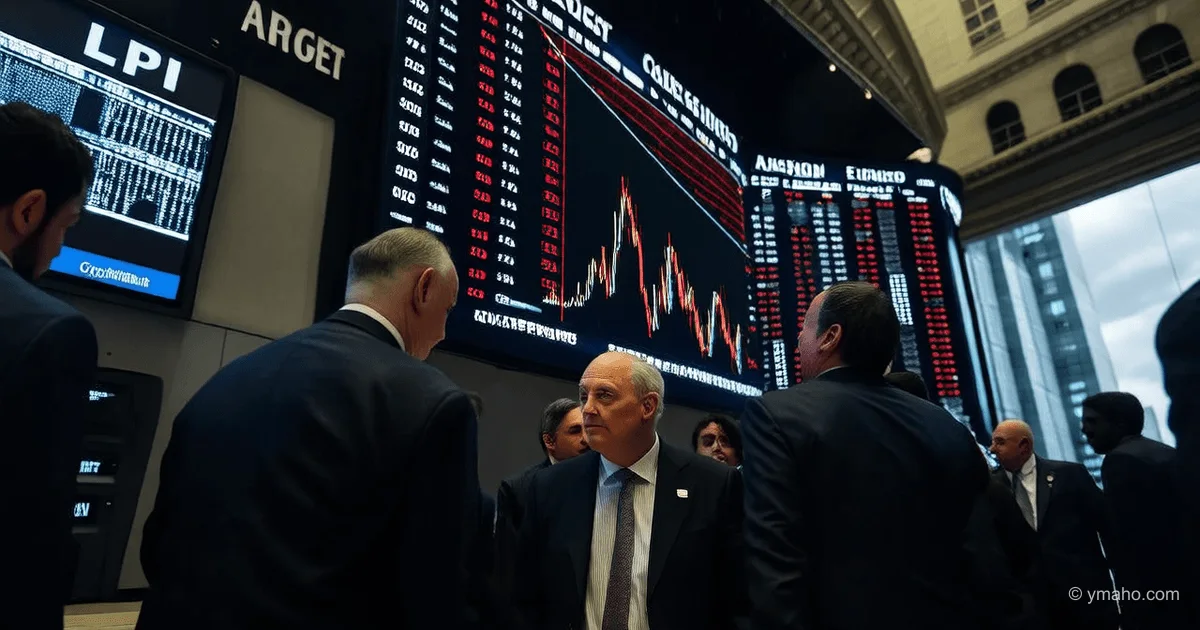
Markets Brace for Key April US Inflation Data in the Week Ahead
Global financial markets are gearing up for a decisive week, with the release of the US Consumer Price Index (CPI) for April taking center stage. The consensus forecast points to a slowdown in monthly growth to 0.6%, but the annual rate could accelerate to 3.7% due to a surge in energy prices.
Markets are not just bracing for another batch of macro data. They are frozen at the intersection of two unique, almost improbable events: a change in Fed leadership at a time when the US economy is receiving a powerful external inflationary shock. The release of the April CPI today is not just a report. It is, in essence, a verdict on the viability of the entire new governance architecture of the Federal Reserve.
The Core: What Is Really Happening
Formally, all eyes are on the numbers: the consensus expects annual CPI to rise to 3.8% or even 4%, up from 3.3% in March. Monthly growth is expected at 0.7%. But this is just external noise.
The real drama lies in the clash of two realities. On one side, the war in the Middle East has driven Brent crude oil prices to $105 per barrel and continues to pressure costs. Diesel is getting more expensive, pushing up freight and food prices, while surveys already show consumer confidence falling to historic lows. This is the very "energy shock" that the Dallas Fed warned about.
On the other side, the key beneficiary of this shock—outgoing Fed Chair Jerome Powell—already has one foot out the door. The Senate approved Kevin Warsh's nomination on Monday evening, and his confirmation as Fed Chair is expected any day now. Thus, the old team will receive the hot CPI data, while the new team will have to deal with the consequences and set policy at the June 16-17 FOMC meeting.
Timeline and Context
The chain of events leading to this point is as follows:
- February 28: A military conflict begins between the US, Israel, and Iran. Since that date, Brent and WTI crude have risen more than 40%.
- March 2026: CPI jumps to 3.3% annualized. The energy component grows explosively (gasoline: +21.2% month-over-month), but core inflation remains relatively restrained. The main blow is absorbed by consumers.
- April 2026: The Fed keeps rates in the 3.50%-3.75% range at its meeting, but a rift grows within the Committee. Three voting members already advocated for a possible rate hike.
- May 11: The Senate overcomes procedural hurdles for Warsh's nomination. It becomes clear that the changing of the guard at the Fed is a matter of days.
- May 12: Release of April CPI. The complication is that the fuel price shock is now compounded by a "second wave"—rising costs for airfares, logistics services, and critically, fertilizers, which hits food prices.
Who Wins and Who Loses
Winners:
- Hawks within the Fed. High CPI numbers, especially if core inflation exceeds the 0.3% monthly forecast, will give them free rein. Any talk from Trump about rate cuts will be shattered by the dry report figures. Kevin Warsh, considered a hawk from his time at the Fed from 2006 to 2011, will have an ironclad alibi to maintain tightness.
- Volatility traders. As Tim Waterer from KCM Trade noted, the oil market is pricing in a range: from a drop of $8-12 if negotiations break through, to a jump back to $115 with a new escalation. CPI data, layered on the fracture in US-Iran talks, will create a perfect storm with very strong moves during the trading session.
Losers:
- The Trump administration and Kevin Warsh personally. Trump expects the new chair to cut rates, but Warsh will have to assert his independence. A "hot" CPI right at the start of his term is the worst backdrop for a new job. The market will immediately test the new chair, and political pressure will become unbearable. The stakes for Warsh are confidence in the dollar, which began to waver under his predecessor: the dollar index fell to 98.62.
- Large US manufacturers and farmers. The output price index in the services sector hit a 45-month high, and 70% of farmers report a shortage of funds for fertilizers. This means cost inflation is eating into business margins, while the ability to pass these costs onto impoverished consumers is shrinking.
What the Media Isn't Saying
The key insight concerns not so much the numbers as the manipulation around them. Mass media focus on the Trump-Warsh standoff but miss the legal hook left by Powell.
Recall: parallel to the change in Fed leadership, there is a Justice Department investigation into the renovation of the Fed building, which Powell considers a pretext for political pressure. Although the investigation has been formally closed, the federal prosecutor can reopen it at any time. Jerome Powell demonstratively remains on the Board of Governors until 2028 and says he will not leave until "the matter is fully closed."
This creates an unprecedented situation of shadow oversight. Powell stays in the FOMC meeting room. If Warsh yields to Trump's pressure and hints at easing with 4% inflation, Powell could use his vote and public authority to crash markets with a single phrase about "political interference." Thus, a hot CPI is not just a problem for rate cuts; it is a tool for "Powell's team" to keep "Warsh's team" in check, blackmailing them with the threat of reopening the investigation.
Forecast: The Next 30 Days and 90 Days
Next 30 Days (until June 11, 2026):
Today's CPI will come in at 3.9% or even 4.0%, exceeding consensus due to a larger contribution from core services. The market reaction in the first hour will be predictably panicky: the dollar index will spike briefly but then fall again due to fear of political instability. The 10-year Treasury yield will rise above 4.4%. Brent will temporarily retreat to $100 as markets fear a global recession and demand destruction. Hawkish comments from Warsh upon taking office will be seen as an attempt to restore the Fed's reputation, slightly calming the debt market.
Next 90 Days (until mid-August 2026):
The Fed under Warsh will keep rates at 3.75% at the June meeting. However, by August, the effect of high oil prices will fully manifest in core indicators. Even if the Iran conflict enters a simmering phase, crop failures due to fertilizer shortages will trigger a new round of food inflation. Warsh will be trapped: raising rates amid falling consumer demand is politically suicidal, while cutting would trigger a dollar confidence crisis. My forecast: by August, markets will start pricing in not a cut but an emergency rate hike at the September meeting of at least 25 basis points, causing a severe correction in US equities.
— Editorial Team









