US Inflation Surges in March, Fueling Hawkish Sentiment at the Fed
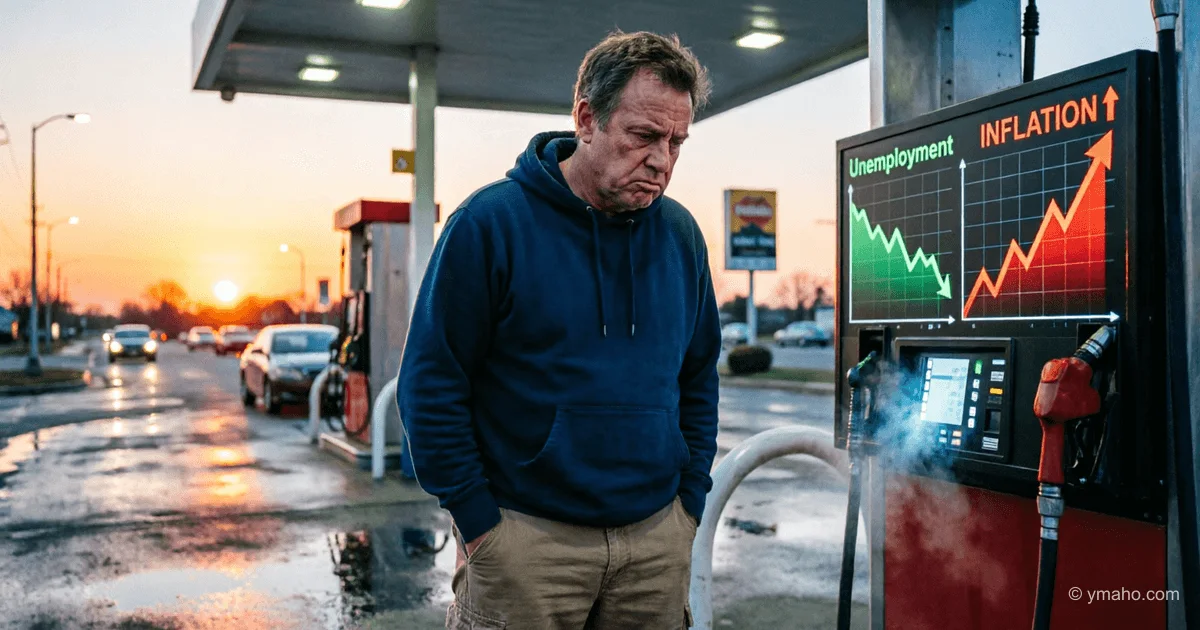
The US Personal Consumption Expenditures (PCE) price index rose 0.7% month-over-month and 3.5% year-over-year in March, the largest monthly jump since mid-2022, driven primarily by a spike in gasoline prices. This has reinforced expectations that the Fed will not cut rates in either 2026 or 2027.
The March PCE reading, soaring 0.7% for the month, is not just an unpleasant surprise. It is the moment when the Federal Reserve lost the last mathematical basis for its soothing rhetoric. Behind the 3.5% annual figure lies a real catastrophe: the energy shock is no longer isolated at gas stations; like a virus, it has penetrated the core of the consumer basket. Markets are only beginning to realize that the era of zero real rates has not just ended but has been replaced by a period of forced tightness that will stretch for years.
The Core: What's Really Happening
The crux of the problem lies in the structure of March's jump. Everyone points to gasoline, but the scariest signal came from supercore PCE—services excluding housing and energy. This indicator, which Jerome Powell himself calls "the most important," jumped to 4.1% year-over-year in March. This means inflation is no longer exclusively a goods story or a consequence of rising rents. It is now inflation of barbershops, airline tickets, insurance premiums, auto repair shops, and restaurants.
Why is this fatal? Because services inflation is insensitive to high rates in the short term. You cannot stop insuring your car or home because of an FOMC decision. You will not postpone surgery or a vet visit until 2028. This type of inflation feeds on the labor market: wages in the services sector continue to grow at 4.5-5% year-over-year, as labor shortages in hospitality and healthcare remain chronic. Consequently, the only way for the Fed to curb this spiral is to deliberately provoke a recession and push unemployment to at least 5%, which no one in the White House can politically afford in a midterm election year. The Fed is trapped: even if rates stay at current levels, inflation reproduces itself through the services sector. Suppressing it requires not just high rates, but ultra-high rates comparable to the Volcker era, which no one dares to implement.
Timeline and Context
March's PCE surge is the culmination of errors dating back to late 2025. Back then, riding a temporary drop in oil prices, the Fed overconfidently signaled three rate cuts in 2026 to markets. Financial conditions were eased before inflation was truly defeated. Banks started handing out premium credit cards again, and developers priced in lower mortgage rates for new projects.
Then, in January-February 2026, the Iranian crisis began to crank up energy prices. By March, the average US gasoline price rose from $3.20 to $4.10 per gallon. But unlike 2022, when consumers had a safety cushion of $2.1 trillion in accumulated COVID savings, households are now heavily indebted. Auto loan delinquencies hit a 15-year high, and credit card debt exceeded $1.5 trillion. So the spike in fuel prices, combined with rising service costs, created a double squeeze: people literally have no money to pay, and they cut back on durable goods while going deeper into debt for basic services. This is a classic stagflationary spiral, where rising prices do not lead to increased prosperity but only corner consumers.
Winners and Losers
The biggest loser is the American consumer without assets. Households earning under $75,000 a year spend up to 35% of their budget on energy and basic services. 3.5% inflation is a fiction for them; their personal inflation, calculated on a truncated basket, approaches 7%. This is political dynamite for the Trump administration, which promised "instant price reductions." This electorate will retaliate in the midterms if gas and utility bills keep rising.
Another less obvious loser is the low-quality corporate debt market (leveraged loans). A huge volume of loans (about $1.8 trillion) was issued at floating rates. If the Fed not only refrains from cutting but is forced to raise rates amid PCE inflation, the cost of servicing this debt will skyrocket. Half of the companies in private credit fund portfolios will face refinancing difficulties, triggering a wave of defaults among B- and CCC-rated borrowers.
Winners include commodity traders and holders of physical gold. Gold broke through $3,200 per ounce in late April and continues to strengthen despite a strong dollar. This indicates that smart money is hedging not against a slow rise in CPI but against systemic distrust in the Fed's ability to control the situation while sacrificing the economy. Gold and commodity ETFs become havens when investors realize the central bank is cornered.
What the Media Isn't Saying
The media discusses the Fed's "hawkish pivot" as if it were a choice. They omit that the Fed is secretly modeling a yield curve control (YCC) scenario in case rate hikes fail to suppress inflation. In the Fed's analytical department, there is an unpublished "Blue Book" outlining "Scenario D." If the Fed rate goes above 4.5% and long-term 10-year Treasuries paradoxically start falling below 3.8% due to recession and flight to quality, the Fed will find itself in Japan's 2016 situation.
Closed memos for governors discuss the mechanics: the Fed may be forced to start unlimited long-duration bond buying (yield-targeting QE) while maintaining a high short-term rate. This is madness from an inflation-fighting perspective, but it is the only way to prevent a collapse of pension funds and insurers sitting on depreciating long-dated paper. That is why the market reacted so nervously to the PCE data—large players intuitively understand that the Fed's toolkit is nearly exhausted, and there is no perfect mathematical exit from the "inflation-debt-oil" triangle.
Forecast: Next 30 Days and 90 Days
30-day horizon (by June 6, 2026).
April PCE data (released May 31) will show an even scarier picture, likely 3.7% YoY or higher. The Texas oil benchmark has not yet fully accounted for the May blockade of the strait and fires in Fujairah; the effect will reach the pump and airline tickets with a 30-45 day lag. Consumer sentiment will collapse. FOMC members, in blackout mode before the meeting, will start leaking "sources close to the regulator" through the press, preparing the market for abandoning rate cut forecasts. This will trigger a mini-correction in the Nasdaq of up to -10%.
90-day horizon (by August 2026).
The Fed will not only refrain from cutting rates but will be forced to raise them by 25 bps at an emergency meeting in late July or at the regular September meeting to 3.75-4.00%. This will kill the mortgage market but will not curb supercore services inflation. We will enter a stagflation-lite phase—inflation will hover around 3.8%, GDP will go to zero or slightly negative. This is the worst scenario for investors: corporate profits will stop growing, and P/E multiples will have to be recalculated from a risk-free rate of 4.5%. The S&P 500 will lose another 15% from adjusted levels. Direct Treasury interventions will be needed to support the banking system, as unrealized bond losses on bank balance sheets will again exceed the critical $700 billion mark. March's PCE will become the trigger for financial instability that will alter the trajectory of the US economy for years to come.
— Editorial Team









