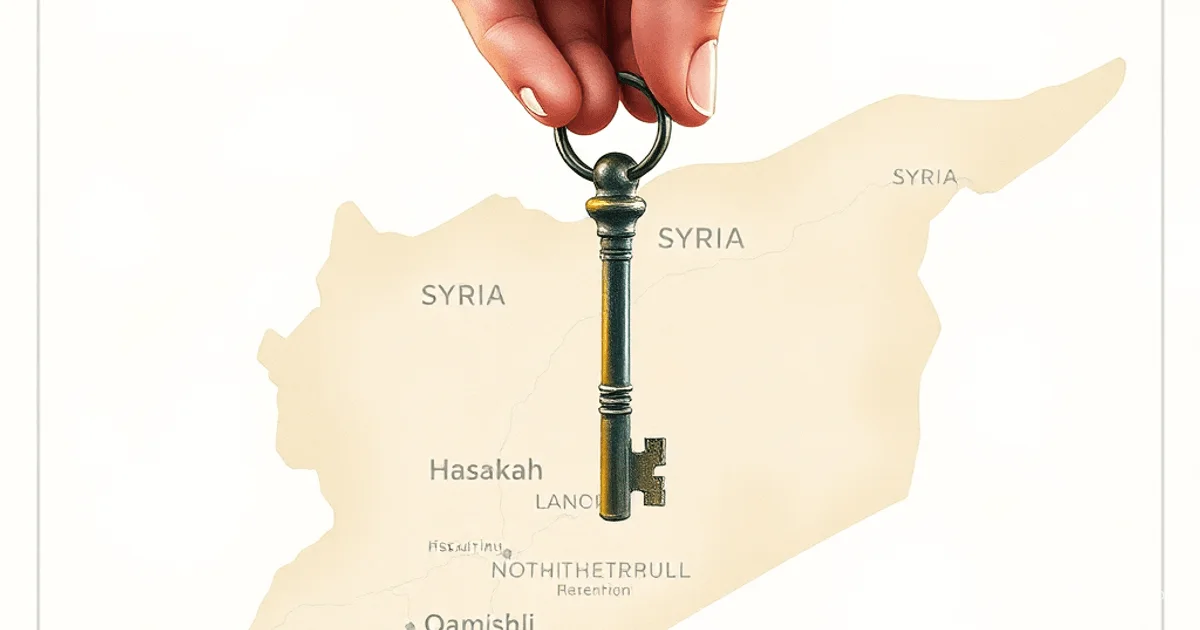
US Troops Leave Syria, Ending a Decade of Military Presence
The last US soldiers have left Syria, handing over their bases to the Syrian government. This marks a major shift in the Middle East, ending a military presence that began ten years ago and reshaping who controls the region's oil-rich northeast.
For years, the US had troops in Syria to fight a terrorist group called ISIS. ISIS, also known as ISIL, was an extremist organization that controlled large areas and committed terrible violence. The US worked alongside a local fighting force, the Syrian Democratic Forces (SDF), which was led by Kurdish groups. This partnership helped defeat ISIS, but it also created a complicated situation where parts of Syria were not under the control of the central government in Damascus.
What Changed on the Ground
The final convoy of US personnel and equipment rolled out of the Qasrak air base in northeastern Syria this week. This completed a process that started earlier this year. Now, the Syrian national army controls all the military sites where Americans were once stationed.
This isn't just about empty buildings. It's part of a larger deal between the Syrian government and the SDF. Key parts of that deal include:
- Kurdish fighters from the SDF are being integrated into the Syrian national army.
- Syrian security forces are now deployed in major northeastern cities like Hasakah and Qamishli.
- Control of border crossings and civilian institutions, like local administrations, has been transferred back to Damascus.
Think of it like a neighborhood that had its own independent security team and management. Now, the city's official police and government offices are moving back in to run things directly.
Why This Matters Beyond Syria
This shift changes Syria's role on the global stage. Last November, Syria officially joined the international coalition against ISIS. That means Syria is now seen as a partner in fighting terrorism, rather than a problem. This new status helped remove the main reason the US kept troops in the country.
The US military stated the withdrawal was a "deliberate and conditions-based transition." The Syrian government says it was done in full coordination with the US, pointing to improved relations since a meeting between the Syrian and US presidents last year.
Analysts note the final US convoy traveled through Jordan, not Iraq, likely to avoid potential attacks from armed groups in the region backed by Iran. This shows the ongoing complex web of alliances and conflicts in the area.
Key Takeaways
- The US military presence in Syria, which began in 2014, has officially ended.
- The Syrian government now has full military control over its northeastern territory, which was previously managed by Kurdish-led forces.
- A political and military integration deal is bringing Kurdish fighters into the national army and returning state control to cities and borders.
- Syria's new role as an anti-ISIS coalition member altered the international calculus for keeping US troops there.
- The withdrawal was coordinated between the US and Syria, suggesting a change in their diplomatic relationship.
What Does This Mean for Regular People?
For Syrians, this likely means a more unified country under one central government, though the long-term stability of that arrangement remains to be seen. For the world, it reduces the chance of direct confrontation between US and Syrian forces in the region. It also means the global fight against extremist groups like ISIS will now involve Syria as a declared partner, which could change how that effort is managed.
— Editorial Team









