Brent crude price again exceeds $110 per barrel amid geopolitical risk premium
News of attacks on US ships and missile strikes on the UAE triggered a sharp jump in oil prices on May 5. The resumption of hostilities keeps prices above this psychological level, slowing the decline in inflation expectations.
Oil above $110 per barrel is not an episode of market hysteria after the attack on Fujairah and missile strikes on the UAE. It is a structural break where the physical market has finally decoupled from the futures market, and central banks have become mere observers with zero influence on the main inflation driver. On paper, Brent closed around $113-114, but actual spot cargoes are going for $150. This $35-40 gap between the screen and reality is the key signal that most commentators miss.
The essence: what is really happening
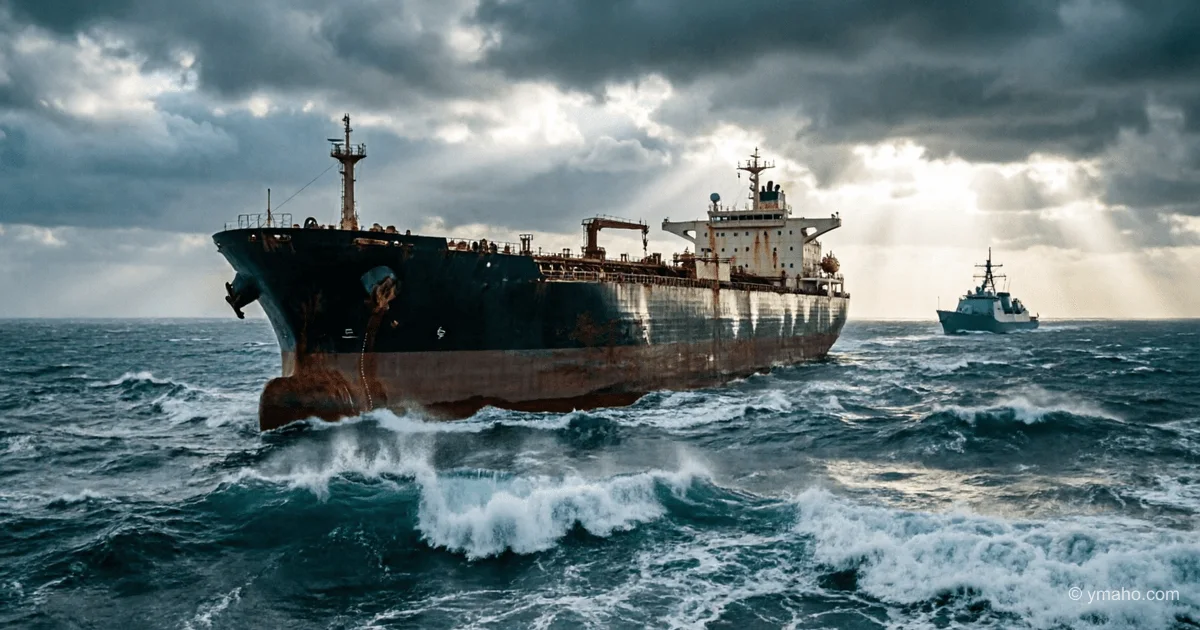
The physical oil market is screaming shortage, while the futures curve still prices in normalization by year-end: WTI falls from current $106 to $77 per barrel. This is a dangerous illusion. Judging by the fact that the Maersk fleet transited the Strait of Hormuz only under US military escort, and some shipowners simply dropped anchor, traffic will not recover even with a partial lull. The market has stopped trading barrels—it is trading the absence of shipping guarantees. Insurers have jacked up war premiums to levels where freight loses economic sense, paralyzing the supply chain more effectively than any official blockade.
The scale of losses goes far beyond conventional analytical models. In March, global supply collapsed by 10.1 million barrels per day—the largest drop in history. Cumulative losses since the start of the conflict have exceeded 360 million barrels. This is not a temporary dip but a tectonic shift that will cascade onto consumer markets in the coming weeks.
Timeline and context
The countdown of the new reality began on February 28, 2026, when Iran imposed a restricted passage regime through the Strait of Hormuz in response to joint US-Israeli actions. Since then, export losses have exceeded 13 million barrels per day, with some production shut in due to lack of storage and some due to direct hits.
The UAE's decision to leave OPEC+, which the market interpreted as a signal of oversupply, actually added only 188,000 barrels per day—a drop in the bucket amid a 10 million deficit. Riyadh is returning to the role of swing producer, absorbing surpluses while hedging its budget with oil above $90 per barrel.
Against this backdrop, the Trump administration finds itself trapped by its own rhetoric: the president threatens Iran with "destruction" on Fox News while instructing the Pentagon to prepare a prolonged blockade of Iranian ports. Iran responded with strikes on the Emirates and commercial tonnage, turning every de-escalation attempt into a new round of conflict.
Who wins and who loses
Winners are few. Saudi Arabia gets a double premium: the price is boosted by its monopoly status as a reliable supplier. Low-cost US shale producers lock in margins unthinkable at $70 per barrel. War insurers and operators of pipelines bypassing Hormuz (overland routes through the UAE and Saudi Arabia) collect rent from every emergency logistics chain.
Losers are almost everyone else. Global petrochemicals are in shock: naphtha in Singapore has risen above $290 per barrel in product basket terms. Airlines are canceling flights across the Middle East, Asia, and Europe—jet fuel consumption has dropped by amounts comparable to the COVID contraction. Developing Asian economies dependent on imports are entering a guaranteed recession zone: regional demand has already collapsed by 2.3 million barrels per day.
But the biggest loser is central banks, led by the Fed. They are squeezed between oil inflation and economic slowdown. Jerome Powell holds the rate at 3.50–3.75%, but this inaction stems from powerlessness, not confidence.
What the media are not saying
The information picture is cluttered with distracting maneuvers. On May 5, the market received two opposing signals simultaneously: the passage of a Maersk vessel under the US flag through the strait—and missile strikes on Fujairah. In reality, protection and indemnity clubs simply do not allow commercial vessels to enter the strait without a military warrant: the first ship was a demonstration, not a resumption of shipping.
The second hidden process is the Trump administration's secret invocation of Article 311 of the US Naval Code for compulsory management of the civilian fleet. This is a forcible takeover of logistics, which itself creates additional fuel demand.
The third fact is the record gap between spot and futures prices ($150 vs $113). The physical market screams shortage, but index and pension funds are forced to rebalance along the futures curve, understating risks for their shareholders by $35 per barrel.
Forecast: next 30 days and 90 days
30 days (by June 6, 2026):
Hormuz will remain half-closed. The US will attempt a second convoy but cannot provide sufficient guarantees to shipowners. Brent will settle in the $108–122 range. Global air traffic will shrink another 7–12%. The IEA will officially declare a shift from "temporary disruptions" to "structural contraction" and forecast Brent at $125 in a protracted conflict.
90 days (by August 6, 2026):
By summer, global oil demand will contract by 1.5 million barrels per day—the strongest quarterly drop since 2020. Asian petrochemicals will begin partial plant shutdowns. The Fed will face an impossible choice: cut rates amid inflation accelerated to 4.5–5%, or hold and watch the recession deepen. It is at this point that the Trump administration will seriously consider direct negotiations without preconditions—not due to diplomatic progress, but under pressure from election ratings collapsing amid gasoline prices.
Strategic conclusion: we have entered a multi-year cycle of geopolitical oil premium. The era of "structural discount," where the threat to Hormuz was seen as hypothetical, is over. From now on, any escalation in the Middle East will be instantly priced in. Companies and entire states without a Plan B for $150 per barrel will enter this new world unprepared—and pay the full price.
— Editorial Team









