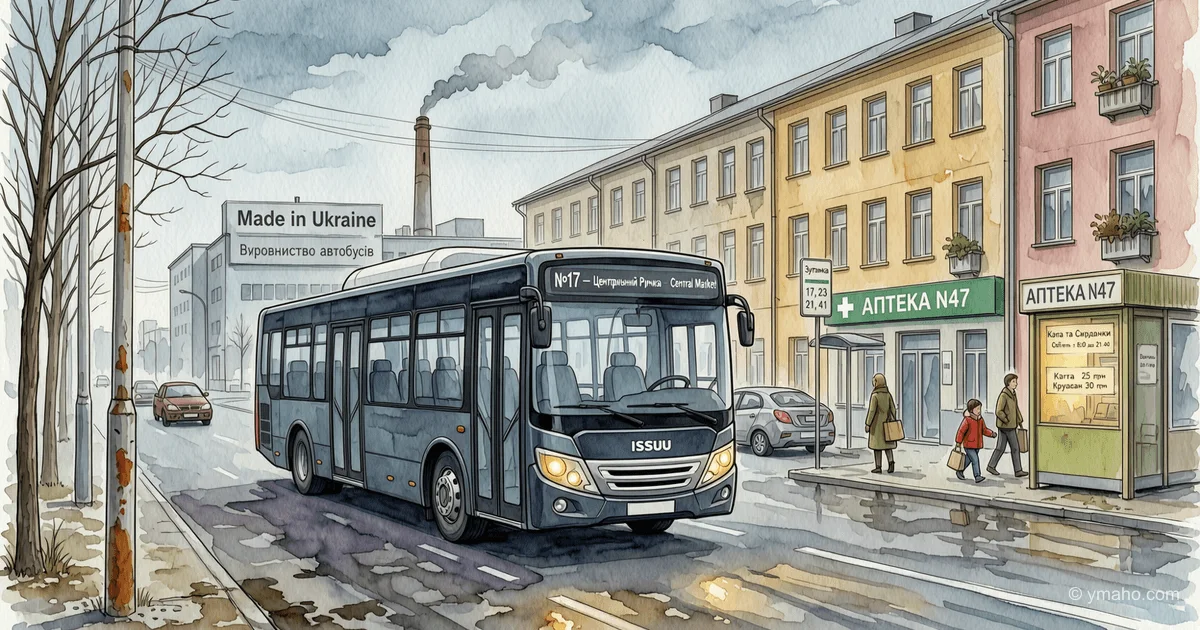
Ukraine's Bus Market Revives: Imports Hit Records, Production Declines
In March 2025, the Ukrainian bus market showed an unexpected surge in activity. New vehicle registrations increased by 307% compared to February, and domestic resales rose by nearly 48%. However, behind these figures lies a significant shift: for the first time in a long while, imports of new buses exceeded domestic production volumes. Why is this happening, and what does the future hold for the market?
Explosive Import Growth: Who Leads?
The most notable trend in March was a sharp increase in imports of new buses from abroad. While only 13 were imported in February, March saw 53 units. The main driver is the fulfillment of large municipal and private contracts to renew urban and suburban transport fleets.
The leader among new models was the Isuzu Citiport, actively purchased for city routes. In second place was the Ford Transit, used for social and corporate transport. This indicates that cities and businesses are betting on reliable and affordable European brands rather than domestic developments.
Domestic Market: Used Buses Still in Demand
Despite the rise in new imports, the bulk of transactions still come from domestic resales—355 deals in March. The leader here remains the Mercedes-Benz Sprinter, long a workhorse for suburban and intercity transport.
Interestingly, the second most popular model was the VDL Citea, a European low-floor bus. This means Ukrainian carriers are actively buying used equipment from the EU that has already served its term in Europe but is still suitable for operation in Ukraine.
Domestic Production: 20% Decline
While imports grow, Ukrainian factories—BAZ, Bohdan/Ataman, ZAZ—reduced output by 20% in March compared to February. A total of 48 vehicles were produced, mostly small suburban models purchased with budget funds.
However, on an annual basis, the picture is more positive: production increased by 71.4% compared to March 2024. This suggests that factories are gradually recovering from last year's downturn but still cannot compete with imports in volume and variety.
What Does This Mean for Ordinary People?
For passengers, this is mostly good news. The renewal of city and suburban fleets means more comfortable and safer trips, especially if low-floor buses are purchased, which are convenient for people with disabilities and parents with strollers.
For the economy, rising imports put pressure on the foreign exchange market, as buses are bought for euros and dollars. On the other hand, developing transport infrastructure stimulates labor and business mobility.
For Ukrainian manufacturers, it's a challenge: to survive, they must either improve quality and reduce prices or find niches where imports are unprofitable (e.g., school buses with strict localization requirements).
Key Points
- New bus imports in March rose 307% compared to February—a historic high.
- Domestic resales increased by 47.9%, led by the Mercedes-Benz Sprinter.
- Domestic production fell by 20%, though on an annual basis it grew by 71.4%.
- Main import brands: Isuzu Citiport (new city buses), Ford Transit (social transport), Mercedes-Benz Citaro (large used city buses).
- Trend: The Ukrainian market is increasingly oriented toward European equipment, both new and used.
Forecast
If current trends continue, the share of imported buses in the Ukrainian market could exceed 70% by the end of the year. This would lead to further contraction of domestic production unless protective measures or support programs for local factories are introduced. For passengers, this offers a chance for more modern transport, but ticket prices may rise due to the currency component.
— Editorial Team









