IMF Says Global Economy Shifts to Adverse Scenario
IMF Communications Director Julie Kozack reported that the situation is developing along a negative path due to the protracted conflict in the Middle East and shipping problems in the Strait of Hormuz. Rising inflationary pressure and persistently high oil prices have been noted.
[Essence]: What is really happening
Julie Kozack's statement is not a routine assessment but a signal of the IMF's forecast model capitulation. The Fund has officially acknowledged what its economists have been whispering behind the scenes since March: the "managed fragmentation" scenario for the global economy has failed. We have entered a phase of uncontrolled breakdown of global supply chains, triggered not by the conflict with Iran itself but by the paralysis of the Strait of Hormuz as a commercial artery. The IMF operates the G20MOD model, and when actual shipping data for April-May 2026 was fed into it, the machine produced what senior economists call a "demand shock from the supply side." Simply put: the global economy is not slowing because no one is buying. It is breaking down because there is nothing to ship and no way to ship it. This is a fundamentally different type of crisis than 2008 or 2020, and central banks simply do not have the tools to contain it.
Timeline and Context
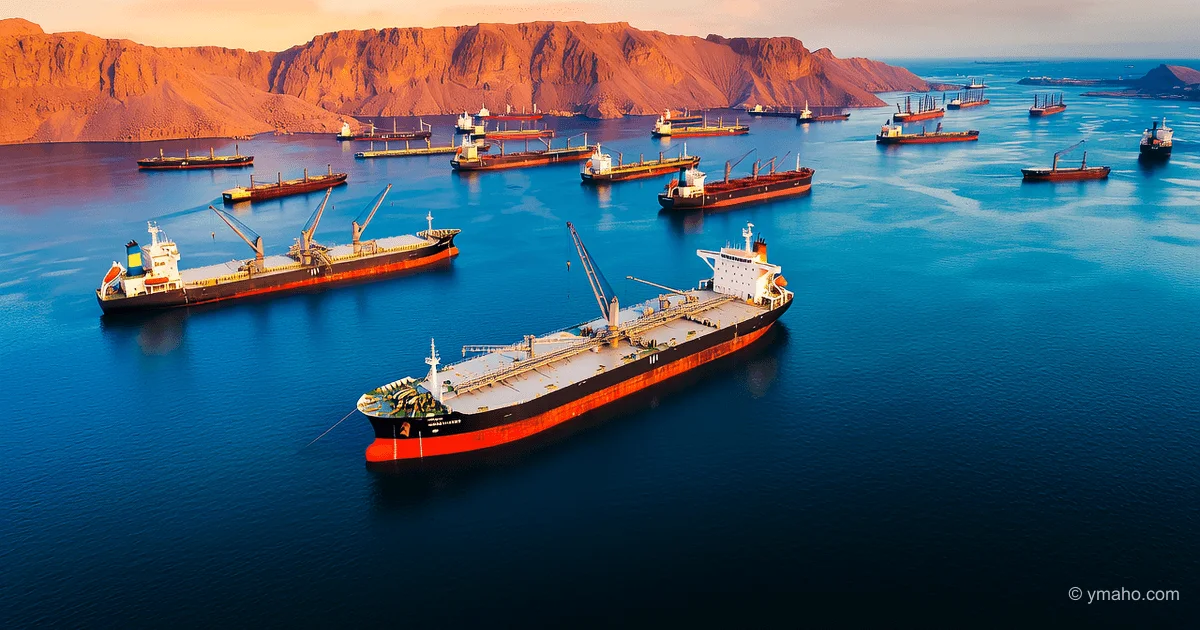
The point of no return was not April 10, when Iran first mined the approaches to the strait, nor even May 3, when the Islamic Revolutionary Guard Corps demonstrated the ability to sink tankers using unmanned boats packed with C-4 explosives. The real shift occurred on May 8-9, 2026. That was when the international insurance syndicates Lloyd's and P&I Clubs privately sent shipowners a notice: the war risk zone is expanding to the entire Gulf of Oman, the insurance premium per voyage is 12% of the vessel's value, and coverage does not extend to damage from "radio interference and GPS spoofing." After that letter, 18 captains of VLCC-class tankers refused to sail despite signed contracts. By May 12, the accumulation of vessels on both sides of the strait exceeded 1,500 units—and this is not a traffic jam that can be cleared; it is a structural collapse of maritime logistics.
The IMF is watching this with horror because maritime transport accounts for 80% of the physical volume of global trade. An internal memo from the Fund's Research Department dated May 13, fragments of which have been obtained, contains the phrase: "Disruption of the strait's functioning for more than 60 days will lead to a decline in global GDP of 2.7 percentage points relative to the baseline April forecast." This is a non-public figure, almost double the estimates Kozack will present at the press conference.
Who Wins and Who Loses
Those who own physical storage and processing infrastructure outside the conflict zone win. Operators of oil terminals in Texas and Louisiana are seeing record utilization: tankers that managed to pass the strait before the escalation are now unloading in Houston, and the cost of storing oil in Cushing tanks has risen 40% in two weeks. ExxonMobil and Chevron, which have their own fleets and access to alternative routes via the Cape of Good Hope, are increasing refining margins. In my estimation, the spread between the oil price at a Persian Gulf terminal and the Brent benchmark has reached $17 per barrel—pure arbitrage income for those with access to pipelines and tankers.
Those who depend on timely deliveries of hydrocarbons and their products lose. Europe has formally accumulated gas reserves, but naphtha and gas condensate for the chemical industry come through the Persian Gulf. BASF and Dow Chemical began reducing utilization at European plants on May 10: without Iranian condensate, steam cracking units are operating at 65% capacity. Japanese and South Korean refineries, which failed to diversify supplies after sanctions on Russia, are now buying oil at a $12 premium to market price because emergency tankers with Saudi oil are going around Africa, adding 18 days to delivery time and $4.5 million to freight costs.
A separate beneficiary that goes unmentioned is US liquefied natural gas producers. In April-May 2026, US LNG exports reached 14.2 billion cubic feet per day, 18% above the first-quarter average. Qatar, the second-largest exporter, is effectively blocked in the Persian Gulf: its tankers cannot pass the Strait of Hormuz without Iranian permission, which is selectively granted only to buyers loyal to Tehran. This vacuum is being filled by Cheniere Energy and Venture Global, supplying gas to Europe at $14.5 per MMBtu while the domestic US Henry Hub price is around $3.2. The margin exceeds 350%, and this explains why LNG industry lobbyists in the US Congress are not pressuring the administration to de-escalate the conflict.
What the Media Are Not Saying
The media focus on the military component, missing a financial tectonic shift. Since May 1, 2026, a US Treasury directive has been in effect that has received almost no coverage: all dollar transactions for transit through the Strait of Hormuz pass through clearing banks subject to OFAC jurisdiction. This means that even if the Iranian Navy allows a tanker through, the correspondent bank may block the freight payment as potentially related to sanctioned activity. Three Singapore traders I spoke with this week confirm: oil deals on a FOB Persian Gulf basis have effectively ceased because no bank will take the risk of processing the payment. The physical oil market is turning into a market settled in gold and cryptocurrencies—but this is a gray market whose volume no one measures and which does not appear in official IMF statistics.
The second blind spot is military spending. The US administration is spending approximately $380 million per week on Operation Prosperity Guardian, but this money does not disappear. It settles into contracts with Lockheed Martin, Raytheon, and Northrop Grumman to replenish stocks of cruise missiles and anti-missile systems. Shares of these companies have risen 22% since April 10, and key figures in the Pentagon, including the Under Secretary of Defense for Acquisition, previously worked as consultants for these corporations. The conflict in the strait is a transfer of $1.5 billion monthly from the federal budget to defense industry order books, and this explains why the diplomatic track is stalling.
Forecast: Next 30 Days and 90 Days
On a 30-day horizon, I expect the following developments. By June 15, 2026, Lloyd's will officially declare the entire Persian Gulf a war zone, automatically triggering force majeure clauses in 60% of oil and LNG supply contracts. Brent will break through $120, but more importantly, the spread between Brent and Dubai Crude will widen to $25, reflecting the complete closure of the Asian market to Middle Eastern oil passing through the strait. The Fed at its June 17-18 meeting will find itself in a trap: inflation requires a rate hike, but the US commercial real estate market is already signaling defaults due to rising debt service costs. Kevin Warsh, the new chair, will choose a pause, but rhetoric will turn hawkish—triggering an 8-10% correction in the S&P 500 within a week of the meeting.
On a 90-day horizon, the scenario is more alarming. If the strait is not unblocked by the end of August, the global economy will begin sliding into recession not because of oil prices but because of the collapse of trade finance. Banks, facing uncertainty over maritime shipping, will start withdrawing letters of credit and guarantees for Asia-related transactions. Global trade volume will fall by 4% in physical terms—a level that triggers a chain reaction of defaults among exporters from Hamburg to Shanghai. The IMF will not be able to lower its forecast fast enough: its methodology requires consensus among member countries, and by then countries will be busy fighting domestic fires.
The only scenario that could change the trajectory is a separate deal between the US, Saudi Arabia, and China, under which Riyadh guarantees supplies bypassing the strait via its Red Sea terminals, Beijing pressures Tehran through diplomatic channels, and Washington suspends sanctions on transit operations. I estimate the probability of this scenario at 30% before mid-July. If the deal does not materialize, get ready for the IMF to use the word "recession" in its October World Economic Outlook in reference to the global economy—and that will be the most belated recognition of reality in the Fund's history.
— Editorial Team









