EU to Grant Countries Budget Flexibility to Combat High Energy Prices Amid War with Iran
The European Commission will offer member states additional fiscal space of up to 0.3% of GDP per year for measures to reduce fossil fuel consumption, allowing them to breach EU fiscal rules. This is a response to high energy prices caused by the war with Iran.
Author's Analysis: The EU Budget Maneuver — a Cover for Italy and a Disservice to the Bond Market
Author: Sovereign Debt Analyst, EU Fiscal Rules Specialist (former experience at the European Stability Mechanism)
[The Gist]: What Is Really Happening
What is being presented as "new budget flexibility for all EU countries" is actually a political rescue for Italy disguised as a fight against the energy crisis. On June 3, 2026, the European Commission announced an extension of the Stability and Growth Pact's escape clause to energy investments, but the conditions are such that only a few will be able to actually use them.
Let's break down the mechanics. Dombrovskis explicitly stated that flexibility is granted only for investments, not for consumption support measures such as fuel excise cuts. This is a crucial point that most media outlets missed. 0.3% of GDP per year for 2026-2028 with a cumulative limit of 0.6% of GDP over three years is not a "budgetary blank check." It is permission to spend on accelerating the energy transition, not on subsidizing gasoline prices.
So what's the real story? The actual news is not the flexibility itself, but how the EU legitimized it. The National Escape Clause previously existed only for defense spending — up to 1.5% of GDP above the ceiling. Now it has been extended to energy, but with a much more modest limit. This is a legal construct that allows Italy (which already has an excessive deficit procedure underway) to avoid appearing as a rule-breaker.
An insider perspective that is being kept quiet: the decision was made under pressure from Giorgia Meloni. Italian Foreign Minister Tajani called it a "significant victory for Italy." Meloni personally lobbied for this measure, threatening to block other EU decisions. The Commission made concessions but with a strict limitation: no subsidizing of fossil fuels. That means Italy cannot use this money to cut gasoline taxes — only for insulation, electric vehicles, heat pumps, and batteries.
Timeline and Context
The timeline of this decision is critical to understanding its true nature. On April 29, 2026, two months after the start of the war with Iran, the European Commission adopted the Middle East Crisis State Aid Temporary Framework (METSAF), allowing subsidies for agriculture, fisheries, and transport. But this was a targeted decision that did not affect general budget rules.
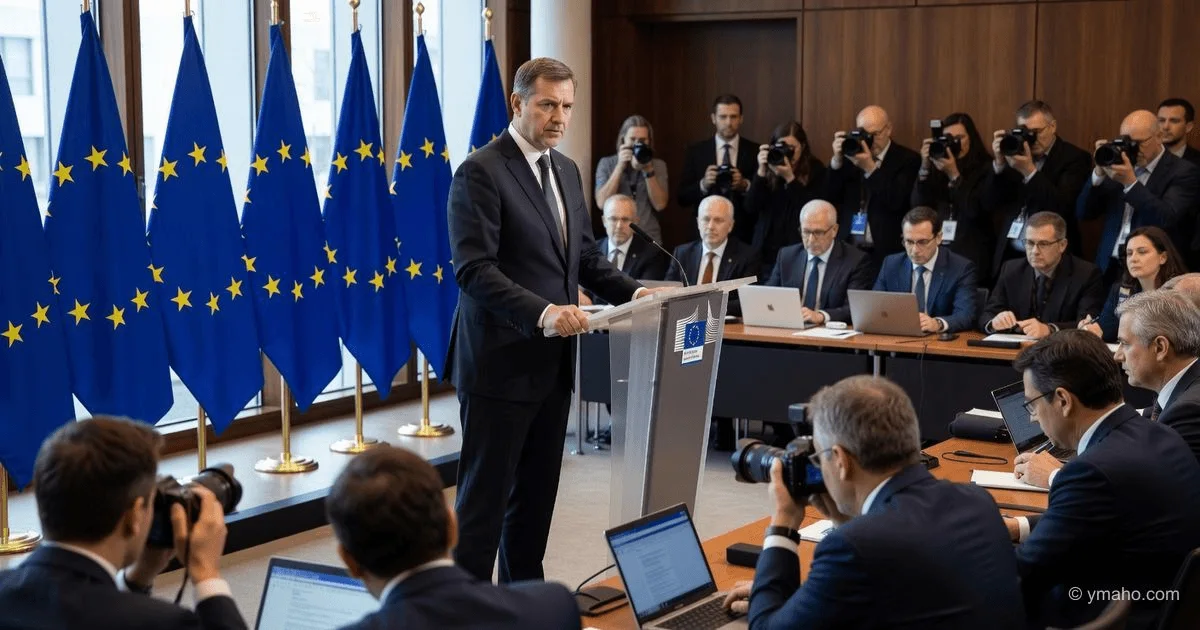
On June 2, 2026, just one day before the official announcement, Bloomberg reported that the Commission was "considering plans" to provide fiscal flexibility. Then on June 3, Dombrovskis at a press conference presented the European Semester — the Spring Package 2026, where he announced the extension of the escape clause. The speed of the decision — less than 48 hours from leak to official announcement — indicates that negotiations were conducted in an accelerated mode under the threat of an Italian veto.
The context of these negotiations is Italy's growing debt, at about 140% of GDP, and the excessive deficit procedure that threatens the country with sanctions. According to Bruegel, by early June 2026, European governments had already allocated over €11 billion in fiscal measures to mitigate the energy crisis, with Spain and Germany together accounting for more than half of that amount. Italy in absolute terms was behind, but relative to GDP, active measures were taken by Greece, Spain, Bulgaria, and Ireland.
It is also important to note a parallel decision: the Commission adapted the State Aid Framework for the Clean Industrial Deal (CISAF), allowing compensation for energy-intensive industries of up to 70% of electricity costs (up from the previous 50%). This is direct subsidization of large businesses that does not require activation of the escape clause and is available to all countries. While the media discussed "budget flexibility" for everyone, the Commission quietly expanded opportunities for industrial aid.
Who Wins and Who Loses
Winners:
- The Italian government — the main beneficiary. Rome can now spend up to 0.3% of GDP per year (about €6-7 billion) on the energy transition without fear of sanctions for exceeding the 3% deficit. This will allow Meloni to fulfill campaign promises and save face with Brussels. Tajani has already called it a "significant victory."
- Manufacturers of energy transition equipment — European companies in sectors like heat pumps (Nibe, Viessmann), electric vehicles (Volkswagen, Stellantis — their European divisions), and energy storage systems (Tesla Energy, Northvolt). An additional €11-12 billion in total investment over three years (0.3% of GDP for large countries) is direct demand for their products.
- France — to a lesser extent, but also a winner. Paris has fiscal space and can use the flexibility to accelerate nuclear energy (the nuclear energy index, however, has fallen 7.4% since the start of the conflict, but volatility remains high). However, France already has a high deficit (5.5% of GDP), and additional spending could worsen its credit rating.
- Holders of Italian green bonds — these securities have received additional support. Demand for the green segment of Italian debt will increase, which may temporarily narrow the BTP-Bund spread for green issues compared to conventional ones.
Losers:
- Households hoping for lower fuel prices — the Commission explicitly banned using flexibility to subsidize fossil fuels. This means excise duties on gasoline and diesel will not be reduced. The IMF warned that "price-suppressing measures benefit the rich 3-4 times more than the poor," but they are politically popular. Their absence will hurt government ratings.
- The German high-yield corporate bond market — yields on German Corporate HY have risen 0.85 percentage points since the start of the conflict, and the G-spread widened by 12 basis points. Additional flexibility for the energy transition does not solve the problem of current high energy prices, and energy-intensive high-yield bond issuers will continue to suffer. I expect further spread widening.
- Northern fiscal hawk countries — the Netherlands, Austria, Finland, and Sweden publicly supported the decision, but behind closed doors expressed dissatisfaction. They fear this decision sets a precedent and that the "escape clause" will become a permanent tool, eroding the Stability Pact. Their governments are now under pressure from domestic parliaments demanding similar concessions.
- The European fossil fuel sector — refineries and gas station operators. Without excise cuts, fuel demand will fall faster, accelerating the structural decline in consumption. This is good for the climate but bad for shareholders of Shell, BP, and TotalEnergies in their European segment.
An unexpected winner — Ukraine. Why? Because extending the "escape clause" to energy is a legal "gateway" through which the restoration of Ukraine's energy system can be financed. If the EU can spend 0.3% of GDP on the energy transition in each country, then it can be argued that helping Ukraine restore its energy infrastructure is also an "investment in the structural resilience of Europe's energy system." I would not be surprised if a proposal to use this mechanism for "Ukraine bonds" appears as early as July-August.
What the Media Are Not Saying
The first and main omission — this maneuver does not solve the problem of current energy prices. The TTF gas price rose 52.5% from February 27 to June 4, 2026, reaching €48.75 per MWh. Coal in Rotterdam rose 26.3% to $134.20 per ton. The solar energy index soared 32.8%. And what does the Commission propose? Spend money on heat pumps and batteries that will pay off in 5-7 years. It's like giving a person dying of thirst a shovel to dig a well instead of a glass of water.
The second omission — the real reaction of the debt market. Cbonds indices show that yields on Italian sovereign bonds have risen 0.49 percentage points since the start of the conflict, and French bonds by 0.46 percentage points. These are huge numbers for a few months. And the announcement of budget flexibility on June 3 did not stop this rise — yields continued to increase because the market perceived the news as a signal that Italy would spend more, not that the energy crisis was over. The BTP-Bund spread will continue to widen, and I forecast 210-220 basis points by September.
The third and most cynical insider insight: the Commission deliberately chose the wording "investments in the energy transition" to avoid violating its own climate promises. If they had simply allowed subsidizing gas bills, it would have been a political failure for the Green Deal. Instead, they created an illusion of action, shifting the responsibility for price increases onto consumers and allowing spending only on "correct" goals. This is a classic bureaucratic escape from reality.
Forecast: Next 30 Days and 90 Days
30 days (until mid-July 2026):
Italy and, likely, Spain and Greece will activate the new clause within 2-3 weeks. I expect the first official announcement to be Italy's declaration of €5-6 billion in additional spending on home insulation and electric vehicle subsidies. The bond market reaction will be negative: the yield on 10-year BTPs will rise to 4.2-4.3% (from the current ~4.0%). The spread to Bunds will widen to 190-195 basis points.
Vanguard has already lowered its eurozone growth forecast for 2026 to 0.8% given the energy shock. I believe that by mid-July, this forecast will be revised down another 0.2-0.3 percentage points when real industrial production data for May-June become visible. Note the consensus forecast for inflation in Q4 2026 — it has been raised from 1.90% to 3.40%. This means the ECB will likely be forced to raise rates at the June meeting (June 11) to 2.25%, and then possibly to 2.50% by September.
90 days (until mid-September 2026):
By September, it will become obvious that "budget flexibility" does not work as a crisis management tool. Energy-intensive industries will continue to close or cut production, despite compensation of up to 70% of electricity costs. ING in its April forecast warned that eurozone inflation could "significantly undershoot" in 2026 due to external factors, but after the gas price jump to €48.75, this scenario looks unlikely.
I expect that in August-September, at least one country (likely Italy or France) will publicly state that the proposed flexibility is insufficient and demand an extension of the clause to current subsidies, not just investments. This will trigger a new round of negotiations in Brussels and likely lead to a compromise: short-term excise cuts on fuel will be allowed, but under strict control and with a commitment to redirect the saved funds to the energy transition within 12 months.
By the end of September 2026, the total volume of announced fiscal measures in response to the energy crisis will exceed €30-35 billion across Europe. The debt of Italy, France, and Spain will rise by another 1-1.5% of GDP. Rating agencies will begin to revise outlooks for Southern European countries — the first downgrade could come as early as October.
My advice to investors: do not buy long-dated Italian bonds (10+ years). High volatility and political risks make them toxic. If you want to stay in the eurozone, buy German Bunds with a 2-3 year duration. A yield of about 2.5% is not fantastic, but it is safe. Or convert euros to dollars — the divergence in monetary policy between the Fed and the ECB will only widen, and EUR/USD will fall to 1.08-1.09 by the end of September.
Editorial Forecast
Asset: Spread of Italian BTPs to German Bunds (10 years). Direction: WIDENING in the next 48-72 hours by 5-10 basis points. Key levels: current spread ~185 bps, target level 192-195 bps. Confidence level: MEDIUM (60%). The news of budget flexibility is already partly priced in, but the market has not yet fully realized that this means an increase in Italy's debt burden without an immediate solution to the energy problem. Main risk: if the ECB on June 11 gives an unexpectedly dovish signal (hinting at a pause in rate hikes), spreads may temporarily narrow to 175-178 bps. We recommend short positions on BTP/Long Bund when the spread is below 180 bps.
— Editorial Team