European Commission to Propose Relaxation of EU Budget Rules to Tackle Energy Crisis
EU member states will be allowed to spend up to 0.3% of GDP above fiscal limits on energy-saving measures and the phase-out of fossil fuels. The decision was made to mitigate the consequences of the war with Iran, which caused a sharp spike in energy prices.
Author's analysis: The EU energy clause — a loophole for Italy and a bearish signal for the debt market
Author: Former European Commission official for economic and financial affairs, participant in the development of the Stability and Growth Pact 2.0
[The Gist]: What Is Really Happening
What is officially called "budgetary flexibility to combat the energy crisis" is in fact a political capitulation by Brussels under pressure from Italy. On June 3, 2026, the European Commission announced that member states could spend up to 0.3% of GDP per year on energy-saving measures and the phase-out of fossil fuels without violating the 3% GDP deficit limit. This decision is a direct consequence of a letter from Giorgia Meloni to Ursula von der Leyen several weeks earlier, demanding that Italy be granted the same flexibility as was given for defense (up to 1.5% of GDP).
But let's break down what lies behind the dry figure of 0.3%. First, this is not new money. It is merely permission not to count certain expenditures when calculating the deficit. Countries still have to find these funds in their budgets — either through tax increases, cuts in other spending, or by increasing debt. Italy, which already has a 140% debt-to-GDP ratio, will choose the third option.
Second, there is a strict limitation: these funds can be spent only on "green" goals — batteries, heat pumps, electric vehicles. Economy Commissioner Valdis Dombrovskis stated outright: "No country will be allowed to subsidize the use of fossil fuels." This means Italy will not be able to use these €6-7 billion per year (0.3% of its GDP) to reduce excise duties on gasoline — its favorite measure.
An insider perspective that is being kept quiet: this entire construct is a legal fiction designed to save face for Meloni in front of her voters. Italy is under an excessive deficit procedure and formally must cut spending, not increase it. Now Meloni can claim that "Brussels has given us the opportunity to spend more." In reality, the Commission has simply allowed Italy to relabel expenditures it already planned under "energy security." This is not a stimulus — it's cosmetic.
Timeline and Context
To understand why this decision is an escalation, not a de-escalation of the budget conflict, we need to trace the chronology of the last two months.
April 2026 — Informal EU summit. Spanish Prime Minister Pedro Sánchez first raises the issue of budgetary flexibility for energy, but meets resistance from Germany and the Netherlands.
Late May 2026 — Meloni publicly intensifies pressure. "We cannot tell citizens that there is money only for defense," she declares, demanding that the exception be extended to energy. In her letter to von der Leyen, she insists on including energy crisis measures in the escape clause.
June 1, 2026 — Bloomberg reports that the European Commission is considering plans to grant flexibility, citing sources close to the discussions.
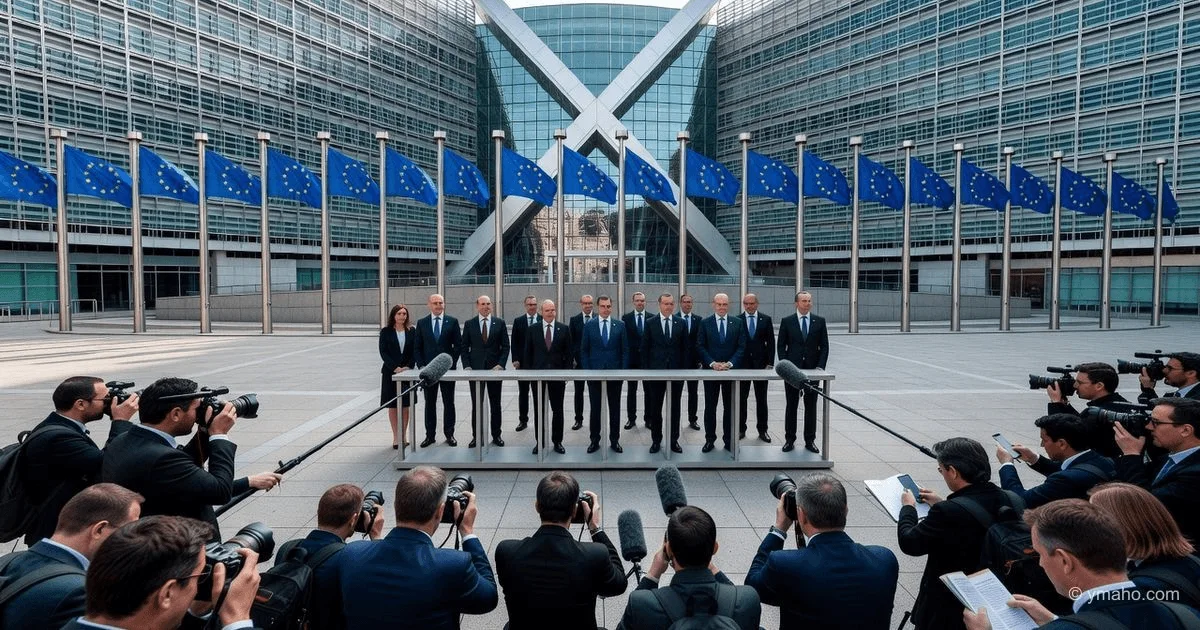
June 3, 2026 — Dombrovskis officially announces the decision at a press conference in Brussels. Italian Foreign Minister Tajani immediately calls it a "significant victory for Italy" in a post on X.
June 4-5, 2026 — Reaction from northern countries. Estonian Finance Minister Jürgen Ligi states his intention to challenge the decision at the EU finance ministers' meeting in Luxembourg (next Friday).
Important context: The EU already activated the "escape clause" during the pandemic and after the invasion of Ukraine. But those were existential crises. Now, it is a regional war in the Middle East that affects prices but does not threaten the territorial integrity of the EU. Many in Brussels believe opening this door again is dangerous. But political pressure from Italy (which threatens vetoes on other issues) proved stronger.
It is also important to note that Germany, which formally supports fiscal discipline, is itself violating the 3% limit — its deficit in 2026 will be 3.7% of GDP, and in 2027, 4.1%. But Berlin uses the defense clause (armament spending after the invasion of Ukraine), so it formally does not fall under sanctions. Italy tried to do the same but has no significant increase in defense spending.
Who Wins and Who Loses
Winners:
- Italian Government (Giorgia Meloni) — the main political beneficiary. Meloni gets to announce new spending on the energy transition without formally violating budget rules. Her Foreign Minister Tajani has already called it "a success for the Italian government and a result of our credibility in Europe." For the domestic audience, it looks like a victory over "Brussels bureaucrats."
- Italian manufacturers of renewable energy equipment — companies producing heat pumps, batteries, electric vehicle components. An additional €6-7 billion in annual state subsidies is direct demand. Shares of Enel (Italy's largest energy group) and smaller players like ERG will get a boost.
- Spain and other southern countries — they can also use the clause. Prime Minister Sánchez was one of the initiators of this measure back in April. Spain, Greece, and Portugal will have the right to spend 0.3% of GDP on the same goals.
- Green investors and ESG funds — additional stimulus for the energy transition in Europe creates long-term demand for green bonds and shares of clean energy companies. ESG-oriented funds can expect capital inflows.
Losers:
- Northern "hawk" countries on fiscal discipline — the Netherlands, Austria, Finland, Estonia. They believe that diluting budget rules undermines confidence in the euro and sets a dangerous precedent. Estonia even plans to challenge the decision at the EU finance ministers' meeting. But they lack enough votes to block the measure.
- Holders of Italian government bonds (BTP) — at first glance, good news. In practice, it is a signal that Italy will continue to increase debt, not reduce it. The yield on 10-year BTPs has already started to rise, and the spread to German Bunds is widening. I expect the spread to reach 210-220 bps by the end of summer.
- European taxpayers — the relaxation does not mean money comes from nowhere. It either increases debt (which future generations will have to service) or leads to cuts in other spending. In Italy, which already has problems with its pension system and healthcare, this choice is particularly painful.
- Fossil fuel producers in Europe — Dombrovskis explicitly banned subsidizing fossil fuel consumption. This means refineries and gas station operators will not receive budget support. Their margins will be squeezed.
- Energy-intensive industries not related to green energy — steel, chemical, cement industries. They cannot get subsidies under this clause but suffer from high energy prices. This creates unequal competition — green companies get help, traditional ones do not.
An unexpected loser — Bulgaria. The country just joined the eurozone and immediately received a reprimand from the European Commission for violating budget rules (deficit of 4.1% of GDP in 2026). Now Bulgaria will be forced to implement strict budget consolidation at a time when other countries are getting flexibility. This creates a risk of a "two-speed Europe" in fiscal policy.
What the Media Is Not Saying
First and most important omission: this maneuver does not solve the problem of current high energy prices. All it does is redistribute spending toward long-term investments in the energy transition. Italian households, which pay 40-50% more for heating and electricity, will not see a cent of this €6-7 billion. They will only see long-term projects that will start saving money in 5-10 years. This is a classic political trick: announce "help" today, but spend the real money on something that brings no immediate relief.
Second omission — the real reaction of the debt market. Investors are not stupid. They understand that 0.3% of GDP is not "free money" but additional debt. The yield on Italian 10-year bonds (BTP) has risen by 0.49 percentage points since the start of the conflict, and French OATs by 0.46 percentage points. After the announcement of new flexibility, yields did not fall but continued to rise. The market interprets this as a signal: "Italy will spend more, not solve its structural problems." I expect the BTP-Bund spread to reach 220 bps by the end of the third quarter.
Third and most cynical insider insight: the decision was made without a full analysis of the consequences for the energy market. Estonian Finance Minister Ligi pointed out a fundamental logical error: "The problem is limited fuel supply. Stimulating demand for the same good is economically wrong. It only exacerbates market imbalance." Indeed, Europe suffers from an energy shortage caused by the war. Subsidizing electricity demand (through EV charging stations, heat pumps) will only increase the load on the grid and push prices even higher.
Fourth omission: Commissioner Dombrovskis stated that countries that did not use their fiscal "cushion" for defense can use it for energy. But this means countries that honestly spent 2% of GDP on defense (like Estonia and Poland) will not get additional space. Countries that spent less (Italy — about 1.4%, Spain — 1.2%) will get a double benefit. This is a reward for fiscal irresponsibility and a punishment for conscientiousness. Ligi called it a "fundamental political choice" that he intends to challenge.
Forecast: Next 30 Days and 90 Days
30 days (until mid-July 2026):
The EU finance ministers' meeting in Luxembourg (next Friday) will be the first test for the new clause. I expect Estonia, and likely the Netherlands and Austria, to express formal disagreement but will not be able to block the decision — qualified consensus is required. Italy, Spain, Greece, and Portugal will support the measure.
By mid-July, at least three countries (Italy, Spain, Greece) will officially activate the clause and present spending plans for 2026-2028. Italy will likely direct funds to subsidize EV purchases and heat pump installations. This will give a short-term boost to shares of Italian companies in these sectors.
The debt market will continue to pressure peripheral bonds. I expect the BTP-Bund spread to widen to 195-200 bps by the end of July. The yield on 10-year BTPs could reach 4.5%.
90 days (until mid-September 2026):
By September, the EU will publish initial assessments of how countries are using the new flexibility. I expect total declared spending across all countries to reach €25-30 billion. However, a significant portion of this money will be spent not on new projects but on relabeling existing programs (creative accounting). This will become obvious when the details of the plans are analyzed.
Moreover, I expect at least one country (likely Italy) to try to broaden the interpretation of "energy-saving measures" to include fuel tax cuts or utility subsidies. The Commission will be forced to refuse, triggering a new political conflict. Meloni may threaten a veto on the EU budget for 2027. This will be a serious test for Brussels-Rome relations.
On the global market, this clause is another brick in the wall of growing debt in developed economies. Combined with defense spending (which has increased in all EU countries after the invasion of Ukraine) and energy transition spending, Europe is piling on debt at a pace not seen since the pandemic. This is a bearish signal for the euro in the long term — the more debt, the weaker the currency.
My advice: Do not buy long-dated Italian bonds. They will be under pressure. If you want to stay in the eurozone, German Bunds with a 2-3 year duration are still the best choice. Or, if you are more aggressive, short Italian BTPs against German Bunds (the spread will widen). And remember: while politicians argue about 0.3% of GDP, the real economy continues to suffer from high energy prices. This will not solve the problem.
Editorial Forecast
Asset: Spread of 10-year Italian BTPs to German Bunds. Direction: WIDENING in the next 48-72 hours by 5-10 bps after the news of budgetary flexibility ("buy the rumor, sell the fact" effect — the market has already priced in the positive, now it realizes the debt increase). Key levels: current spread ~185 bps, target level 195-200 bps. Confidence level: MEDIUM (60%). Depends on details of the EU finance ministers' meeting and Germany's position. Main risk: if Germany unexpectedly supports expanding flexibility (unlikely), the spread could temporarily narrow to 170 bps. We recommend short BTP/long Bund positions at entry below 180 bps.
— Editorial Team