ECB Expected to Raise Rate Amid Inflation Surge and Middle East War
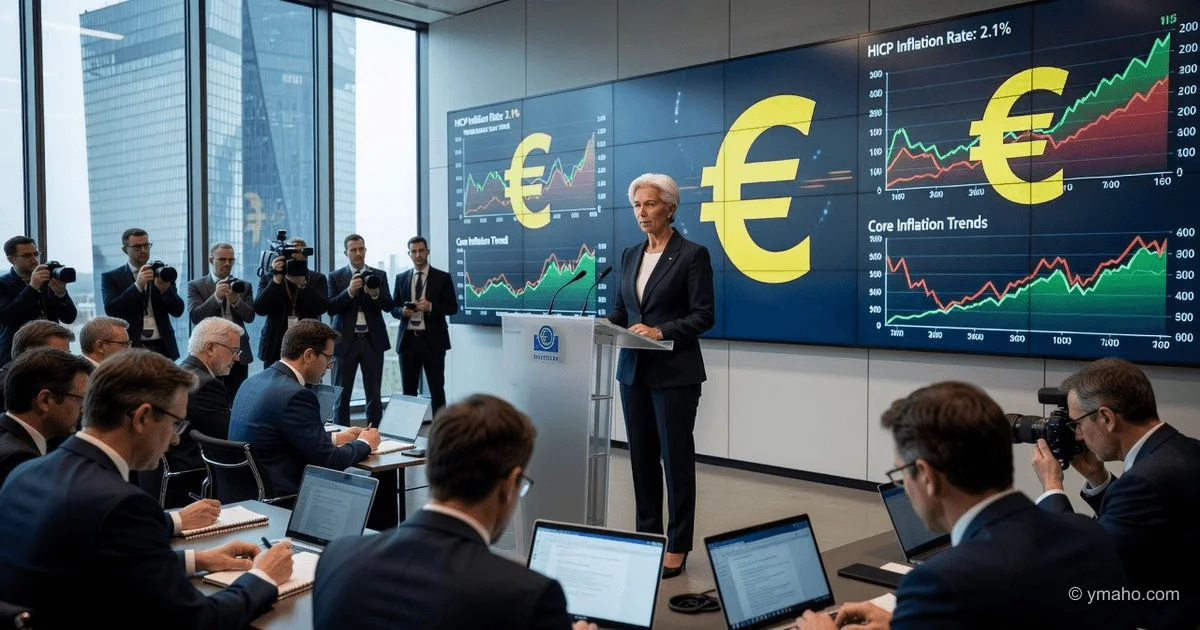
Consumer prices in the eurozone rose to 3.2%, and core inflation accelerated more than expected, leaving the ECB with little choice next week. The conflict with Iran continues to put upward pressure on energy prices in the region.
Author's analysis: The ECB rate hike on June 11 is not about fighting inflation, but about the fear of losing face
Author: Macroeconomist, former ECB advisor on monetary policy (2019-2024)
[The Gist]: What's Really Happening
The fact that the ECB will raise the deposit rate by 25 basis points to 2.25% on June 11 is no longer news. It's a "done deal," as traders call it. 74 out of 80 economists polled by Reuters expect this hike. But the real drama, which no one writes about in headlines, lies in why they are doing it.
The official version: fighting inflation, which reached 3.2% in May, with core inflation (excluding energy and food) accelerating to 2.5% — above forecasts. But the truth is much more cynical. The ECB is raising rates not because the economy is overheating (it's contracting; eurozone GDP fell 0.1% in Q1, and the 2026 forecast has been cut to 0.7-1.0%), but because they fear repeating the mistake of 2021-2022, when they denied inflation for too long and ended up "behind the curve."
An insider perspective I'll share with you: inside the ECB, the debate is not about whether to hike or not. The debate is about how to sell this hike to the market. The baseline scenario, according to DBS and ING, is a "hawkish hike" with a hint of a possible hike in September. But there are also those who think this is a "one-and-done" move, because the economy cannot withstand a second blow.
The paradox is that the ECB has painted itself into a corner. ECB Chief Economist Philip Lane, back in January 2026, two months before the war with Iran, said that a 2% rate is a "neutral level" and that the ECB expected a "remarkably stable situation." Now the war has shattered all forecasts. Energy prices have soared, and the ECB is forced to act, even if this action contradicts all its previous statements.
Timeline and Context
Let's start with how we got to this point. In June 2024, the ECB deposit rate peaked at 4.0%. Then a cutting cycle began, and by June 2025, the rate had fallen to 2.0%. The ECB celebrated victory over inflation. Lane, in an interview with La Stampa in January 2026, spoke of a "transition to sustainable inflation at 2%."
Then — on February 28, 2026 — the US and Israel war against Iran began. By May 2026, energy prices had soared. Eurozone inflation, which was still around 2.2% in March, jumped to 3.2% in May. And the ECB panicked. A Reuters poll conducted from May 29 to June 3 showed: 92.5% of economists expected a 25 bps hike on June 11.
The key fork in the road is not the June 11 meeting, but what comes after. The poll showed that 49 out of 80 economists (61.25%) expect another hike in September. This consensus formed only in the last two weeks. As recently as April, the majority saw no hike at all in 2026.
It's also important to understand the context of other central banks' decisions. On June 5, strong US labor market data came out (172,000 new jobs), fueling expectations of a Fed rate hike. This strengthened the dollar, and the euro fell below 1.16. The ECB now must act also to support the euro — a weak currency fuels imported inflation. The FIFA World Cup (starting June 11) also creates short-term demand, but that's a temporary effect.
Who Wins and Who Loses
Winners:
- Holders of short-term European bonds — after the hike, the yield on 2-year German Bunds will rise to 2.5-2.6%, making them an attractive alternative to deposits.
- Euro (short-term) — the rate hike, if accompanied by hawkish rhetoric, will strengthen the euro to 1.16-1.17. But this will be a short-lived effect because the market has already priced in the hike.
- European banks — the expansion of net interest margins will boost their profits in H2 2026. German banks (Deutsche Bank, Commerzbank) and French banks (BNP Paribas, Société Générale) with large floating-rate loan portfolios will benefit the most.
- Energy companies — high inflation means high energy prices. Shell, TotalEnergies, and BP reap windfall profits, regardless of what the ECB does.
Losers:
- Italian bonds (BTP) — the spread to German Bunds has already widened to 185 bps, and a second hike in September would push it to 210-220 bps. Foreign investors are fleeing Italian debt.
- European real estate and construction sector — higher rates increase mortgage and developer loan costs. In Germany, where the housing market is already cooling, this could trigger a 5-10% price drop in 2026-2027.
- Small and medium-sized businesses in Southern Europe — they are most dependent on bank lending, which is becoming more expensive. Italy, Spain, Greece, and Portugal will suffer more than Germany and the Netherlands.
- Importers — euro strengthening (short-term) makes imports cheaper, but temporarily. In the medium term, the euro will still weaken due to the rate divergence with the Fed.
An unexpected loser: European exporters to the US. Yes, a weak euro is good for exports, but if the Fed raises rates (which the market is already pricing in), US demand will fall. European automakers (Volkswagen, BMW, Mercedes-Benz) and machine tool manufacturers (Siemens, Bosch) may face a drop in orders from the US in H2 2026.
Another unexpected loser: Christine Lagarde. If the eurozone economy enters a recession in H2 2026 (and the probability, according to the Reuters poll, is rated as "high" by two-thirds of economists), her reputation as a "dove" who hesitated too long and then abruptly turned "hawkish" will be shattered. She may not get a second term in 2027.
What the Media Isn't Saying
First and most important omission: The ECB has no idea where inflation will be in 6 months. In March 2026, before the war, the ECB developed three scenarios: baseline (oil $90, gas EUR50), adverse, and "severe." We are now somewhere between baseline and adverse. But the ECB doesn't know if there will be a ceasefire. Yet they plan to hike on June 11 and probably again in September, completely ignoring that their forecasts are a shot in the dark.
Second omission: Mentioning that conditions differ from 2022 is key, but insufficient. In 2022, Europe was much more dependent on Russian gas. Now it's much less, because they switched to Norway and the US. But that doesn't make Europe invulnerable. Direct supplies from Qatar (less than 4% of total) are not that important, but the effect still passes through international prices. Moreover, the war with Iran has closed the Strait of Hormuz, creating a global supply shock from which Europe cannot isolate itself.
Third and most cynical insider insight: The role of "expectations management." ING explicitly states that the ECB's main goal at the June 11 meeting is to maintain "hawkish" market expectations. Because if markets believe the ECB is done hiking, long-term inflation expectations will become unanchored, forcing the ECB to take much more painful steps. This is a classic central bank problem: sometimes what markets think you will do is more important than what you actually do.
But the most dangerous thing is that the ECB may overestimate its ability to control expectations. If they hike in June and then are forced to pause in September due to recession, markets will see it as a sign of weakness. This will cause even more volatility. The ECB may be trapped by its own success: they have "trained the hawks" so well that they cannot back down without losing credibility.
Forecast: Next 30 Days and 90 Days
30 days (until mid-July 2026):
June 11 — ECB hikes 25 bps to 2.25% (99% probability). Lagarde's rhetoric will be hawkish but cautious. The key phrase everyone will watch: "ready to act again if data warrant" (meeting-by-meeting approach).
Immediately after the hike, the euro may strengthen briefly to 1.1650-1.1700. But this will be a news-driven move that quickly fades. The main trend — euro weakness — will remain, because the Fed will also be raising rates (or signaling hikes), and the eurozone economy is weaker than the US.
Watch US inflation data on June 12. If CPI comes in above 4.0% (consensus 3.9%, but risk of 4.2% after strong employment data), the dollar will strengthen sharply, and the euro will fall below 1.1500. This will be the main driver for EUR/USD in the next two weeks.
90 days (until mid-September 2026):
A second ECB hike in September is not a "baseline scenario" but a "likely" one. The Reuters poll shows 61% expecting a second hike. DBS and ING agree that further hikes in H2 are likely, but the ECB will act cautiously.
However, I bet the ECB will not hike in September. Why? Because by September it will become obvious that the eurozone economy is in recession. Industrial production is falling, services PMI is below 50 (47.6 in May), and consumer confidence has collapsed. Germany's GDP in Q2 will likely be negative (Bloomberg forecast 0.8% for full 2026, but already revised down). If Q2 is negative and Q3 is stagnant, the ECB cannot hike. That would be political suicide.
Thus, my forecast: one hike in June, a pause in September, and then possibly even a cut in Q1 2027 if the recession deepens. Markets are currently pricing in 64 bps of hikes by year-end — roughly two and a half 25 bps hikes. I think this forecast is too optimistic (from a hawkish perspective). Actual hikes will be no more than 25-50 bps in 2026.
My advice: Don't believe in a "hawkish" ECB long-term. It's temporary. Long euro positions are a trap. Buy the dollar and possibly the Swiss franc (the SNB will likely not hike, and the franc will rise as a safe haven). Short Italian BTPs against German Bunds is the best bet for the next 6 months.
Editorial Forecast
Asset: Italian 10-year BTP vs. German Bund (spread). Direction: WIDENING in the next 72 hours by 5-10 bps after the ECB meeting on June 11. Key levels: current spread ~185 bps, target 195-200 bps. Confidence level: MEDIUM (60%). Lagarde's rhetoric will be key — if she gives a clear signal of a second hike in September, spreads may temporarily narrow, then widen again. Main risk: an unexpected "pause" statement after the June hike — this would cause a sharp narrowing to 170-175 bps. We recommend entering short BTP positions only after the press conference, when the rhetoric becomes clear.
— Editorial Team