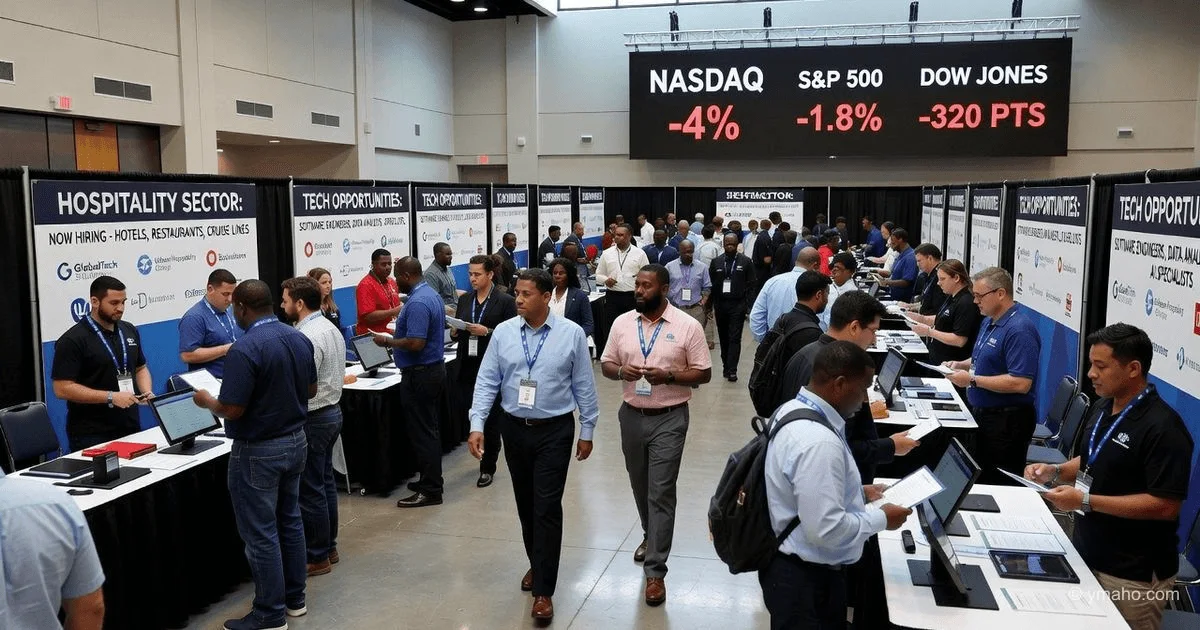
Massive US Hiring Defies Expectations of Labor Market Slowdown
172,000 jobs added in May beat all forecasts, with March and April data revised upward. Broad-based employment growth across industries boosts confidence in improving labor market conditions, partly fueled by the upcoming FIFA World Cup.
Author's Analysis: May US Hiring — The World Cup as a Trigger for Market Collapse
Author: Macro Strategist, Market Microstructure Specialist (former interest rate derivatives trader in New York)
[The Core]: What's Really Happening
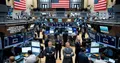
The figure of 172,000 new jobs in May is not just "beating expectations." It's an absolute knockout for a market that had priced in only 80,000–105,000. But the paradox that no one in mainstream media highlights sharply enough: this "strong" report triggered a brutal sell-off in the US stock market. The Nasdaq plunged 4.18% — its worst day since April 2025, the S&P 500 lost 2.64%, and the Dow dropped 695 points (1.35%).
What explains this dissonance? The stock market, especially the tech sector, lives in a "bad news is good, good news is bad" paradigm. Strong employment data means the Fed will keep raising rates, which is a death blow for high-multiple companies, particularly in semiconductors and AI. The semiconductor ETF index crashed 10% — its worst session since March 2020. Marvell Technology lost over 16%, Intel and AMD about 11%, and Micron 13%.
An insider perspective that goes unspoken: the true driver of this "explosive" hiring is not the strength of the US economy, but the 2026 FIFA World Cup, kicking off on June 11. The leisure and hospitality sector added 70,000 jobs — five times the average monthly pace over the past 12 months (14,000). Of those, 48,000 came from food services and drinking places — bars, restaurants, pubs hiring staff in anticipation of an influx of fans.
Thus, the "strong labor market" is a one-time, predictable, and temporary effect of a sporting event, not organic economic growth. But the Fed won't discount the World Cup. They'll see 172,000 and raise rates. And that's a tragedy for markets.
Timeline and Context
The key inflection point occurred on June 5, 2026, when the Bureau of Labor Statistics released May data. Market reaction was immediate and brutal. The 10-year US Treasury yield surged above 4.5%, and the 30-year above 5%, returning to key levels that undermine companies' ability to service debt.
A tectonic shift occurred in derivatives markets. The probability of a Fed rate hike by end of 2026 jumped from 25.3% to 52% on the Kalshi platform. CME FedWatch showed a 68.4% probability of a hike in December. Former Fed Vice Chairman Roger Ferguson directly told CNBC: "I think a hike could indeed happen this year, and not without reason. Inflation is quite sticky."
But more importantly, March and April data were revised upward. A total of 93,000 additional jobs were added to previously reported figures. This means the labor market was stronger not only in May but also in the preceding two months. This strips the Fed of its last argument for a pause ("data could be revised downward").
The context of this report is the war with Iran, which is stoking inflation through energy prices. US inflation stands at 3.8%, while hourly wage growth is 3.4% year-over-year. That means real household incomes have been falling for four months straight, and consumer confidence is near historic lows. ING Chief Economist James Knightly called it "a growing squeeze on household purchasing power."
Who Wins and Who Loses
Winners:
- Holders of short positions in tech stocks, especially semiconductors. Those who shorted NVDA, AMD, Intel, and Marvell before the report earned double-digit percentage returns in a single day. It was a perfect trade setup: strong hiring = rate hikes = growth stocks fall.
- The US dollar against all major currencies. The dollar index (DXY) surged to two-month highs, breaking above 104.00. The euro fell below 1.0800 — its lowest since early March. The dollar gets dual support: from strong US data and from safe-haven status amid the war with Iran.
- Oil market (short-term). Strong US data signals sustained demand for energy, supporting Brent prices at $95-100. However, this is a double-edged sword — if the Fed aggressively hikes rates, the dollar strengthens further, and oil could fall in dollar terms.
- Banking sector (partially). Rising bond yields mean expanding net interest margins for banks. But for regional banks holding long bond portfolios, it's a negative capital revaluation — so it's mixed.
Losers:
- Tech companies and the AI sector — the biggest losers. 10-year yields above 4.5% are poison for high-multiple companies. The semiconductor ETF lost 10% in a single session. Investors flee risk assets into cash and short-term Treasuries.
- Borrowers with floating rates (mortgages, credit cards, corporate loans). A Fed rate hike (even in December) is already being priced into market expectations, pushing long-term rates higher. The average 30-year mortgage rate has already exceeded 7.2% — killing the housing market.
- Real estate investment trusts (REITs). They are rate-sensitive, and rising bond yields make their dividend yields less attractive compared to risk-free Treasuries.
- Financial services sector (22,000 job losses in a month). The BLS report recorded a contraction in financial services: -22,000 jobs in May, totaling -107,000 since the peak in May 2025. This is a structural shift driven by automation and high rates reducing loan demand.
- Low-income consumers. Real wages are falling (3.4% wage growth vs. 3.8% inflation). Long-term unemployment (27 weeks or more) rose to 27.5% of all unemployed — up 7 percentage points year-over-year. This is a "silent epidemic" no one talks about.
A less obvious loser — the crypto market. A rising dollar and bond yields are the worst scenario for Bitcoin, which positions itself as "digital gold" but behaves like a risky tech asset. I expect BTC to fall to $45,000-48,000 in the next 30 days if the Fed maintains hawkish rhetoric.
What the Media Isn't Saying
First and foremost omission: The World Cup starting June 11 not only created 70,000 jobs in May but will destroy productivity worth hundreds of billions of dollars in June-July. According to FinanceBuzz, US employers will lose $4.5 billion due to employees watching matches during work hours. Globally, the figure could reach hundreds of billions. One in three workers worldwide plans to take at least one day off to watch matches, and a quarter will follow games at work.
What does this mean for June employment data? It will be terrible. Productivity will drop, hours worked will decline, and some companies may temporarily cut staff after the tournament ends. But the Fed, meeting on June 17-18, will look at May's artificially inflated numbers and won't know about the impending July slump. This is a classic "data lag" — the Fed is always behind.
Second omission: The internal structure of hiring shows not "broad-based growth" but concentration in three sectors. Yes, the employment diffusion index rose, but 70,000 of 172,000 (40%!) is just leisure and hospitality. Local government added 55,000 (32%). Healthcare — 35,000 (20%). These three sectors accounted for 92% of total job growth. Manufacturing, construction, wholesale and retail trade, information, professional services — all showed "little change" or contraction. This is not diversified growth. It's skewed.
Third, most cynical insight: The hiring data for leisure and hospitality (70,000) was collected in May — before the World Cup started. What happens in June, when the tournament is underway? Hotels already report slow bookings, fans complain about ticket prices (President Trump said he "wouldn't pay" $1,000 for a ticket to the US-Paraguay match). New York and New Jersey Attorneys General are investigating FIFA for "artificially inflating prices and misleading fans." The economic boom restaurateurs and hoteliers hoped for may not materialize. Then the 70,000 new jobs created in May could turn into 70,000 layoffs in August-September.
Forecast: Next 30 Days and 90 Days
30 days (through mid-July 2026):
Key date — June 17-18, Fed meeting. I expect the Fed to hold rates in June (consensus 98-100%) but deliver a very "hawkish" signal about a December hike. The 10-year yield will rise to 4.75-4.90%. The S&P 500 will fall another 3-5% from current levels.
But the biggest risk is the CPI inflation data due June 12. Consensus is 3.9% annual. If CPI comes in above 4.0%, markets will price in 80%+ probability of a hike as early as September, not December. This would trigger a second wave of selling.
Watch consumer data. Since real incomes have fallen for four months straight and consumer confidence is at record lows, May retail sales (due June 15) could show an unexpected decline — the first in three months. This creates a dilemma for the Fed: strong labor market vs. weak consumption. I bet they ignore consumption and focus on employment.
90 days (through mid-September 2026):
By September, the World Cup effect will have completely faded. July-August employment data will show a sharp slowdown — to 50,000-80,000 new jobs per month. The leisure and hospitality sector may even show negative hiring (seasonal layoffs). Unemployment will jump to 4.5-4.6%.
But inflation will remain high — above 3.5% — due to the war with Iran and high energy prices. This is a stagflationary scenario, the worst for markets: no growth, no disinflation. The Fed will be trapped. Raising rates amid rising unemployment is political suicide. Not raising means inflation stays above target.
I expect that by September, markets will begin pricing in two opposing scenarios simultaneously: a hike in December (60% probability) and a cut in the first half of 2027 (40%). This will create massive volatility in bonds, and I recommend staying in short-term paper (3-6 months), avoiding long durations. The yield on 3-month Treasuries will be around 5.5% — the best risk-adjusted return in the market.
Editorial Forecast
Asset: Semiconductor Index (SOXX / iShares Semiconductor ETF). Direction: FURTHER DECLINE in the next 48-72 hours, a correction of another 3-5% after the 10% crash on June 5. Key Levels: after falling to $450 from $500, next support at $430, resistance at $470. Confidence Level: HIGH (70%). The market is fully repricing Fed rates, and the AI/semiconductor sector is the most vulnerable to rising yields. Main Risk: if CPI data on June 12 comes in below 3.7% (unlikely), a sharp 5-7% bounce could occur. Stop-loss for short positions — $475 on the index.
— Editorial Team