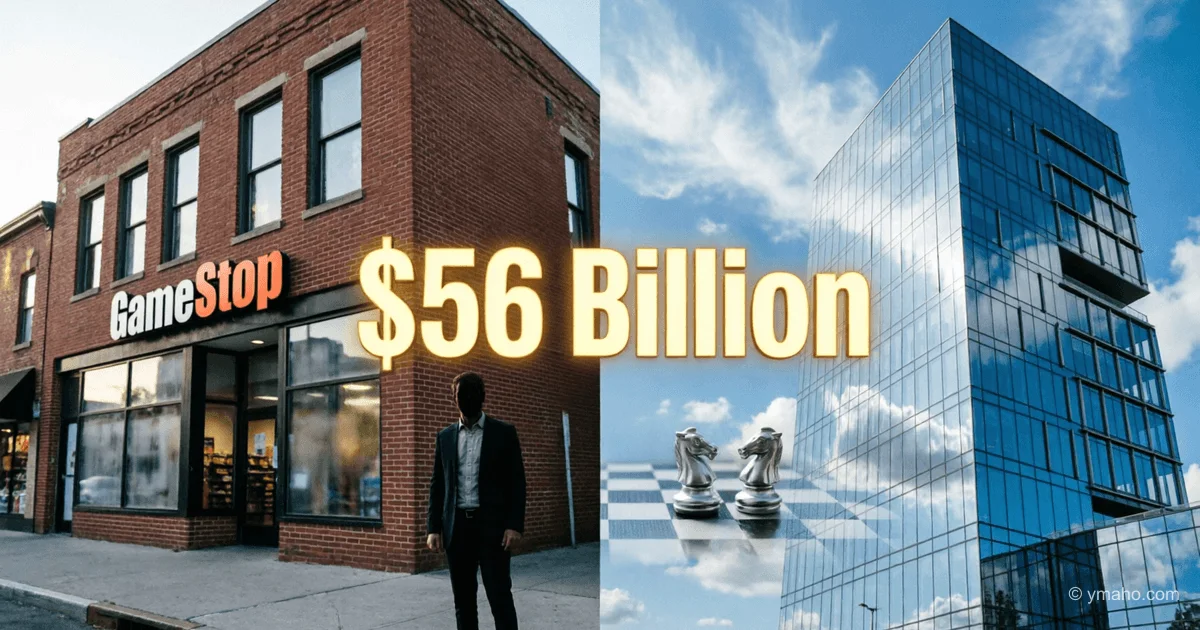
GameStop Offers to Buy eBay for $56 Billion
GameStop CEO Ryan Cohen made an unsolicited offer to acquire eBay for approximately $56 billion in cash and stock, with GameStop already holding a stake of about 5% and securing $20 billion in debt financing from TD Bank.
GameStop vs. eBay: How a $12 Billion Meme Stock Decided to Acquire an E-commerce Giant
Introduction
Over the past weekend, the U.S. M&A market was shaken by news worthy of a Hollywood script. GameStop — a video game retail chain with a market capitalization of just about $12 billion — announced its intention to acquire one of the pioneers of e-commerce, eBay, which the market values at nearly four times that amount — $46 billion. The deal value proposed by GameStop's charismatic CEO Ryan Cohen is $56 billion (or approximately €47.8 billion at current exchange rates). This move instantly stirred Wall Street, leaving investors wondering: is this the start of a great transformation or just a noisy PR stunt in the style of "meme" stocks?
Event Details and Timeline
The formal offer, characterized by the market as "unsolicited," was made on May 3, 2026. GameStop is willing to pay $125 per share of eBay, with the payment structure splitting this amount 50% in cash and 50% in GameStop stock. The proposed premium is about 20% above eBay's closing price on Friday, May 1.
Despite the apparent suddenness, Cohen has been preparing for the attack since the start of the year. GameStop quietly accumulated eBay shares starting February 4, without attracting attention, resulting in a stake of approximately 5% in the target asset. The financial structure of the deal is extremely aggressive: GameStop's own cash reserves amount to about $9 billion, which is clearly insufficient. The missing bridge across the chasm is to be built with $20 billion in debt financing, guaranteed by Canada's TD Bank. The remaining portion is expected to be covered through a stock issuance, which will inevitably dilute the stakes of current GameStop shareholders. As an additional capital source, the involvement of Middle Eastern sovereign wealth funds is not ruled out.
Cohen is playing hardball: if eBay's board of directors rejects the offer, he intends to launch a proxy fight and appeal directly to the company's shareholders.
Motives and Synergy: Betting on the "Passion Economy"
At first glance, an alliance between a seller of game consoles and a global marketplace may seem odd, but it is based on cold business logic targeting the rapidly growing market for collectible items (trading cards, sneakers, retro games, and luxury goods). GameStop is already transforming its retail locations from disc-selling outlets into hubs for trading and authenticating collectibles.
Ryan Cohen plans to turn GameStop's 1,600 physical stores into drop-off and verification points for eBay sellers. In his vision, this would solve the main problem of online reselling — trust and authenticity — and enable eBay to become a "legitimate competitor to Amazon." The key financial synergy metric: Cohen promised to reduce the combined company's annual operating expenses by $2 billion within 12 months of closing the deal. This is a direct play on scale: eBay generates a massive gross merchandise volume (GMV) of $22.2 billion in just the first quarter of 2026, with 135 million active buyers. GameStop gains access to this huge audience, while the platform gains physical presence and rigorous quality control.
Reactions from Key Players and the Market
The financial world received the initiative with a mix of irony, admiration for its audacity, and deep skepticism. eBay's shares surged about 10% in pre-market trading, reaching around $118, which remains below the $125 offered by Cohen. This suggests the market does not believe the deal will close at the stated price. GameStop's own shares fell about 3% on the news, as investors began pricing in the risks of massive debt load and equity dilution.
Analysts at Bloomberg Intelligence deemed the deal's likelihood low, citing significant execution risk and inevitable dilution. Michael Burry, the famed seer of the 2008 crisis, also expressed skepticism, calling a full acquisition a "stretch" for GameStop given the huge valuation gap. Regulatory concerns also loom: experts expect antitrust intervention both in the U.S. and the EU due to potential stifling of competition in the secondary electronics market.
Forecast and Conclusions
This is a classic case of "David vs. Goliath," where David is armed with a printing press and charisma. The practical execution of the deal is extremely challenging. The gap between the buyer's pocket and the target's scale is nearly $37 billion, which would need to be covered by new debt or highly risky stock issuance.
Nevertheless, it is too early to count Cohen out. He has already announced a new incentive plan for himself tied to the company's market capitalization reaching $100 billion. The acquisition, or even the attempt, creates a powerful catalyst for reshaping GameStop's image as a technology conglomerate rather than just a dusty mall store. The deal's fate depends on the receptiveness of eBay's board. If they enter negotiations, we can expect a fascinating restructuring. If not, a dirty proxy war for shareholder votes, which in itself could boost both companies' stock prices in the short term. In any case, this story becomes a litmus test for the power of "meme" money in the modern economy.
— Editorial Team









