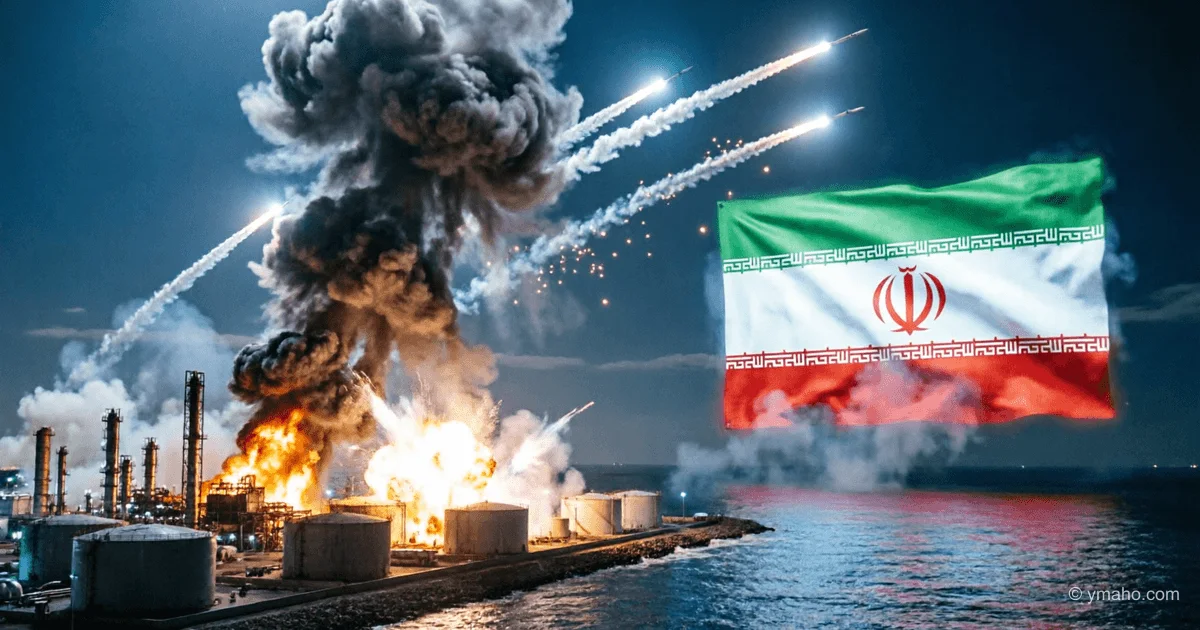
Iran Threatens Strikes on Persian Gulf Oil Facilities if Conflict Escalates
Tehran warned that if US attacks resume, the Islamic Revolutionary Guard Corps will strike oil facilities of all Persian Gulf countries, potentially triggering a global energy crisis. Drone attacks were recorded in Baghdad's 'Green Zone', where the US embassy is located.
Iran Moves to 'Oil War': Threat to Persian Gulf Energy Facilities and Dual Crisis
Introduction
On April 29, 2026, the oil world held its breath in anticipation of a new blow that could be worse than the closure of the Strait of Hormuz. The commander of the Islamic Revolutionary Guard Corps (IRGC) Aerospace Force, Brigadier General Majid Musavi, issued a direct warning: if the US or Israel launch new strikes on Iran, and Persian Gulf countries provide their territory or infrastructure for this purpose, they will 'have to say goodbye to oil production'.
This is not just rhetoric. Earlier, on April 6, after a US strike on Iran's oil terminal on Kharg Island, the IRGC had already called this a 'red line', promising to turn the energy facilities of Arab neighbors into 'ashes'. Iran has consistently struck US bases in the region and shows no signs of stopping.
Analysts at The Wall Street Journal have already described attacks on energy assets of Persian Gulf countries as a 'new phase of the conflict'. If oil fields and refineries in Saudi Arabia, the UAE, Kuwait, Qatar, and Bahrain come under attack, the global oil market will face a collapse compared to which the current blockade of Hormuz would seem like a warm-up. This comes amid reports of drone attacks on Baghdad's 'Green Zone', where the US embassy is located.
Event Details and Timeline
On April 22, 2026, the second round of US-Iran talks was scheduled to take place in Islamabad, mediated by Pakistan. However, the atmosphere on the eve was far from compromise. On April 20-21, General Musavi issued a series of warnings, effectively taking the entire region's economy hostage.
'Our southern neighbors must understand that if their geographical position and infrastructure are used in the interests of enemies to attack Iran, they will have to say goodbye to oil production,' the Iranian Mehr news agency quoted Musavi as saying. He clarified that this refers to the destruction of facilities used specifically for production, not just military bases.
This statement was the culmination of an escalation that had been ongoing since late February. On February 28, the US and Israel began striking targets inside Iran. On April 6, US aircraft attacked the strategic Kharg Island, through which 90% of Iran's crude oil exports pass. It was then that the IRGC first stated it would retaliate against the energy infrastructure of Arab neighbors cooperating with the US.
Since then, the list of potential targets has expanded. It now includes major oil fields and refineries in the United Arab Emirates, Saudi Arabia, Kuwait, Qatar, and Bahrain.
Impact and Significance (for the World / Industry / Society)
Iran's threat is not just another round of escalation; it takes the conflict to a fundamentally new level.
Energy catastrophe 'squared'. Until now, the main problem for the market was the blockade of the Strait of Hormuz, which prevented tankers from exporting oil. However, with the threat of strikes on the fields themselves, we are talking about the physical destruction of raw material sources. As WSJ notes, market participants are pricing in risks where the time needed to restore damaged facilities could exceed the duration of the entire war.
According to JPMorgan, if direct strikes on neighbors' infrastructure are added to the existing deficit, the total reduction in oil and petroleum product supply could reach 12 million barrels per day, exceeding 10% of global demand.
Geopolitical rift within the Arab world. Persian Gulf countries find themselves in a terrible position. On one hand, they are US allies and host American military bases. As political scientist Artur Demchuk noted, virtually no Persian Gulf country condemned the US and Israeli attack on Iran, and for Tehran, they are as much enemies as Washington. On the other hand, they do not want to be burned alive in someone else's war. Iran has already demanded compensation from Bahrain, Saudi Arabia, Qatar, the UAE, and Jordan for their role in the conflict.
Saudi Arabia officially denies involvement in the operation against Iran. However, the kingdom's Foreign Minister, Faisal bin Farhan Al Saud, warned Tehran: 'If Iran expected that Arab states... would not be able to respond to its aggression, it was mistaken. Any escalation will only be met with counter-escalation.'
Reactions of Key Players
Persian Gulf countries. The reaction of Iran's neighbors is a mix of panic and fury. On one hand, they try to distance themselves from US strikes. On the other, they demonstrate readiness to defend themselves. The foreign ministers of 12 Arab and Islamic countries at a meeting in Riyadh have already called Tehran's strikes on Arab countries 'unjustified'. Concrete steps are already being taken: the UAE closed its embassy in Iran and recalled its ambassador. Saudi Arabia threatens retaliatory military strikes.
United States. The White House has not directly commented on the IRGC's threats against oil fields. However, the very logic of US strategy—blockade and economic strangulation of Iran—forces Gulf allies to bear the brunt. The US will likely have to strengthen air defenses in the region and spread its forces between deterring Iran and protecting Saudi refineries.
Iran. For Tehran, this threat is a deterrent tool. Iran is making it clear: if you bomb our export terminal on Kharg, we will deprive you of the ability to produce oil at all. As WSJ writes, Iran was forced to take this step due to threats to its own security.
Forecast and Conclusions
The world is on the brink of what can be called an 'energy apocalypse'.
Coming hours. Markets will frantically price in these threats. Even if physical strikes are not yet carried out, fear of them is already baked into oil prices, which fluctuate above $110.
The fate of the second round of talks in Islamabad, scheduled for April 22, is highly uncertain. Iran has already stated it may refuse to participate due to 'excessive demands' from the US and the blockade of the strait. If talks collapse, military escalation will continue.
Conflict development. Experts at The Wall Street Journal warn: attacks on energy assets of Persian Gulf countries are a new phase of the war. This means that from now on, the economy of every country in the region becomes a legitimate military target.
Risk of global recession. In the short term, the situation looks hopeless. Iran cannot allow Arabs to remain safe while its oil infrastructure burns. Arabs cannot allow Iran to destroy their sources of income with impunity. As a result, the West may lose access not only to Iranian oil but also to oil from Saudi Arabia and the UAE.
Conclusion. The world has already grown accustomed to high oil prices due to war. But if Iran carries out its threat, we will have to get used to their absence—to total shortage. Strikes on refineries in Saudi Arabia or storage facilities in the UAE would cause infrastructure damage requiring months, if not years, to repair. At that point, global recession will cease to be a forecast and become a reality for every person on the planet, regardless of whether they are in a combat zone.
— Editorial Team









