JSM Beauty's Korean Pop-Up in New York Wraps Up with Glass Skin Masterclasses
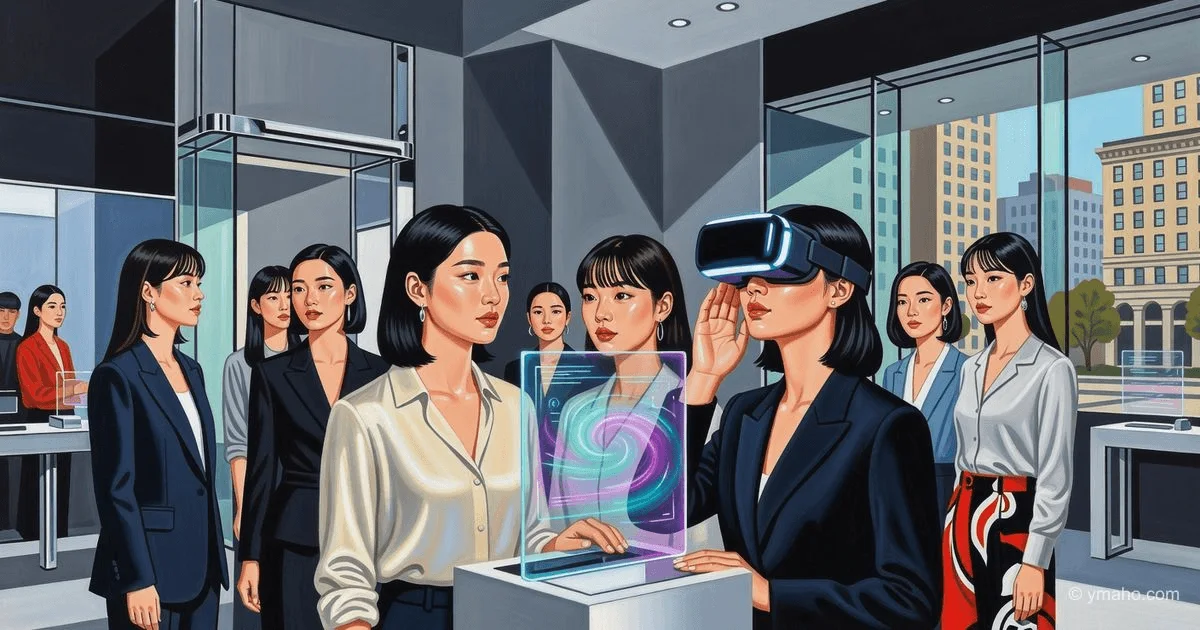
Union Square hosted the "Glass Skin Atelier" pop-up from makeup artist Jeong Saemul's brand. Visitors tried AI skin tone diagnostics, a VR trip to Seoul, and masterclasses on the signature makeup technique.
Beauty Without Borders: Why JSM Beauty Didn't Just Open a Pop-Up—It Declared War on Western Cosmetics
Think the New York pop-up story is just about limited gift sets and hype? In five days JSM Beauty sold thousands of cushions, gave away 150 pearlescent cases, and sent one lucky winner on a Seoul tour. But that's only the visible tip of the iceberg.
The real story is that Jeong Saemul, the woman who turned "glass skin" into a global phenomenon, just finished rehearsing her worldwide invasion. June 2026 won't be remembered for the Union Square pop-up. It will be remembered as the month K-beauty first entered the American market not as "Amazon exotica" but as a premium player with technology Western brands can't replicate.
[The Core]: What's Really Happening
What's really happening is a complete overhaul of distribution channels. Like many Korean brands, JSM Beauty had sold through Amazon and local distributors since 2020. It was an easy strategy: low entry barrier, global reach, minimal overhead. But it had one fatal flaw—zero brand control. On Amazon your cushion sits next to an $8 knockoff. You can't explain why your AR shade-matching technology is worth the price.
So in May 2026, just two weeks before the pop-up, JSM Beauty quietly incorporated JUNGSAEMMOOL USA INC. This isn't paperwork. It means the brand now has direct contracts with retailers, can hire local staff, and—most importantly—can run its own marketing campaigns without middlemen. The head of the U.S. office is Yoo Jae-eun, a vice president who previously led global expansion. This is senior leadership, not an intern.
The New York pop-up became the new structure's first public move. It was executed with surgical precision: AR skin undertone diagnostics (patented technology no Western brand has copied), a VR journey to the Seoul flagship, masterclasses with top makeup artists, and a lottery for a trip to Korea. This isn't selling cosmetics. It's selling the JSM ecosystem. You're not buying a cushion—you're buying access to "glass skin" the way Korea's most respected makeup artist does it.
Non-obvious insight: JSM Beauty isn't really competing with other Korean brands on Amazon. It's competing with Fenty Beauty and Haus Labs. Why? Its real weapon isn't peptides or extracts—it's AI and AR shade-matching technology. Western industry wisdom says creating a foundation in 30 shades (exactly how many JSM offers) is hard and expensive. JSM did it five years ago and added augmented reality that reads your undertone better than a Sephora consultant. Western brands are still playing "guess your shade." JSM already won that game.
Timeline and Context
To understand why this is happening now, look at three key events from the past 12 months.
May 2025: The Korean government launched the K-Export Star 500 program, selecting 500 promising export companies. JSM Beauty made the list and gained access to state subsidies for marketing and logistics—fuel for its American push.
February–March 2026: TikTok and Instagram saw a second wave of interest in JSM Beauty. Cushion videos racked up millions of views. Unlike the first wave in 2023, today's audience is already "trained" in K-beauty—it knows about glass skin and is looking for the tools to achieve it.
April 2026: The Korea Health Industry Development Institute released striking data: U.S. cosmetics exports in Q1 2026 jumped 49.1% year-over-year to $470 million. Analysts revised forecasts. K-beauty is no longer a "trend"—it's the "new normal."
Mid-May 2026: JSM Beauty incorporated its U.S. entity while also being selected for K-Export Star 500. A double signal to the market: we're here for the long haul and the government believes in us.
May 28–June 2, 2026: Glass Skin Atelier pop-up in New York. Thirty free sets daily, private sessions for customers spending $250+, and a Seoul trip giveaway. The format created scarcity and FOMO. People lined up to "touch" the brand. After June 2, JSM Beauty left—not unsold inventory, but hundreds of thousands of social posts.
Winners and Losers
Winners:
- JSM Beauty itself. In five days it didn't just sell product. It built a database of thousands of American clients who opted into AI skin diagnostics. That data is gold. The brand now knows which shades New Yorkers need, which textures American women prefer, and which skin concerns matter most. Direct pop-up sales are pennies compared with the value of this information.
- Korean beauty startups with AI/AR tech. JSM Beauty proved the tech-forward approach to color works in the West. Korean companies developing virtual try-on and AI diagnostics will now be flooded with requests from U.S. and European brands. A new export sector—"beauty-tech as a service"—is born.
- Major U.S. malls and department stores. Mall traffic is falling. Events like the JSM pop-up create footfall. Young people aren't coming "for cream"—they're coming for the experience: VR travel, pearlescent cases, free yakgwa cookies. That's exactly what brick-and-mortar retail needs to survive the Amazon era.
Losers:
- American makeup artists who built brands on "natural" positioning. JSM's edge is technology. When a client hears "The AR scanner matched your shade with 99% accuracy," she stops trusting the artist who says "I think this one will work." Professional authority yields to the algorithm.
- Sephora and Ulta without direct JSM contracts. Right now JSM sells in the U.S. mainly through Amazon and its own site. The pop-up signals: "We can sell ourselves without you." If Sephora doesn't offer strong terms for an exclusive launch, JSM may simply skip its stores—losing a top-five Amazon beauty item.
- Mid-tier Western beauty brands lacking technology and storytelling. They can't compete on price (Korean manufacturing is more efficient). They can't compete on tech (no AR/VR). They can't compete on story (no Jeong Saemul). Their only advantage is physical shelf space—and JSM just showed it can create Apple-Store-level pop-up buzz.
What the Media Isn't Saying
Everyone writes about "glass skin," free gifts, and VR trips. No one mentions the elephant in the room—data and dependence on Chinese platforms.
First, the AR skin diagnostics used at the pop-up require users to upload photos. Under the terms, those images can train algorithms. Question: whose algorithms? If the tech was built in Korea and servers are in the U.S., who has access to biometric data from thousands of American women? In an era when California is tightening privacy laws, this is a ticking bomb. Press releases are silent.
Second, reliance on the Chinese market. Yes, JSM is charging into the U.S., but its main market remains China, where it promotes heavily on Xiaohongshu (RED). In May 2026 JSM received an invitation to the China Beauty Expo (CBE), Asia's largest cosmetics trade show. Despite geopolitical tension, the brand is doubling down on China. If U.S.–China relations worsen, JSM could be caught in the crossfire. The American pop-up is both expansion and insurance against losing China. Journalists stay quiet.
Third, the scaling problem. Turning a successful five-day pop-up into a sustainable U.S. business is a different story. Hiring staff, building logistics, handling returns and taxes—JSM has taken the first step by incorporating. But becoming "the Korean MAC" will take another two to three years. Media call it a "triumph," forgetting that 90% of Korean brands that opened U.S. offices closed them within two years. American-market competition is no joke.
Forecast: Next 30 and 90 Days
Next 30 days (July 2026):
After the pop-up closes, JSM Beauty will activate its online channels. It will aggressively retarget ads at attendees via geolocation and Wi-Fi tracking. Expect email blasts with "for those who missed it" promo codes. July's goal isn't sales—it's loyalty-program sign-ups. JSM wants the email and phone of everyone who touched its product. That's the foundation for future U.S. D2C business.
At the same time, Western brands (Fenty, Rare Beauty, Haus Labs) will release "emergency" updates to their AR try-on tools. They'll see the Koreans pulling ahead and try to catch up. Without JSM's patented undertone technology, their attempts will look clumsy and spark TikTok backlash: "Sephora AR can't see my olive undertone, but JSM can."
Next 90 days (Fall 2026):
The big decision is physical retail. By September JSM will analyze traffic and sales data from the pop-up. If 30% of visitors are willing to drive ten miles to a store, it will sign with a chain—most likely Ulta, since Sephora's exclusivity terms are tougher. If online sales after the pop-up jump 200–300%, it will skip physical stores and stay D2C + Amazon.
By November 2026 JSM Beauty will launch a holiday collection tailored for the American market. It will include limited cushion shades unavailable in Korea—adapted for Latino and African-American undertones that Asian brands traditionally overlook. This is the test drive: how ready is JSM to become a truly global brand rather than just "a Korean brand sold in the U.S."?
Final note: in December, if everything goes to plan, JSM Beauty will open its first permanent U.S. store. Not a pop-up—a real location, most likely in Los Angeles, where the Korean diaspora is strong and beauty enthusiasts are concentrated. That's where we'll see whether the Union Square pop-up grew into a full American chapter or stayed a pretty Instagram picture. I'm betting on the former. JSM has prepared too long for this moment to stumble.
— Editorial Team