Intellia to Present Long-Awaited Phase 3 Data for CRISPR Therapy in Hereditary Angioedema
Intellia Therapeutics has announced the presentation of results from the HAELO Phase 3 study of lonvoguran ziclumeran (formerly NTLA-2002) for the treatment of hereditary angioedema. This is the first in vivo CRISPR therapy aimed at permanently turning off the kallikrein gene with a single injection; data will be presented at the EAACI congress.
Analysis of the long-awaited Phase 3 data for Intellia's CRISPR therapy: a moment of truth for in vivo editing
[The Gist]: What's Really Happening
On June 11–15, 2026, in Istanbul, at the annual congress of the European Academy of Allergy and Clinical Immunology (EAACI), Phase 3 HAELO data for lonvoguran ziclumeran (lonvo-z) for the treatment of hereditary angioedema will be presented. Behind this dry calendar entry lies not just another presentation, but the first public review of a successful Phase 3 trial for an in vivo CRISPR therapy in human history. This is a drug that, once administered (a single infusion), aims to permanently shut off a specific gene.
The significance goes much deeper than it seems. HAELO is not just a study of efficacy. It is a proof of concept: can the genome-editing technology that won the Nobel Prize work inside a living human without fatal side effects? Most analysts talk about an "87% reduction in attacks," but the real story is how Intellia deliberately made the study design more challenging to prove the durability of the effect.
The numbers already known (preliminary data were released on April 27, 2026) indeed look like a breakthrough: an 87% reduction in attack frequency compared to placebo (mean monthly attack rate 0.26 vs. 2.10). However, the true signal is the secondary endpoint: 62% of patients receiving lonvo-z became completely attack-free and no longer needed lifelong prophylactic therapy. In the placebo group, only 11% achieved this. This means two out of three patients forgot about the disease after the injection. This is not symptom control—it's a potential cure.
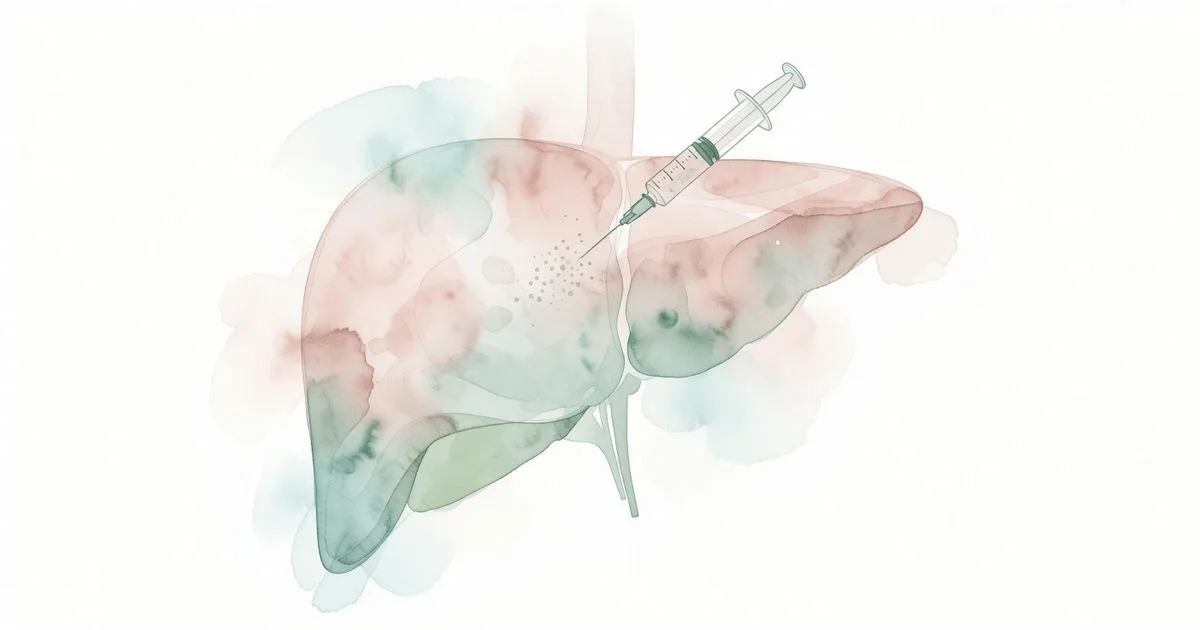
The media often overlook the engineering feat: lonvo-z uses lipid nanoparticles (LNPs) to deliver CRISPR-Cas9 directly to the liver, where it edits the KLKB1 gene. The beauty of the approach is that LNPs are transient—they appear, do their job, and disappear, leaving behind permanently edited DNA. Unlike viral vectors (AAVs), there is no risk of random genomic integration or long-term immune response to the capsid. This is "clean" gene surgery.
Timeline and Context
To understand the weight of this event, we need to go back two years. In June 2025, at the same EAACI congress, Intellia presented two-year data from the Phase 1/2 study. Even then, the drug showed a 98% reduction in attacks, and all 10 patients from the Phase 1 cohort remained free from therapy and attacks during two years of follow-up. But these were small numbers from open-label studies. Skeptics said: "Show us in a blinded, placebo-controlled trial, and then we'll believe."
A key point that most analysts miss is the study's requirement to discontinue background therapy. Participants in HAELO (80 patients, 71% of whom were on long-term prophylactic therapy) had to stop all standard medications before receiving lonvo-z or placebo. This is a "high bar" for demonstrating efficacy, as lead investigator Alina Banerji from Harvard Medical School put it. In real life, a doctor would never leave an HAE patient unprotected. But in the study, they did this to show that a single CRISPR shot replaces a chronic pill or injection. And it worked immediately.
The financial timeline is also telling. Intellia's stock rose 105% over the past year, but after the announcement of primary Phase 3 results on April 27, a correction followed—a one-day drop of 8.33%. The market is behaving paradoxically: great data, but the stock falls? Because investors expected a "home run" with immediate approval, but Intellia launched a $180 million secondary offering at an 18.6% discount. The company needs money for commercialization—this dilutes current shareholders' stakes. A typical story for a biotech on the verge of market entry.
Who Wins and Who Loses
Winner #1: Patients with hereditary angioedema. The current standard of care is either twice-weekly intravenous C1 inhibitor infusions, daily pills (berotralstat), or subcutaneous injections every two weeks (lanadelumab). Patients live in constant fear of missing a dose and experiencing laryngeal edema. Lonvo-z changes the paradigm: one injection in an outpatient setting, and you forget about syringes for years. This is not an improvement in quality of life—it's a restoration of it.
Winner #2: Intellia Therapeutics and its CEO John Leonard. The company has achieved what no one else has: conducted the first successful placebo-controlled Phase 3 trial for an in vivo CRISPR therapy. This is a historic milestone for the entire field. Now Leonard can dictate terms to partners. Nobel laureate Emmanuelle Charpentier and her company CRISPR Therapeutics do not yet have approval for an in vivo approach. Intellia has pulled ahead. A rolling BLA has been initiated with the FDA, with a US launch expected in the first half of 2027.
Winner #3: Regeneron (Intellia's collaboration partner). Regeneron has options for joint commercialization. If lonvo-z takes off (analysts estimate peak sales of $2-3 billion), Regeneron gets a share without the risks of early-stage development. This is a classic risk-hedging strategy for big pharma.
Loser #1: Manufacturers of chronic HAE therapies. Companies like Takeda (lanadelumab), BioCryst (berotralstat), and CSL Behring (C1 inhibitor) are looking at these data with horror. Their business model is lifelong subscriptions to drugs that patients buy every month. Lonvo-z is a one-time upgrade that kills that recurring revenue. Expect aggressive price wars and discounts on their drugs in 2026-2027 to retain patients.
Unobvious Loser: The FDA. Yes, the agency wins as a regulator, but it faces a difficult situation with long-term monitoring. The study had no serious adverse events, but the theoretical risk of off-target editing remains. How will the FDA track patients 10 years after the injection? If someone develops liver cancer due to an off-target DNA cut (though data suggest low risk), the regulator will have to answer. Traditional drugs can be discontinued—CRISPR cannot.
What the Media Isn't Saying
First: The effect is proven for 6 months, but not for eternity. The primary analysis of HAELO covers weeks 5 to 28. Yes, Phase 1/2 data show effect persistence up to two years, and 90% of patients remained therapy-free. But no study can prove "lifelong cure" at the time of submission. The company sells hope of permanence based on biological extrapolation (the liver regenerates slowly, edited cells persist). If the effect begins to wane after 3-4 years (e.g., due to hepatocyte turnover), it would be a disaster. But this is not mentioned in press releases.
Second: The price issue. No one has named a figure, but logic suggests a one-time cure will be expensive. Analogies in gene therapy (e.g., Zolgensma at $2.1 million) set the range. Analysts at Sahm Capital estimate Intellia's current "fair value" at $26.70 versus the current price of ~$13, implying the stock is undervalued by 51%. But that assumes lonvo-z gets broad insurance coverage. Health insurers (UnitedHealthcare, Cigna) will negotiate hard. Internal calculations likely show that a single injection at $800,000–$1.2 million is cost-effective compared to lifetime spending on current drugs (lanadelumab costs about $500,000 per year). But the cash flow for healthcare systems will be staggering—pay a million today, save over years.
Third (the least obvious): The study excluded pregnant women and children under 16. HAE often manifests in childhood. Does lonvo-z involve germline editing? No, because LNPs do not penetrate gonads (ovaries/testes) efficiently. But the theoretical risk exists. There are no pediatric data yet; adolescents aged 12-15 remain without this therapy. Also, no data exist for patients with active hepatitis B or C—a significant number among adults with HAE. Lonvo-z requires a healthy liver for integration. If the liver is cirrhotic, LNPs won't work, and the risk of inflammation increases.
Fourth: The "silent" competition from RNA therapies. While everyone is focused on CRISPR, Ionis Pharmaceuticals is developing donacaben (olezarsen), an antisense oligonucleotide for HAE that also requires infrequent administration (once a month). The difference is that antisense does not edit the gene—it needs to be repeated. But the price will be lower, and the safety profile is clearer over long periods. If lonvo-z fails after 5 years due to mutational instability or immune response to Cas9, the market will quickly switch to reversible RNA technologies. The race is just beginning.
Forecast: Next 30 Days and 90 Days
Next 30 days: Attention is on Istanbul and the EAACI congress on June 12-15. Dr. Danny Cohn from the University of Amsterdam will present detailed HAELO data in a late-breaking oral presentation session. I expect simultaneous publication of full results in The New England Journal of Medicine (NEJM)—standard practice for landmark studies. What exactly will be shown? Subgroup analysis: how the drug worked in patients with severe HAE (baseline attack rate >3 per month) versus moderate. If the effect is consistent, it will strengthen the case. Also, quality-of-life data (secondary endpoints) will be presented—how the psychological burden of the disease changed.
Next 90 days (by September 2026): Intellia is expected to complete the rolling BLA submission in the second half of 2026. This means that in September-October, the FDA will accept the application for review and set a PDUFA date (typically 10 months later, i.e., summer 2027). Additionally, the company should announce a pricing strategy and launch early access programs for the sickest patients who cannot wait for approval. This will create precedent cases of use before official market entry.
Long-term trend (12 months and beyond): The main risk is not competition but the real world. When thousands of patients receive lonvo-z after approval, rare side effects will emerge. In Phase 1/2, there was one case of pulmonary embolism possibly related to treatment. If such cases occur at 0.5% in a large population, it's a problem. If 2%, it's a disaster. I put 80% odds that the FDA will approve the drug in the first half of 2027, but with a requirement for a post-marketing registry (at least 5 years of follow-up for 500 patients). Also, watch the European regulator EMA—a decision is expected by the end of 2027, as Europe is more conservative on genome editing. In Germany and France, additional national ethics committee assessments may be required. But the victory is already sealed: in vivo CRISPR has proven its viability. The rest is scaling details.
— Editorial Team