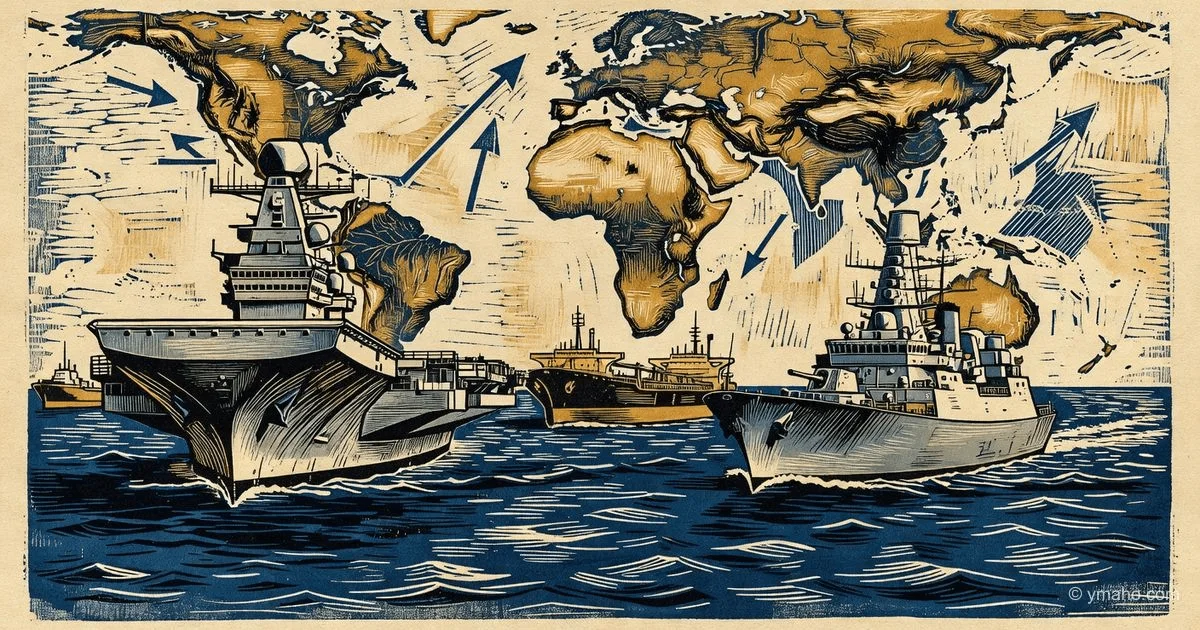
France and UK Ready to Deploy Naval Mission to Protect Strait of Hormuz
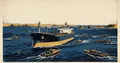
Emmanuel Macron stated his readiness to lead a multinational escort mission immediately after signing a ceasefire agreement to ensure navigational safety.
Games with Definitions: Why Macron's 'Mission Without Deployment' Is Europe's Smartest Financial Move
[The Gist]: What Is Really Happening
Headlines scream: 'France and Britain Ready to Deploy Naval Mission in Hormuz.' But if you open Emmanuel Macron's briefing in Nairobi, you see the exact opposite: 'There was never any question of a French or Franco-British deployment.' So what is going on? Are the media lying? No, they simply don't understand the difference between 'deployment' and 'pre-positioning.'
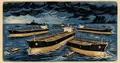
The real essence is that Europe is creating an option for force without committing to use it. This is a classic 'costly threat' strategy: show your trump card but don't place a bet. The French aircraft carrier Charles de Gaulle already passed through the Suez Canal on May 6 and is heading to the Red Sea and the Gulf of Aden. The British destroyer HMS Dragon completed combat training off the coast of Crete and is ready to take position. But neither is entering the Strait of Hormuz.
Why? Because this is a tactical pause with a diplomatic face. Macron clearly stated the conditions: the mission will begin 'as soon as conditions allow' and 'in coordination with Iran.' This is not a military operation—it is a leverage tool in negotiations. Europe is telling Tehran: 'We are ready to enter. Don't make us.'
And here is what matters: on May 13, 2026, according to RIA Novosti, about 26 countries joined the mission declaration, including Australia, Japan, South Korea, Qatar, and a dozen European states. This is not two countries—it is a coalition. But a coalition without a combat mandate is essentially a diplomatic club.
Timeline and Context
The chain of events began long before June. As early as April 5, 2026, Macron ruled out French participation in the US mission in Hormuz, calling it 'coercive.' Instead, Paris and London began building an alternative—a 'neutral' mission without the US and Iran.
On April 22-23, a meeting of military planners from 44 countries took place in London, where practical details were agreed upon. On May 11, the first meeting of defense ministers was held, chaired by John Healey (UK) and Catherine Vostren (France), with more than 40 states participating.
But the key moment occurred precisely on May 10. That day, Iran, through Deputy Foreign Minister Kazem Gharibabadi, stated that any presence of French or British ships in the region would meet a 'decisive and immediate response.' And on the same day, Macron in Nairobi said he 'never considered' deployment.
Coincidence? No. This was coordinated communication. Iran warned—Europe de-escalated without taking a step back. The Charles de Gaulle remained in the Red Sea, near the Bab el-Mandeb Strait, not in Hormuz. This is a symbolic compromise: we are not entering, but we are close.
By May 14, the situation stabilized: 26 countries signed the declaration, but no ship entered the strait. The 'active waiting' mode persists, and that is exactly what the market needs: enough uncertainty for high oil prices, but not enough escalation for panic.
Who Wins and Who Loses
Winner #1 — France. Macron pulled off a brilliant political trick. He created the appearance of European leadership without military risks. He seized the initiative from the US (which looks militaristic) and from Iran (which must reckon with a 'neutral' mission). The French aircraft carrier now sits at Bab el-Mandeb—a critical point off Yemen—and can at any moment block the southern exit of the Red Sea. This gives Paris leverage over both Iran and the Houthis.
Winner #2 — Britain. After Brexit, London desperately sought a new global role. 'Leader of European defense' is a decent replacement for 'leader of the EU.' HMS Dragon—one of the most modern destroyers in the British fleet with the Sea Viper system—is now the calling card of 'Global Britain.' And crucially, all this happens without direct US involvement, bolstering London's independent image.
Loser #1 — Iran. Tehran found itself trapped by its own rhetoric. Iran claimed that any foreign presence was 'militarization' and grounds for attack. But what to do when ships are stationed at Bab el-Mandeb, not in Hormuz? Striking a French aircraft carrier in international waters means starting a war with NATO. Not striking means admitting the threats were a bluff. Iran chose a third option: silence.
Loser #2 — The US. The Trump administration formally supported the mission but was effectively left out. Europe created an alternative center of power in the region, where decisions are made by Paris and London, not Washington. For the US, accustomed to leading the parade in the Persian Gulf, this is humiliating. But arguing with allies amid a war with Iran is a luxury they cannot afford.
What the Media Are Not Saying
The most important non-obvious insight: The mission in the Strait of Hormuz is actually a mission at the Bab el-Mandeb Strait. Macron moved the Charles de Gaulle there, not to Hormuz. Why? Because Bab el-Mandeb is the key to the Suez Canal. If Iran, through the Houthis, closes that strait, Europe loses not only oil but all trade with Asia.
And here is what is interesting: on May 13, 2026, after 'successful' negotiations, Iran promised Japan safe passage through Hormuz. And European ships? Silence. European tankers continue to queue or take the long route around Africa. The French and British 'mission' changed nothing for European business—but created an illusion of action.
Second insight: the mission includes mine clearance. This is a key detail that is ignored. Iran is not just 'blocking' the strait—it has mined it. According to some sources, about 1,500 vessels and 20,000 sailors are stuck in the strait. To evacuate them, mine clearance is needed, which requires the presence of warships.
But mine clearance is impossible without Iran's consent because the minefields are controlled by Iranian military. In effect, any mine clearance mission is an intrusion into an area Iran considers its own. That is why Macron speaks of 'coordination with Iran.' Without Tehran's green light, nothing will start.
Third insight: the US has been conducting its own blockade of Iranian ports since April 13. This means there are now two 'blocking' players in Hormuz: Iran (closing passage for everyone) and the US (closing exit for Iranian ships). The European mission tries to be a 'third force,' but in this geometry, there is no third option. You are either with the US (against Iran) or with Iran (against the blockade). Europe chose 'above the fray'—and ended up with nothing.
Forecast: Next 30 Days and 90 Days
Next 30 days (until July 2, 2026):
No deployment will occur. The Charles de Gaulle will remain in the Red Sea, HMS Dragon off the coast of Oman. US-Iran negotiations (mediated by Qatar and Egypt) will continue to stall. The European mission will remain 'potential,' not 'active.'
Key indicator: An official statement from Iran agreeing to 'international presence for mine clearance.' Without this, the mission will not start. If such a statement appears, it signals a breakthrough, and oil prices will drop by $5-7 per barrel.
Next 90 days (until end of August):
By the end of summer, pressure on Europe will increase. European countries are running out of strategic oil reserves, and gas prices in Asia are hitting records. Macron and Starmer will be forced either to activate the mission (risking conflict with Iran) or admit its failure. The latter is more likely: the mission will quietly die, and Europe will continue to seek alternative routes via Africa.
The main risk is escalation at Bab el-Mandeb. If the Houthis (Iran's allies) start attacking European ships in the Red Sea, the Charles de Gaulle will be directly in the line of fire. Then France will have to either retreat (loss of face) or engage in combat (start of war). This is the most dangerous scenario for oil markets—it could push prices to $140 per barrel.
Editorial Forecast
Asset: Brent crude oil (futures)
Direction: Sideways with a weak downward trend. The news of the mission is already priced in, but the lack of real action disappoints the market.
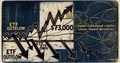
Key levels: $104–$110 per barrel. A break below $104 could lead to $100. A rise above $110 signals new military news.
Confidence level: Medium (65%). The mission will not affect physical supplies in the next 72 hours but may influence trader sentiment.
Main risk to forecast: A sudden statement from Iran agreeing to European escort (in exchange for sanctions relief). This would instantly crash prices to $95-98, as the market would perceive it as a 'blockade breakthrough.' However, the probability of such a scenario in the next 72 hours is extremely low—less than 10%.
— Editorial Team