Japan Receives Guarantees from Iran for Passage of Its Ships Through the Strait of Hormuz
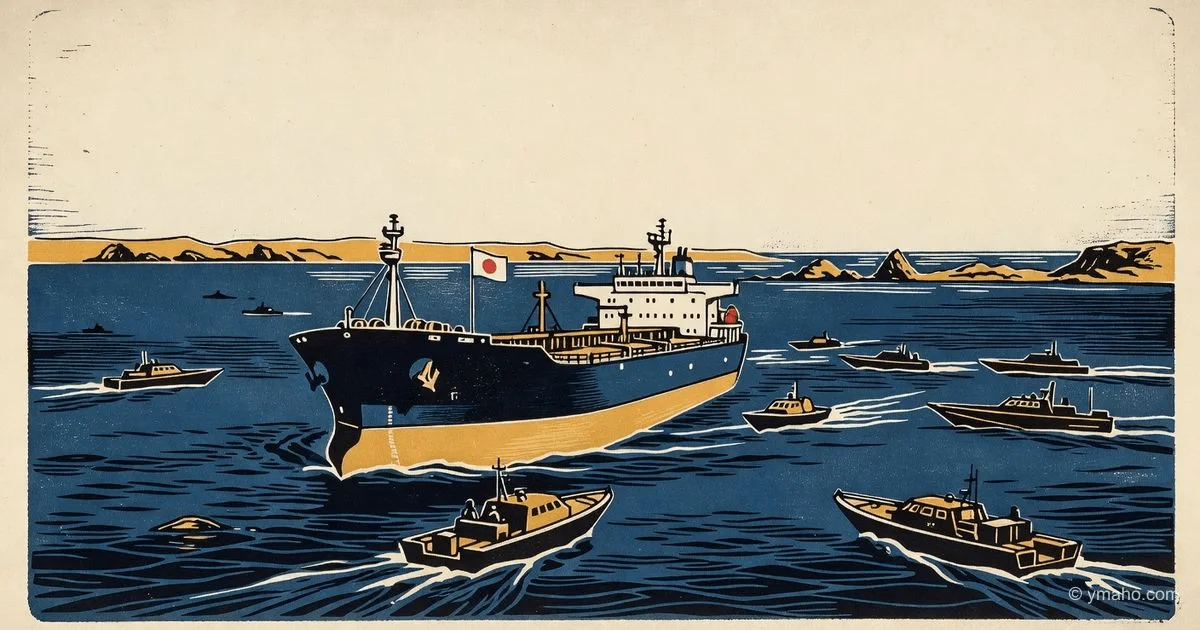
Iranian President Masoud Pezeshkian assured Japanese Prime Minister Sanae Takaichi of unimpeded passage for Japanese vessels amid threats of a blockade by the IRGC.
A Diplomatic Privilege: Why Iran Opened the Strait of Hormuz for Japan but Not for Others
[The Gist]: What Is Really Happening
The official version looks like a diplomatic success for Tokyo: Iranian President Masoud Pezeshkian, in a phone call with Japanese Prime Minister Sanae Takaichi, assured that Japanese ships would pass through the Strait of Hormuz "unimpeded and with maximum facilitation." Takaichi, in turn, called on Tehran to show "maximum flexibility" in negotiations with the U.S. and expressed hope for a swift peace agreement.
But diplomatic rhetoric hides a much harsher reality: Iran is not just "guaranteeing safety" for Japanese ships—it is trading access, demanding in return the supply of "goods needed by the Iranian side" and access to Japan's frozen Iranian financial assets. This is not a humanitarian gesture. It is a commercial deal disguised as diplomatic assurances.
The essence of what is happening is the segmentation of the Strait of Hormuz into "green corridors" for select countries and "red zones" for the rest. Japan gets privileged access not because Tokyo is a diplomatic giant, but because Japan is one of the few major energy importers that has nothing to offer Iran but money and goods. Iran understands this and uses it ruthlessly.
Note the timeline: On May 25, the tanker Idemitsu Kosan became the first Japan-linked vessel to successfully pass through the strait after the conflict began on February 28. This was followed by a phone call on June 1, during which Pezeshkian effectively legitimized this scheme. Iran set a precedent, and now this precedent will be scaled—but not for everyone, only for those willing to pay.
Timeline and Context
The context of this "special treatment" for Japan dates back to April 2026. On April 13, U.S. President Donald Trump announced a blockade of Iranian ports to completely halt Iranian oil exports. In response, Iran effectively closed the Strait of Hormuz to shipping, except for vessels receiving special permission.
On May 28, reports emerged that the U.S. and Iran had reached a 60-day ceasefire memorandum. Trump stated that the "unprecedented naval blockade of Iranian ports would be lifted." However, the very next day, strikes hit Kuwait, putting the truce in question.
It was in this fragile context that the phone call between Takaichi and Pezeshkian took place—the third since the conflict began. The previous two occurred on April 5-6 and April 30. Each time, Japan tried to play mediator between the U.S. and Iran, and each time that role proved symbolic.
The numbers behind this diplomacy speak louder than words. According to Japanese government data, 43 Japan-linked vessels are stuck in the strait. The country's oil reserves are sufficient for about 200–240 days, and naphtha for about four months. But the problem is not an immediate shortage—the problem is that the just-in-time system has been disrupted, and logistics are not recovering.
Japan's crude oil imports fell by 47% in March–May 2026 compared to the same period in 2025. This is the largest decline among all major oil importers worldwide. China cut imports by 18%, South Korea by about 30–35%, but Japan suffered the most due to its 90% dependence on the Middle East before the conflict.
Who Wins and Who Loses
Winner #1: Iran. Tehran achieved what it wanted: legitimization of its control over the strait. Pezeshkian did not just "guarantee safety"—he secured from Japan a promise to supply "necessary goods" and access to Iranian financial assets frozen in Japan. Formally, this is not a payment for passage—it is "trade cooperation." In reality, Iran is monetizing its control over a strategic waterway. Every Japanese ship passing through the strait is an acknowledgment of the new reality.
Winner #2: The Trump administration, but with caveats. On one hand, the U.S. cannot ensure free navigation itself—its military presence in the region is weakened. On the other hand, Japan, a key U.S. ally in Asia, is now forced to negotiate directly with Iran without American mediation. This shows that the "American security guarantee" no longer covers freedom of navigation. Trump may not publicly admit it, but the fact remains: Tokyo entered direct talks with Tehran because Washington could not open the strait.
Loser #1: South Korea and other Asian importers. If Japan got a "green corridor," why hasn't South Korea, which depends on Middle Eastern oil for about 70% of its needs? Because South Korea does not have the same assets frozen in Japanese banks or the same diplomatic weight. The Japanese precedent creates a two-tier system for shipping: one for countries that can offer Iran something in return, and another for everyone else.
Loser #2: European maritime carriers. While Japan negotiates, European ships continue to wait in queues or take the long route around Africa, increasing freight costs by 30–40%. Maersk and Hapag-Lloyd have already announced a "war premium" for passage through the region, and this premium will not decrease until the Japanese precedent is extended to Europe. But it won't be, because Europe is not ready to pay Iran the same price as Japan.
What the Media Leaves Out
The most important non-obvious insight: Japan's "success" in opening the strait is actually a capitulation to reality, not a diplomatic victory. Note how Pezeshkian's guarantees are phrased: he says Iran will "make the necessary efforts" for Japanese ships to pass. This is not a firm commitment—it is a conditional permission that can be revoked at any time. Iran reserves the right to decide which ships pass and when.
Second insight: Iran's conditions ("supply us with necessary goods") is a euphemism for sanctions arbitrage. Goods that Iran cannot obtain directly due to U.S. sanctions will flow through Japan. This turns Japan into a transit hub for sanctioned goods, putting Tokyo in a delicate position with Washington. The U.S. is silent for now, but it will not tolerate this for long.
Third insight: Oil import data shows that Japan is actively switching to American oil. The U.S. share of Japan's imports rose from 2% in February to over 20% in May. This means that the "opening of the strait" for Japan is not so much a solution to the problem as a temporary relief. Japan is already building new logistics less dependent on Hormuz, and negotiations with Iran are insurance, not a core strategy.
Forecast: Next 30 Days and 90 Days
Next 30 days (until July 2, 2026):
The Japanese precedent will be copied by other Asian countries. South Korea and possibly India will begin separate negotiations with Iran on passage guarantees. This will happen quietly, without public statements, because the U.S. does not approve of a "paid system" for shipping. But the fact remains: Iran has created a model that works, and others will copy it.
Key indicator for traders: The number of ships passing through the strait. If it exceeds 60–70% of pre-war levels, Iran will likely start "collecting tribute" from everyone, not just Japan. If it stays at 40–50%, the system remains selective.
Next 90 days (until the end of August):
By the end of summer, the U.S. will be forced to respond to its allies' separate deals with Iran. Two options: either turn a blind eye (admitting control over the strait is lost) or tighten sanctions against countries that "feed" Iran. The first option is more likely because the U.S. lacks the tools to punish Japan or South Korea without hurting itself.
For the global oil market, this means the "Iran factor" will become permanent, not temporary. The risk premium in Brent prices (the difference between current price and fundamental value) will remain at $10–15 per barrel at least until the end of the year. No one knows when Iran will want to renegotiate terms, and this uncertainty is the main driver of volatility.
Editorial Forecast
Asset: Brent crude oil (front-month futures)
Direction: Sideways with elevated volatility. The news of Japanese guarantees slightly reduces the risk of a total blockade but does not eliminate fundamental uncertainty.
Key levels: Range $103–$112 per barrel Brent. A break above $112 is possible only with a new military incident. A drop below $103 would require a breakthrough in U.S.-Iran negotiations.
Confidence level: Medium (60%). The market has already priced in the possibility of selective opening of the strait for Iran's allies.
Main risk to the forecast: If other countries (especially China) follow Japan's example and start separate negotiations with Iran, this could create a "herd effect" that Iran would use to raise passage fees. In that case, oil could rise to $118–120 despite increased ship traffic. Conversely, if the U.S. publicly condemns Japan for "trading with the enemy," it could trigger a new escalation.
— Editorial Team