Israel Captures Strategic Beaufort Castle in Lebanon, Raising Flag Over Citadel
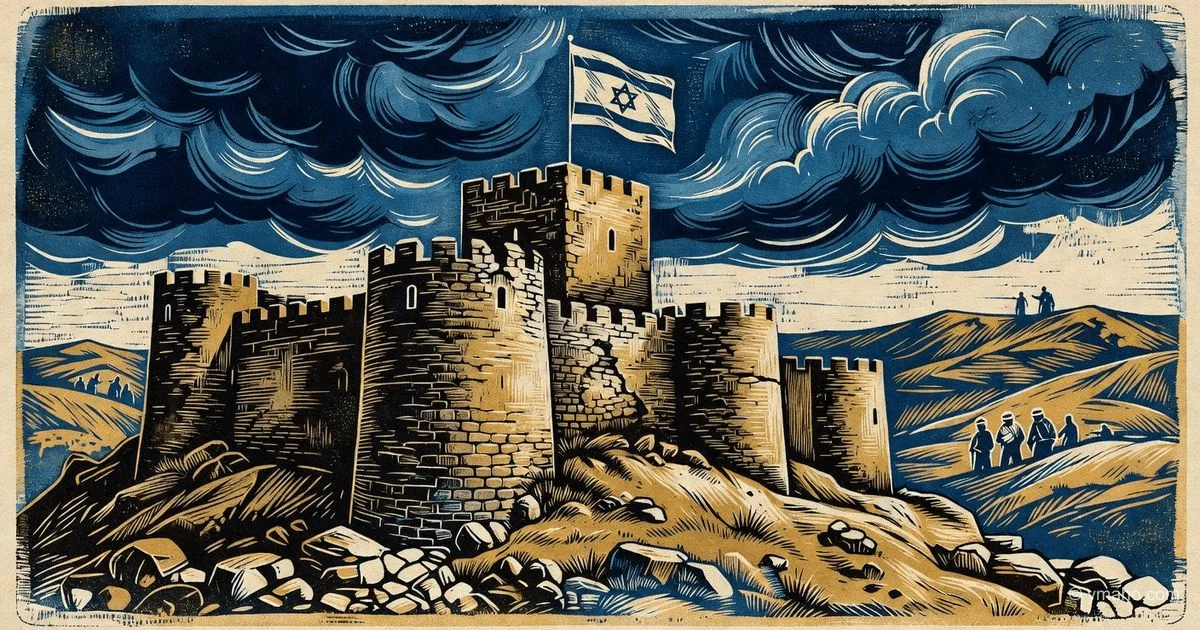
The Israel Defense Forces took control of an ancient fortress in southern Lebanon, delivering a symbolic blow to Hezbollah forces. The movement's fighters continue to wage a war of attrition in the area.
The Citadel as a Marker: Why Capturing Beaufort Is Not a Military Victory, but a Point of No Return in Negotiations
[The Essence]: What Is Really Happening
When the Israel Defense Forces (IDF) released a video of raising the flag over Beaufort Castle, global media headlines erupted with talk of a "strategic victory." Formally, this is true: control of the fortress, perched at an altitude of over 700 meters above sea level, provides surveillance capabilities from Nabatieh to the Mediterranean Sea and northern Israel. But if you think this will change the balance of power on the battlefield, you are mistaken.
The real essence of the operation, which began on May 26, lies not in capturing ancient stones, but in shifting the "red lines." Until recently, the Israeli army held the so-called "yellow line" — a buffer zone up to 12 km deep from the border. Crossing the Litani River and capturing Beaufort marks the first such deep incursion since the withdrawal of troops in 2000.
Prime Minister Benjamin Netanyahu called this a "dramatic shift in policy." For the financial market, this sounds like a death sentence for any hope of a quick ceasefire. While Iran, in negotiations with the US, demands a ceasefire on all fronts (including Lebanon), Israel publicly and demonstratively buries that possibility.
Note the synchronicity: while Israeli-Lebanese negotiations (the first round of direct contacts in 30 years!) were supposed to take place in Washington, the IDF pushed deeper into territory. This is classic tactics: worsen the opponent's negotiating position by creating irreversible facts on the ground. The Lebanese army and Hezbollah now must negotiate not about the status quo, but about reclaiming lost ground. Symbolism here matters more than guns: Beaufort was a tourist site, and now the Israeli flag flies where Lebanese once peacefully strolled. This is a blow to sovereignty that will force Lebanon to make concessions only at gunpoint.
Timeline and Context
We need to mark the dates, because every minute here is worth millions of dollars.
- April 17, 2026: A US-mediated ceasefire takes effect. It is considered fragile but formally holds.
- May 26, 2026: Israel launches an operation to "clear" the Beaufort ridge and Saluki Valley area. The formal pretext is the threat of new types of fiber-optic drones from Hezbollah, which are hard to detect.
- May 31, 2026 (Sunday): The IDF officially announces control of the fortress. The Israeli Prime Minister releases a video. On the same day, US National Security Advisor Mike Waltz and Secretary of State Marco Rubio hold consultations. Interestingly, the official US reaction to the capture of Beaufort was restrained — "no comment."
- June 1, 2026 (Monday): Israel strikes the southern suburbs of Beirut (Dahieh), where Hezbollah is based. Thousands flee their homes in panic. Hezbollah responds with rocket attacks on Haifa. France convenes an emergency UN Security Council meeting.
- June 2, 2026 (today): Hezbollah announces agreement to a ceasefire (via Parliament Speaker Nabih Berri) — on condition that Israel stops attacks on Beirut. Israel ignores the statement and continues to expand the occupation zone.
Who Wins and Who Loses
Winner #1 — Benjamin Netanyahu (domestically). Israeli society is tired of compromises. "Return to Beaufort" evokes strong emotions among the older generation, who remember the 1982 war. Netanyahu needed the image of a "strong leader" amid legal trials and pressure over hostages in Gaza. He got it. Note his rhetoric: "We have returned united, stronger than ever."
Winner #2 — Arms manufacturers. The conflict is entering a positional phase. Israel is losing equipment (reports of 26 soldiers killed and dozens wounded), Hezbollah uses invulnerable drones. This means US and European military aid (especially air defense systems and electronic warfare equipment) will only increase in value. Lockheed Martin and RTX (Raytheon) stocks will continue to rise as long as Hezbollah keeps launching rockets.
Loser #1 — Donald Trump. The Trump administration is trying to strike a deal with Iran to stop the war in the Persian Gulf and lower oil prices ahead of the elections. But their main ally (Israel) is doing everything to sabotage that deal. Hezbollah demands a ceasefire in Lebanon as a condition for any agreement with Tehran. Israel responds with invasion. The US position appears weak and out of control. The US ambassador to the UN had to blame "terrorists" without condemning Israel's actions.
Loser #2 — The ordinary Lebanese and Lebanon's economy. Over 3,400 dead, more than a million displaced, destroyed hospitals and historical monuments. Lebanon, already bankrupt, is losing the last remnants of its infrastructure. Reconstruction will require tens of billions of dollars the country does not have. But the market is worried about something else: when states collapse, black markets and smuggling thrive. Expect a surge in illicit financial flows through this region.
What the Media Leaves Out
The most important non-obvious insight: capturing Beaufort is economically pointless but informationally devastating for Hezbollah. Experts directly call it a "media success," not a military one. While channels show the Israeli flag over the citadel, the world forgets about high gas and oil prices caused by the Strait of Hormuz blockade. But for a trader, this is a trap. Everyone got distracted by a pretty picture in Lebanon, overlooking that Iran has already used this news as a pretext to harden its position in strait negotiations.
Second insight: Israeli losses are mounting, and this is a "war of attrition" for the country's economy. Despite territorial gains, mobilization of reservists and high ammunition costs (one interceptor missile costs tens of thousands of dollars) create a budget deficit. 26 soldiers killed on this front alone is no "picnic." Israel's budget deficit in 2026 will grow, putting pressure on the shekel (ILS).
Third insight (geopolitical): France urgently convened the UN Security Council and even proposed a plan: 39 armored vehicles for the Lebanese army in exchange for Hezbollah's disarmament. This is an attempt by Paris to regain influence in its former mandate territory. But while guns speak, diplomacy is silent.
Forecast: Next 30 Days and 90 Days
Next 30 days (until July 2, 2026):
Israel will try to clear the area up to the Zahrani River (south of the Litani). Hezbollah will shift to guerrilla warfare using drones and anti-tank guided missiles. Negotiations in Washington will stall. We will see oil prices (Brent) rise to $112-115, as the market realizes the "Lebanese front" is here to stay. Iran will not strike a deal with the US while its ally is being bombed.
Next 90 days (until end of August):
The Middle East conflict will turn into a single clinch system. The Gaza Strip (70% occupied), Lebanon (south occupied), and the blockade of straits. The world will get used to war. Europe will start implementing emergency economic measures to save energy. The Fed will not cut rates until the end of summer; inflation will remain high. The main risk is escalation in the West Bank, which would open a "third front."
Editorial Forecast
Asset: Gold (XAU/USD) and Brent Crude Oil
Direction: Up. The news of Beaufort's capture and strikes on Beirut removes the last hopes for a ceasefire in the coming weeks. Investors will flee to safe-haven assets.
Key levels (gold): Resistance — $2,370. A breakout would pave the way to $2,400 and all-time highs ($2,450). Support — $2,320. (Oil) — Brent will hold above $109.
Confidence level: High (80%). Escalation is obvious, and "bears" on oil and gold currently have no counterarguments.
Main risk to forecast: A sudden US ultimatum to Israel (e.g., halting bomb shipments). If Trump publicly rebukes Netanyahu, it could trigger profit-taking on long gold positions by 2-3%, as the market would perceive it as de-escalation. However, the probability of such a scenario in the next 72 hours is low (less than 15%).
— Editorial Team