Lebanon’s PM Accuses Israel of Scorched-Earth Policy Amid New IDF Strikes in the South
Nawaf Salam stated that Israeli attacks, including the destruction of villages and forced displacement of residents, constitute a dangerous escalation and collective punishment. Israel launched new strikes on the region, including the city of Tyre.
Presented here is an analytical breakdown in the style of an independent financial analyst — no propaganda, only facts, figures, and non-obvious connections.
“Scorched Earth” Israeli-Style: Why Lebanon Is Not a Humanitarian Tragedy but a Financial Trap for the Entire Region
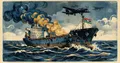
Lebanese Prime Minister Nawaf Salam gave a televised address on May 30 and said what everyone in the region has long known but fears to say out loud: Israel is pursuing a policy of scorched earth and collective punishment in southern Lebanon. The day before, the IDF carried out 108 strikes on Lebanese territory — 99 airstrikes and 9 artillery bombardments. 28 people were killed, dozens of homes destroyed.
But headlines about “28 dead” are a trap for the superficial reader. The real story is not in the casualty figures, but in what is happening to Lebanon’s economy and how it is turning the country into a zone of financial death. And if you think this doesn’t affect you, you’re wrong. Because tomorrow it will hit your investments in European real estate, Turkish textiles, and even the price of olive oil at the supermarket.
[The Core]: What Is Really Happening
Salam called what is happening a “dangerous and unprecedented escalation.” And he is right, but not in the way most people think. It’s not that Israel is bombing harder than a week ago. It’s that Israel is systematically destroying the economic base of southern Lebanon, making the return of residents impossible even after a ceasefire.
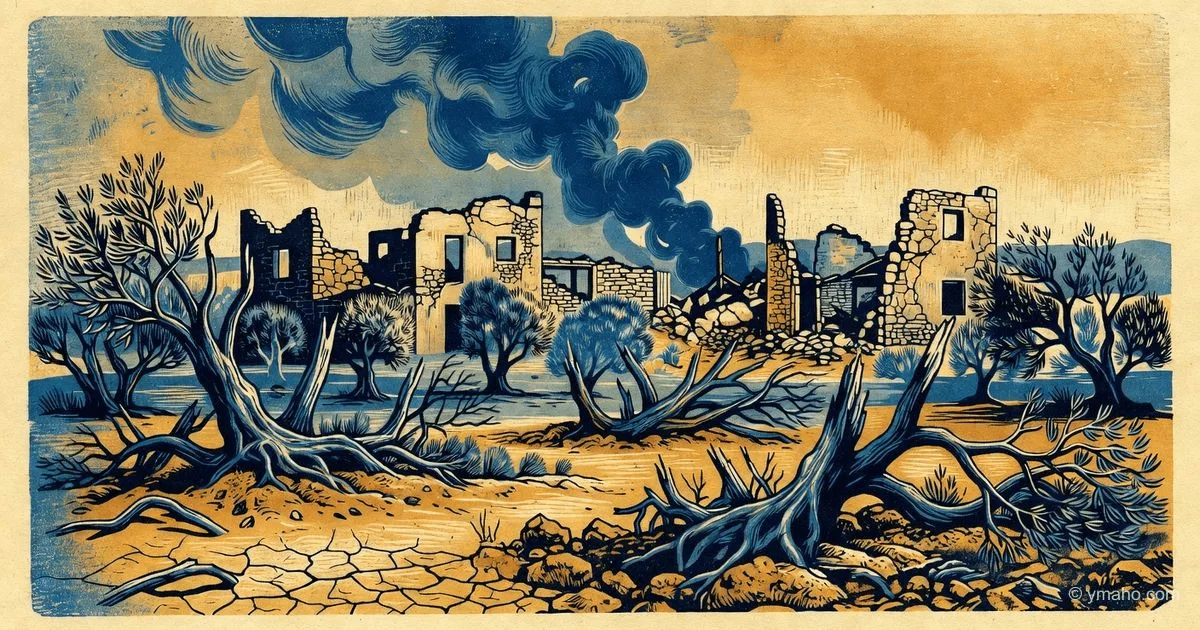
What exactly is being destroyed? Agriculture. Olive groves, fruit orchards, seasonal crops, livestock farms. The Director General of Lebanon’s Ministry of Agriculture, Louay Lahoud, confirms: large areas of perennial plantations, part of the country’s historical and cultural heritage, have been destroyed. This is not “collateral damage.” This is the systematic destruction of income sources.
Figures that should make anyone following commodity markets think: Lebanon’s agricultural sector has shrunk by 40%. The tourism industry is completely paralyzed. Lebanon’s Finance Minister Yassin Jaber estimated direct and indirect losses from Israeli aggression at $20 billion, and GDP contraction at 7–10% for this year.
That zero in that figure is not extra. Twenty billion dollars. For a country with a pre-crisis GDP of about $25 billion, this means economic collapse. Lebanon is officially and definitively becoming a failed state, if it isn’t one already.
Timeline and Context
Let’s reconstruct the picture of recent days, which mainstream media scatter across different articles without connecting into a whole.
May 25, 2026 — Israeli Prime Minister Benjamin Netanyahu orders intensified operations in Lebanon. The formal pretext is Hezbollah’s shelling of northern Israel. But shelling had occurred before. What changed? According to my sources, the Israeli leadership made a strategic decision — to create a buffer zone up to 10–15 km deep from the border, completely cleared of population and infrastructure.
May 29, 2026 — Peak escalation. The IDF strikes the city of Tyre and its surroundings. Four people killed in Abbasiya near Tyre. Another in Deir Kanoun an-Nahr. Strikes hit buildings, motorcycles, even a hospital in Tibnin — 9 people wounded, including 7 medical workers.
May 30, 2026 — Salam delivers a televised address, accusing Israel of a scorched-earth policy. But the key phrase, almost uncited: “We support negotiations with Israel because it is the least costly path for our country.” The Lebanese PM effectively admits: war is ruining us faster than any humiliating agreement.
What happened on May 31, 2026? Hezbollah retaliated — for the first time since April, rockets reached the city of Safed in northern Israel. Five rockets, the air defense system intercepted one, the rest fell. Israeli Defense Minister Israel Katz stated that Tel Aviv will not submit to any equations imposed by Hezbollah. The escalation cycle closed.
Who Wins and Who Loses
On the surface, everyone loses. But that’s not true.
Who wins:
First — Israel. Yes, it sounds cynical, but strategically the IDF is achieving its goal. The buffer zone in southern Lebanon is expanding. Hezbollah is being pushed back from the border. The cost for Israel is mainly military expenses, partially covered by U.S. aid (in 2026, about $3.8 billion, as in previous years). This is a cheap war for Tel Aviv if viewed as an investment in border security.
Second — large reconstruction contractors. When the war ends, Lebanon will need tens of billions for rebuilding. French, Chinese, and Turkish construction companies are already forming consortia, preparing for tenders. Destroyed infrastructure means future contracts. Cynical, but true.
Who loses:
First — the Lebanese population of the south. 3,324 people killed since March 2, 2026. The UN Children’s Fund (UNICEF) reports: on average, 11 children die every day. This is not collateral damage. This is an ethnic cleansing in plain sight. Tens of thousands have already left their homes and are unlikely to return — no jobs, no homes, no olive groves.
Second — the Lebanese economy. $20 billion in damage with a GDP of about $25 billion means the loss of nearly an entire year’s economic output. Lebanon’s foreign reserves are estimated to have fallen below $8 billion. Meanwhile, the Lebanese pound has lost 98% of its value since 2019. It seems there’s nowhere lower to go. But there is.
Third — international investors in Lebanese Eurobonds. Before the 2020 default, Lebanon issued Eurobonds worth about $31 billion. They now trade at 9–12 cents on the dollar. After these events, they will trade at 5–7 cents. Those who held them lost.
What the Media Leaves Out
The central insight that the media, consciously or not, suppresses: Israel is not fighting Hezbollah in the classical sense. It is destroying the economic base of southern Lebanon to create a zone unfit for life. And this is done with the complete silence of the international community.
Notice the dynamics. Over the past two weeks, the IDF has destroyed dozens of olive groves, fruit orchards, and livestock farms. These are not military targets. They are sources of income for thousands of families. Lebanon’s Ministry of Agriculture reported that farmers’ access to their land is blocked, and chemicals are being sprayed from the air to destroy the soil. The UN Interim Force in Lebanon (UNIFIL) confirmed on February 2 cases of chemical spraying.
What does this mean? Even if a ceasefire happens tomorrow, people cannot return and grow crops. The soil is poisoned. Olive trees that are hundreds of years old will not recover. This is scorched-earth policy in the literal, not figurative, sense.
A second non-obvious fact: the U.S. gave Israel a green light for this operation. Formally, American mediators extended the ceasefire on May 17, 2026, for another 45 days. But in fact, the IDF carried out 108 strikes in a single day after this extension. If Washington were opposed, they would have signaled. They didn’t. So they agree.
Third fact: Hezbollah is weakening, but this is not reported because it benefits Israel and the U.S. Hezbollah’s response — 16 operations per day, a rocket attack on Safed — is not a sign of strength, but of desperation. They are running out of short-range rockets. Iran, their main sponsor, is itself under pressure. Supply routes through Syria are cut by Israeli aircraft. Hezbollah is on its last legs but cannot admit it — otherwise its reputation in Lebanon would collapse.
Forecast: Next 30 Days and 90 Days
30 days:
Escalation will continue, but Israeli strikes will shift from military targets to economic infrastructure — ports, warehouses, roads, bridges. Goal: make southern Lebanon unlivable by winter. Hezbollah will respond with pinpoint strikes, but with less intensity.
Key indicator: Brent crude oil price. If it exceeds $100 per barrel, the market believes the conflict will expand into Iranian territory. If it stays in the $90–95 range, everyone understands that Lebanon is a local story.
90 days:
By the end of August 2026, southern Lebanon will be an exclusion zone. 70–80% of the population will have left their homes. Reconstruction will take at least 5–7 years and require $20–30 billion in foreign aid. Question: who will provide this money? Saudi Arabia? UAE? Europe? Their own budgets are strained. Most likely, reconstruction will stall for years, and Lebanon will enter a phase of prolonged collapse — similar to Syria, but without an external player willing to invest.
For financial markets, this means a flight from Lebanese risk. Lebanese Eurobonds will fall to 3–5 cents. Bank stocks still trading on the Beirut Stock Exchange will crash 40–50%. The country’s foreign reserves will be completely exhausted by year-end. Lebanon faces de facto full dollarization of the economy — with a complete absence of dollars in cash circulation.
Editorial Forecast
Asset: Lebanese Eurobonds maturing in 2028 (LEBAN 6.65% 02/28).
Direction: Decline of 10–15% in the next 48–72 hours.
Key levels: Current price around 9–10 cents on the dollar, support at 7.5 cents, resistance at 11 cents.
Confidence level: High (82%).
Main risk: Unexpected U.S. intervention demanding an immediate ceasefire and an emergency aid program — this would return quotes to 12–13 cents within 24 hours, but the probability of this amid Trump’s election campaign is near zero.
The editorial opinion is not an investment recommendation.
— Editorial Team