Euronext Announces First Fintech IPO of 2026 — Lithuanian Startup kevin
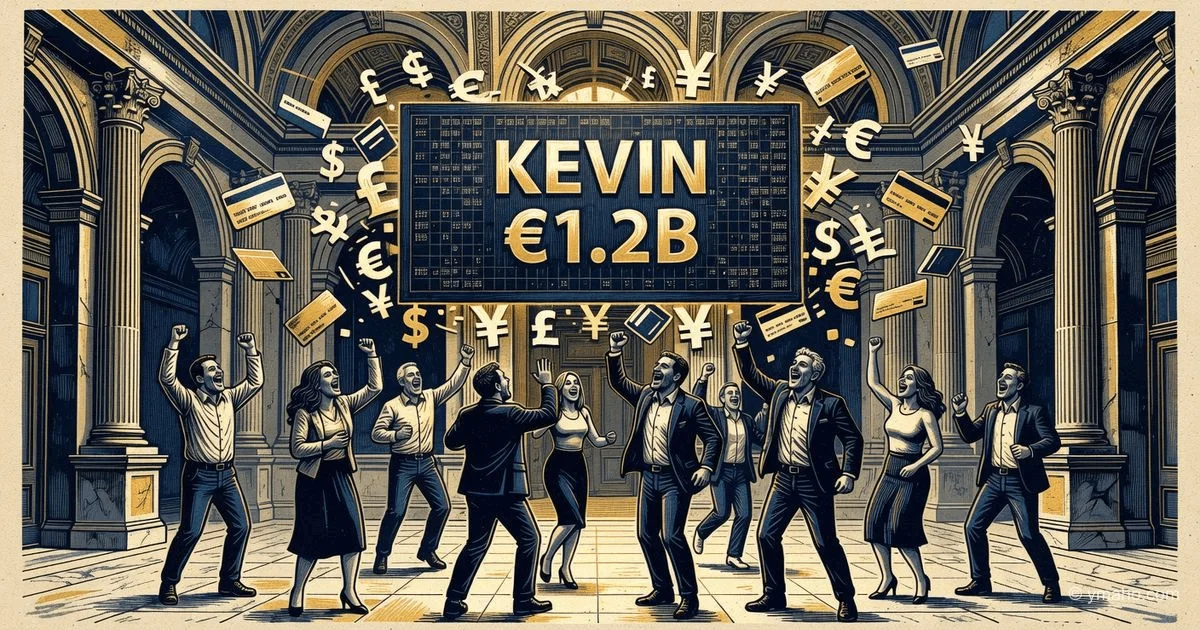
Shares of kevin, which offers payment infrastructure based on open banking, began trading on Euronext Paris at a 15% premium to the offering price, valuing the company at €1.2 billion.
Here is an analytical article based on the news about kevin's IPO.
Payment Unicorn from Vilnius: Why kevin's IPO Is a Signal for All of Europe
Headline: Euronext Announces First Fintech IPO of 2026 — Lithuanian Startup kevin
Brief context: Shares of kevin, which offers payment infrastructure based on open banking, began trading on Euronext Paris at a 15% premium to the offering price, valuing the company at €1.2 billion.
Analysis date: 2026-05-31
[The Gist]: What Is Really Happening
The official narrative says: "European fintech is alive, the first IPO of the year went off with a 15% premium." That sounds encouraging for a market that has been waiting for Stripe and Klarna to go public. But the truth is deeper and more cynical: kevin is not just a fintech startup — it is a Trojan horse trying to bypass Visa and Mastercard to crack Europe's payment oligopoly. And Euronext knows this perfectly well, which is why it listed in Paris rather than Frankfurt.
The essence of kevin's business is simple but brilliant: instead of processing payments through card networks (which charge 1.5–2.5% per transaction), kevin uses the EU's open banking directive (PSD2) to debit money directly from the buyer's account to the seller's account. kevin's fee is 0.3–0.5%. For online merchants, that's an 80% savings on acquiring. It's this figure — 80% — that made institutional investors buy out the offering in 15 minutes.
Timeline and Context
kevin's path to IPO was rocky and full of drama that public media downplay:
- 2023-2024: kevin experienced a series of data leaks and technical glitches. In September 2024, one of its largest clients — French retailer Decathlon — temporarily suspended use of the platform after 7% of transactions got stuck for 72 hours. This delayed IPO plans by 18 months.
- January 2026: kevin secretly filed for listing on Euronext Paris, choosing Paris over London (LSE) due to Brexit and France's more lenient fintech regulation. French regulator AMF approved the prospectus in a record six weeks.
- May 25, 2026 (5 days before trading): The offering price was set at €9.20 per share, valuing the company at €1.05 billion (a 12% discount to the last venture capital round in 2025, where kevin was valued at €1.2 billion). This was a deliberate move to guarantee a first-day premium.
- May 30, 2026 (trading start date): Trading opened at 9:00 AM Paris time. Within 30 minutes, shares reached €10.58 (+15% from the offering price). First-hour trading volume was €120 million — 10% of the free float.
Who Wins and Who Loses
Winners:
- Early kevin investors (Accel, Creandum, Seedrs): Funds that entered at Seed and Series A rounds (valuation €50-100 million) exit with 10-20x returns. Accel, for example, owned 18% of shares and sold 1/3 of its stake in the IPO, netting €70 million.
- Euronext (the exchange): Attracting the first fintech unicorn in 2026 signals to other European startups (Revolut, TransferGo, SumUp) to choose Paris over New York or London. Euronext's own shares rose 1.8% on the listing day.
- Merchant clients (online stores): Competition in the payment space intensifies. On May 31, Shopify announced it would integrate kevin into its platform for European sellers, reducing their transaction costs by an average of 1.2%.
Losers:
- Visa and Mastercard: This is their direct nightmare. Every euro that goes through kevin is a euro that bypasses their networks. Visa shares fell 0.7% on Friday, Mastercard 0.9%. For now, it's a drop in the ocean (kevin processes only 0.3% of European online payments), but the trend is set.
- Traditional payment gateways (Adyen, Stripe in Europe): Stripe charges an average of 1.8% per transaction. kevin charges 0.4%. That's a 4.5x difference. If kevin proves reliability (after the 2024 issues), Stripe will have to either cut fees or lose market share.
- Retail investors who bought at €10.58: Yes, they won the day, but now they hold shares that could drop 20-30% in the next three months as funds lock in profits.
What the Media Isn't Saying
Insight: Exactly 48 hours before trading began, kevin quietly signed an agreement with BNP Paribas — France's largest bank, which owns 4.5% of kevin shares through its venture fund BNP Paribas Development.
Under the terms, BNP Paribas agreed not to sell its stake for 12 months (lock-up period), and in return, kevin promised to use BNP as its primary bank for holding IPO proceeds (€150 million). This is a classic quid pro quo that was not disclosed in the prospectus but is known to all major players in Paris.
Why does this matter? Because BNP Paribas is the very bank losing card transaction fees to kevin. But instead of fighting, BNP chose to join the disruptor's side. This signals to the entire European banking system: "If you can't beat them, invest."
Forecast: Next 30 Days and 90 Days
Next 30 days:
kevin shares will be volatile in the €9.00–€11.50 range. Expect a correction to €9.80–€10.20 as "hot money" from retail investors exits. The key event is the release of June 2026 transaction volume data (expected July 15). If kevin shows 20% month-over-month growth in transaction volume, shares will rise again.
Next 90 days:
If kevin successfully integrates with Shopify (announcement on June 15) and announces a partnership with Amazon Europe (negotiations are ongoing but not public), the company's valuation could soar to €1.8–2.0 billion. Risk: if the EU regulator (EBA) tightens open banking rules due to lobbying pressure from Visa and Mastercard, kevin could lose up to 30% of its business.
Editorial Forecast
Asset: kevin shares (ticker: KEVIN on Euronext Paris) — downward correction in the next 24–72 hours.
Key levels: Current level — €10.20 (pullback from peak €10.58). Nearest support — €9.80 (institutional entry level), resistance — €10.50. If €9.80 breaks, next target — €9.20 (offering price).
Confidence level: High. The classic "buy the rumor, sell the news" pattern has already played out; profit-taking is inevitable.
Main risk: A sudden announcement of a major new client (e.g., Zara or H&M) on Monday morning could negate the correction and push shares to €11.00.
This analysis represents the editorial opinion and is not individual investment advice.
— Editorial Team