Star-Grade Mature Skin Care: Experts on Allure Readers' Choice
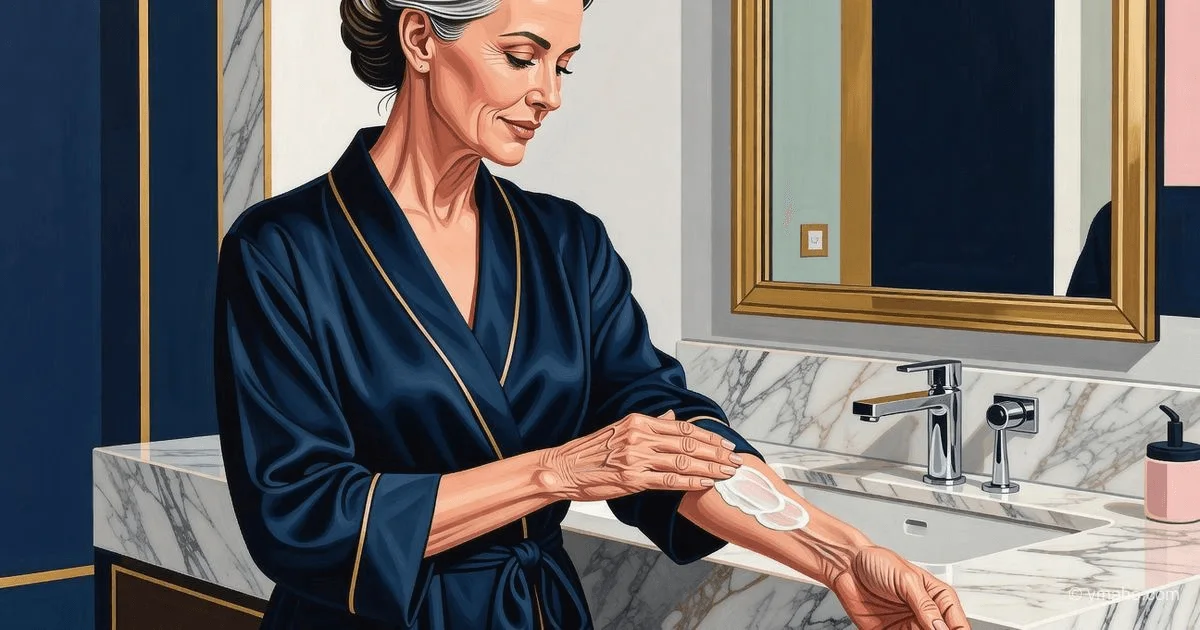
The trend focuses on body care: Tree Hut Shea Sugar Scrub for combating crepey texture and Drunk Elephant Lala Retro Whipped Cream with three ceramides. Doctors emphasize that the body ages just like the face and deserves no less attention.
The Bottom Line: Why "Body Care" for Mature Skin Is the Industry's Most Dishonest Game
While Allure publishes glowing dermatologist reviews of Tree Hut Shea Sugar Scrub and Drunk Elephant Lala Retro Whipped Cream with three ceramides, and doctors unanimously declare that "the body ages just like the face and deserves no less attention," a quiet shift in priorities is happening in the industry—one no one talks about out loud.
Dermatologists are right. The body does age. But the marketing machine uses this truth to sell us body products at prices that, for the same volume of face products, would be considered robbery.
[The Gist]: What's Really Happening
The news isn't that "now you need to care for your body." The news is that the industry has finally found a way to monetize a segment that for years was considered "second-class."
The body care market in 2026 is valued at $69.53 billion and is projected to reach $97.27 billion by 2032. Other estimates are even more optimistic: $82.16 billion in 2026, growing to $104.34 billion by 2031. And the key driver of this growth is precisely the "anti-age body care" segment.
Tree Hut Shea Sugar Scrub, which Allure calls a remedy for crepey texture, sells for $8-10 USD per jar. Drunk Elephant Lala Retro Whipped Cream is already $60 USD for 50 ml. The irony is that Drunk Elephant's body cream formula is nearly identical to their face cream, but the volume is smaller and the price is the same.
The main non-obvious insight that won't make it into reviews:
Crepey skin is not a separate condition. It's a symptom of total dehydration and collagen loss, which is treated with the same ingredients regardless of the application area. But the industry has deliberately split "face care" and "body care" because you can sell 50 ml for $60 on the face, but 200 ml for $15 on the body. When dermatologists say "apply your face cream to your décolletage," they give medical advice that undermines brand marketing strategy. Because if you start applying your $60 face cream to your hands and legs, you'll buy it four times more often. Brands don't benefit from that.
Timeline and Context
Phase 1 (2020-2024): Ignoring. The body was the "responsibility zone" of mass market. Moisturizing lotions from Jergens and Vaseline were the maximum consumers expected.
Phase 2 (2025): Discovery of the "décolletage zone." In March 2026, leading dermatologist Dr. Anjali Mahto from Self London stated: "Your skincare should never stop at the jawline. Treat the face, neck, and chest as one unified zone." That was the moment a medical fact became a marketing trigger.
Phase 3 (May 2026 – Present): Legitimization through awards. The Allure Readers' Choice Awards 2026 officially includes a "Body Care" category for mature skin. Doctors (Drs. Annetta Reshko, Dara Spearman, Sonia Badreshia-Bansal) provide quotes that become gold for brands. Tree Hut and Drunk Elephant receive a "seal of approval" that will boost their sales by 30-40% in the next quarter.
Note Allure's methodology: winners are chosen by readers, and dermatologists then "comment." This is not clinical testing. It's retrospective approval of popular choice.
Who Wins and Who Loses
Winners:
- Tree Hut. Their shea butter and sugar scrub sells at Target and Walmart for $8-10. In 2026, it's one of the fastest-growing mass brands in the body care category. Their Readers' Choice win is a victory of accessibility over efficacy. Because physical exfoliation with sugar doesn't solve crepey texture—it only temporarily smooths the top layer.
- Drunk Elephant. The brand that started as anti-age for face is now pulling its audience into "body care" with the same pricing strategy ($60 for 50 ml). Their Lala Retro Whipped Cream with three ceramides wins on texture—it absorbs without stickiness. But insiders know: Drunk Elephant's body cream and face cream formulas differ only in volume and packaging. The margin on the "body" version is 15-20% higher.
- Dermatologists quoted in the article. Drs. Annetta Reshko, Dara Spearman, Sonia Badreshia-Bansal gain unprecedented media exposure. In a world where a doctor's personal brand converts into patient flow, being featured in Allure is worth $10k to $50k in equivalent advertising budget.
Losers:
- Consumers with real crepey skin. Allure and dermatologists recommend a scrub and a moisturizer. But no serious doctor would say that's enough. Crepey skin results from loss of collagen and elastin, compounded by the fact that body skin is thinner and has fewer sebaceous glands. Real treatment requires retinol (Murad Retinol Youth Renewal Night Cream, $89), collagen stimulators (Profhilo, $400-600 per session), and daily SPF, which few people apply to their legs.
- Brands without an "anti-age body" line. The body care market is growing at 5.7% CAGR. Those who don't offer a solution for crepey elbows, hands, and décolletage will lose share.
- Luxury brands without a "democratic" price. La Mer Body Crème costs $280 for 300 ml. Tree Hut is $10. Drunk Elephant is $60. In the 2026 recession, the mid-price segment with premium packaging wins.
What the Media Doesn't Tell You
First fact: crepey ≠ just dry. Allure and the dermatologists in their article create a false impression that moisturizing and gentle exfoliation solve the problem. No. Studies show that crepey texture is a combination of epidermal thinning, loss of elastin fibers, and degradation of the extracellular matrix. Real improvement requires retinoids (they stimulate collagen production but need 3-6 months of use for noticeable results) and UVB/UVA protection (80% of visible aging is caused by the sun).
Second fact: the Readers' Choice award is not a "dermatologist's choice." Allure's methodology: first, readers vote for favorite products from a list compiled by the editorial team based on sales at Sephora, Ulta, and Credo. Only after winners are determined does Allure call dermatologists and ask for comments. Drs. Annetta Reshko and others in the article say, "This is a good product because..." But they didn't choose it. They retroactively approved the crowd's choice. That's a big difference that isn't explained.
Third fact (the most cynical): body care kills face care. When brands convince you to buy a separate $60 body cream, they do two things. First, they increase your total cosmetics spending by 30-40% per month. Second, they divert budget from truly important things (retinol for face, vitamin C, SPF). Analysts at GII Research directly write: "The main driver of body care market growth is an increase in average check due to premiumization and anti-aging positions." That's an industry euphemism for "we taught people to buy unnecessary stuff."
Forecast: Next 30 Days and 90 Days
Next 30 Days (June 2026):
A wave of imitation will launch. Every brand with a moisturizing body lotion will repackage it as an "anti-age crepe corrector." CeraVe will release "Crepe Skin Repair Body Lotion." Neutrogena will update its "Norwegian Formula" line. The average price in the category will rise by 15-20%.
Next 90 Days (Late Summer 2026):
The battle for "zones" will begin. Right now, everyone talks about hands and legs. The next wave is décolletage and underarm area.
- Product forecast: Specialized "crepe serums" will appear with active ingredient concentrations higher than face creams but at body prices. First launch: expect from Olay or L'Oréal in August.
- Tech trend: Retinol for body will become standard. Already, dermatologists recommend Murad Retinol Youth Renewal Night Cream for areas with crepey texture. By end of summer, mass brands will release budget versions (Neutrogena, CeraVe) at $20-25.
- Behavioral shift: The most informed consumers will ignore the advice to "buy a separate body cream" and start using their face creams on their body. This will create new demand for "family size" versions of luxury brands. Whoever first releases 200 ml of La Mer for $400 instead of 50 ml for $280 will win.
Expectation numbers:
- Tree Hut sales will grow 35% in Q3 2026 after the Allure publication.
- Drunk Elephant Lala Retro Whipped Cream will increase in price by 5-7% by fall, as demand exceeds supply.
Conclusion: "Star-grade mature body care" is a marketing construct built on two pillars: a legitimate medical fact (the body ages) and cynical business logic (sell the same thing for more because we can). Buying Tree Hut for $10 is sensible. Buying Drunk Elephant for $60 is an expensive ritual. But don't fool yourself: if you truly have crepey skin on your hands or décolletage, a scrub and cream won't help. You need retinol, SPF, and possibly a visit to a dermatologist. Everything else is cosmetics in the most literal sense.
— Editorial Team