Beauty Guide for the New Season: Postnatal Skincare
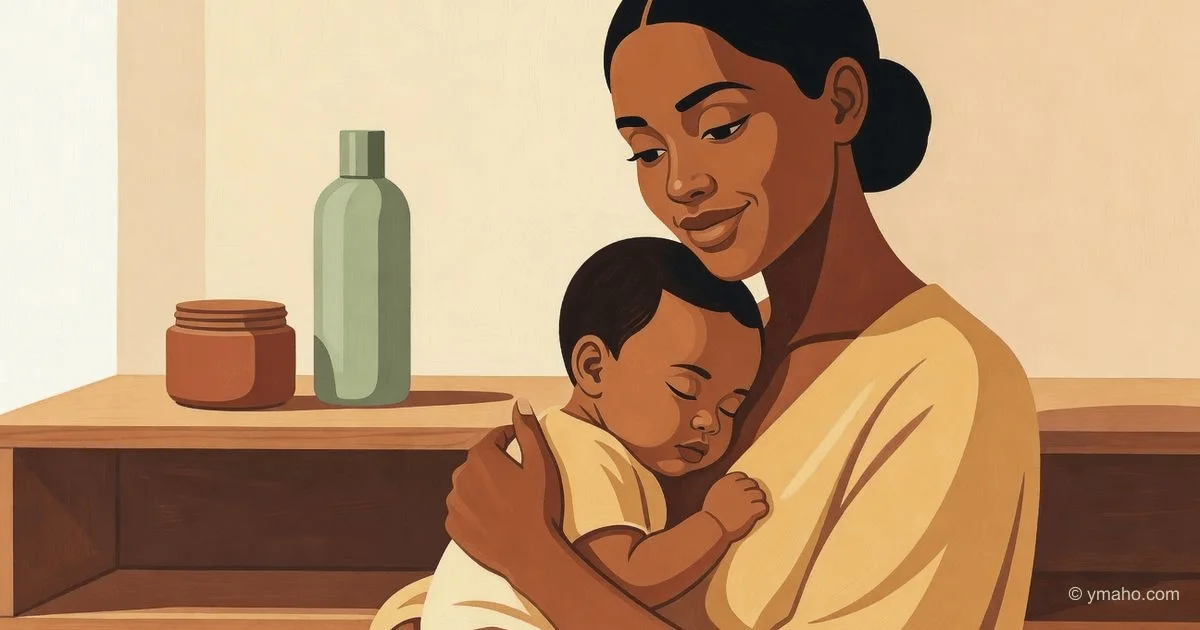
Harper's Bazaar has curated essential products that help mothers feel better during the postpartum recovery period (the fourth trimester). The selection includes items that restore comfort and a sense of identity, from moisturizing balms to restorative shampoos.
The Fourth Trimester as a Business: Why the Beauty Industry Has Finally Noticed a Forgotten Audience
While Harper's Bazaar publishes "must-have" lists for postpartum recovery, the industry is finally acknowledging what mothers have silently known for years: the fourth trimester is not just a period of caring for a newborn, but also a time of deep identity crisis for women. Cosmetics here serve not as a luxury, but as a tool for reclaiming one's former self.
[The Core]: What's Really Happening
Behind the touching stories from Harper's Bazaar's editor-in-chief about how "a single lip balm helped her feel like herself again after IVF" lies a harsh economic calculation. The maternal care market is not just growing—it's exploding.
According to the latest data from May 2026, the global market for pregnancy and postpartum products is valued at $33.95 billion, with a projected growth to $42.72 billion by 2030 (CAGR 6.2%). The broader "maternity & personal care" category is expected to reach $130.23 billion by 2035.
But the numbers aren't the main point. The main point is a shift in direction. Previously, the industry viewed pregnancy as a temporary condition requiring "safe" versions of regular products. Now, the postnatal period is being carved out as a separate category with its own consumer logic.
The key non-obvious insight that won't make it into glossy magazines:
The fourth trimester is an ideal marketing scenario because it doesn't sell creams and shampoos. It sells regaining control. After childbirth, a woman loses control over her body, schedule, sleep, and hormones. Buying the "right" moisturizing balm or restorative shampoo is a ritual that restores the illusion of control. Brands that understand this (CeraVe, Burt's Bees, Earth Mama) build their communication not around "solving a problem," but around "empathy and recognition." Forbes calls this the "anchoring effect": one product becomes a symbol of returning to normalcy.
Timeline and Context
Phase 1 (2015–2022): The Era of "Safety." The market is dominated by pharmacy brands labeled "for pregnant women." The main narrative: "Do no harm to the baby." Cosmetics are perceived as a potential threat.
Phase 2 (2023–2025): The Explosion of "Clean" Cosmetics. Specialized D2C brands like The Spoiled Mama and Earth Mama Organics emerge. Consumers begin demanding not just "safety," but effectiveness in the face of exhaustion and hormonal chaos.
Phase 3 (May 2026 – Present): The Point of Consolidation. Harper's Bazaar publishes a guide featuring top industry experts—from the magazine's beauty director to the head of social trends at M.A.C Cosmetics. This is a sign: mass-market and luxury brands are officially entering the category.
Confirmation of the trend comes from M&A deals. In November 2024, The Good Glamm Group acquired The Moms Co. (an Indian D2C brand for moms and kids). In January 2025, LOLA launched a full postnatal line with gel perineal pads and organic sanitary pads. The market is consolidating; smaller brands are becoming acquisition targets.
Who Wins and Who Loses
Winners:
- Brands with evidence-based claims and expert ambassadors. Harper's Bazaar relies on opinions from Sarah Tan (journalist), Julie Wilson (Cosmopolitan), and Jenna Rosenstein. In an era of information overload, a new mother doesn't read labels—she trusts "her" experts.
- Korean and Japanese brands focusing on minimalism and safety. In Asian guides for pregnancy and breastfeeding care, bestsellers include Hada Labo (hyaluronic acid), CeraVe (ceramides), and COSRX. Japanese and Korean cosmetics win by contrast with the "heavy artillery" of Western anti-aging brands.
- FemTech companies integrating care with health. The pregnancy care market includes not only creams but also orthopedics, incontinence treatment, and lymphatic drainage. The smartest players build ecosystems: skincare + health tracking + telemedicine.
Losers:
- Premium brands without a "mom" line. Estée Lauder and La Mer are absent from fourth-trimester lists. Their time will come later, when women exit "survival mode." But by then, loyalty will already be captured by CeraVe and Burt's Bees.
- Eco-brands without medical background. Essential oils and "natural cosmetics" without clinical trials are losing ground. As Asian guides note, "natural doesn't always mean safe": rosemary or sage oils can be dangerous during pregnancy.
- Offline pharmacies without e-commerce. In 2026, online channels are the key growth driver, while offline lags. A new mother won't go to a pharmacy with a baby. She'll order everything for delivery.
What the Media Isn't Saying
First fact: tariffs kill accessibility. According to a TBRC report from February 2026, tariffs have increased the cost of imported creams, oils, and gels in North America and Europe. Categories like "stretch mark minimizers" have been hit hardest. This has led to higher retail prices and supply delays. Paradoxically, the best postnatal products become more expensive precisely when women are most financially vulnerable (maternity leave, reduced income).
Second fact: the myth of "safety" during breastfeeding. Many believe that any product can be used during lactation because "nothing passes through the skin into breast milk." This is dangerously simplistic. Research shows that some ingredients (salicylic acid in high concentrations, hydroquinone, retinoids) still require caution. The real risk isn't in the milk, but in skin-to-skin contact between mother and baby. Cream on the chest, neck, or hands can transfer to the baby's skin. That's why guides advise: don't apply products directly to the breasts and nipples, and wash hands before touching the baby.
Third fact (cynical): hair issues are the most monetizable. 2026 data shows that 91% of mothers experience postpartum hair loss, with 47% experiencing moderate to severe loss. This is where the main brand battle unfolds. And this is where the most aggressive marketing budgets are spent. But the media doesn't report that most "specialized" products are just regular shampoo with a 300% marketing markup.
Forecast: The Next 30 Days and 90 Days
Next 30 Days (June 2026):
Expect an avalanche of collaborations between maternal care brands and mom influencers. Harper's Bazaar has set the trend—now every self-respecting beauty blogger will release "my guide to the fourth trimester." Key metrics to watch: growth in search queries for "postpartum skincare" and "breastfeeding safe products."
Next 90 Days (Late Summer 2026):
Market consolidation will begin through M&A deals.
- Deal forecast: Large conglomerates (P&G, Unilever, J&J) will start hunting for successful D2C brands like Earth Mama Organics. A brand with $50-100 million in revenue could be valued at $300-500 million.
- Tech trend: "Smart" postnatal kits with QR codes linking to personalized recovery programs (nutrition + care + exercise) will emerge. Integration with health tracking apps (like Midi Health) will become standard.
- Geographic shift: The fastest growth is in the Asia-Pacific region, especially China, India, and Japan. Western brands will actively enter these markets through local collaborations.
What an insider should do: Don't look at the US. Look at Japan and Korea. That's where trends for minimalist, safe, and tech-driven care are forming, which will reach the West in 6-12 months. Also, watch the development of the "perineal care" segment—in January 2025, LOLA launched cooling/warming gel pads, and this is just the beginning. The next step is personalized pelvic floor recovery kits.
Conclusion: The fourth trimester is no longer the "shadow of pregnancy." It has become an independent category with its own growth drivers: empathy, safety, convenience, and the return of identity. Brands that understand this will grow. Those that continue to sell "stretch mark cream" as the only solution will remain in the past.
— Editorial Team