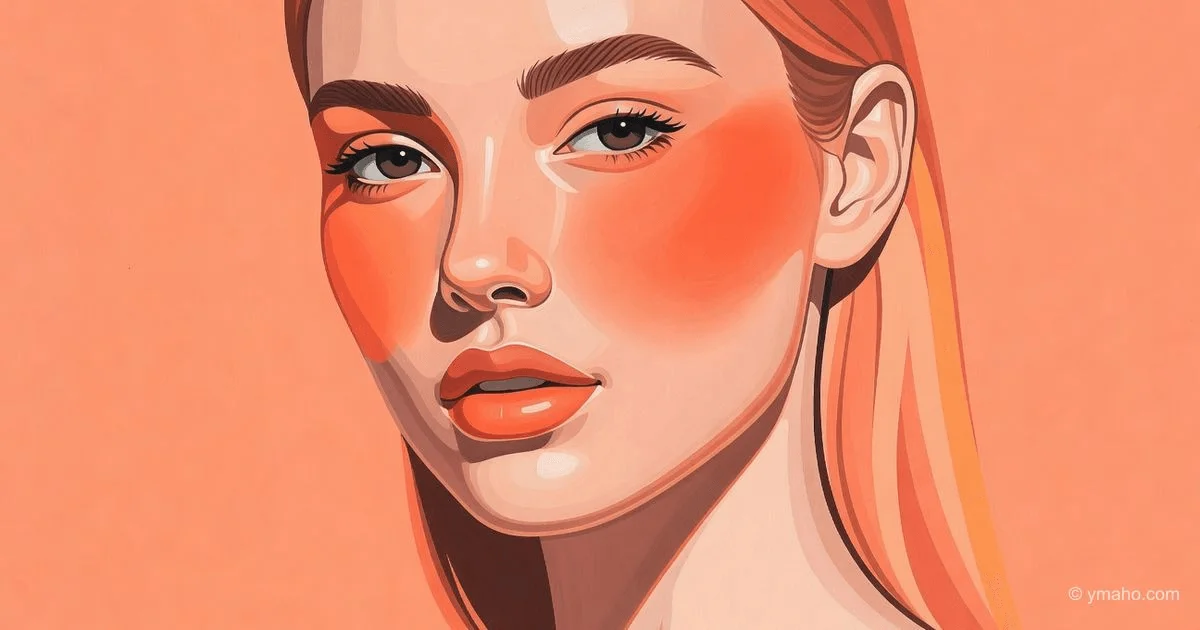
The Ultimate Summer Lifestyle Trend: Sunburn Blush Without Borders
Following the Rabanne and Chloe shows, applying blush to the apples of the cheeks and the bridge of the nose to mimic a light tan is coming into fashion. Preference is given to cream and gel textures that give the skin a natural glow and freshness.
Fake Tan for $50: Why 'Sunburn Blush' Is the Deal of the Century for the Industry
While Grazia Italia and Aljamila are touting the return of the 'carefree summer look' and TikTok floods us with videos under the hashtag #sunburnblush, which has amassed nearly 100 million views, I see not an aesthetic trend but a marketing operation that the industry has been preparing for the last three years. The technique of applying blush to the apples of the cheeks and the bridge of the nose to mimic 'sunburned cheeks' is not about beauty. It's about a total reset of the 'blush' category.
[The Gist]: What's Really Happening
The decorative cosmetics market in 2026 is worth $39.88 billion. But the fastest growth in the Face Makeup segment is being shown by cream blushes. The segment of waterless cream blush sticks will grow from $1.3 billion in 2026 to $4.2 billion by 2036. That's a CAGR of 12.1%—higher than the entire color cosmetics category.
Why is that? Because blush is the only product in decorative cosmetics that has no functional substitute. Foundation can be replaced by BB cream or tint. Lipstick by lip gloss. But 'blush' as a category cannot be replaced by anything else. And the industry has finally realized: if you can't kill a product, you must reinvent the way it's consumed.
The main non-obvious insight:
The #sunburnblush trend is not an accident. It's an industrial response to two simultaneous crises: the decline in lipstick sales (lockdowns taught women not to paint their lips under a mask) and the oversaturation of the bronzer market. When the pandemic killed lipstick as a category, manufacturers needed to find a new 'anchor' product that would occupy the same volume in the makeup bag and the same share of the receipt. Blush became that anchor. The 'sunburn' technique is simply a way to make you apply three times more blush than before. Instead of two swipes on the cheekbones—6-8 dots on the cheekbones, nose, forehead, and chin. Product consumption has increased by 300%. The industry is thrilled.
Timeline and Context
Phase 1 (2023-2024): The Blush Revival. As early as 2023, cream blushes made a comeback thanks to the 'clean girl aesthetic' and TikTok videos. But back then, they were applied sparingly—only on the apples of the cheeks.
Phase 2 (2025): Placement Technique Experiments. Makeup artists start playing with application zones: the 'lifting effect'—blush towards the temples, 'romantic look'—center of the cheeks, 'sunburn'—bridge of the nose + cheekbones. Grazia Italia notes: placement technique can completely change the structure of the face.
Phase 3 (April-May 2026): #sunburnblush Explosion. With the arrival of summer, the hashtag gathers nearly 100 million views. Makeup artists recommend shades with an orange undertone—peach, coral, papaya, 'dusty nectarine'—for maximum naturalness. At the Rabanne and Chloe shows, this trend is legitimized on the runways. Aljamila magazine notes: it's the most talked-about makeup trend of the season.
February 2026 (Actual Background): Research and Markets publishes a forecast: the color cosmetics market will grow, with blush being one of the leaders in the Face Makeup category. Circana adds: in Q1 2026, blush and bronzer showed solid growth, while mass makeup overall declined.
Who Wins and Who Loses
Winners:
- Producers of cream and liquid blushes. Westman Atelier, Rare Beauty, Saie, Glossier—their sales are skyrocketing. It is widely recognized that cream formulas are best suited for sunburn blush due to their ability to blend into the skin and create a natural, dewy finish.
- Brands of waterless sticks. The segment of waterless cream blush sticks is growing at a CAGR of 12.1%. Consumers want portability: a stick can be tossed in a bag and refresh the blush in 10 seconds.
- Sephora and Ulta. Mass prestige and mass market are converging: in Q1 2026, both showed 6-7% growth. Blush is a key driver.
- E-commerce and TikTok Shop. Direct sales through social networks are growing. The trend is visual—it's easy to sell through a 15-second video.
Losers:
- Producers of powder blushes. They don't provide the 'dewy' finish needed for the 'just off the beach' effect. Their share in the Face Makeup category is shrinking.
- Brands of matte lipsticks. Lip products continue to lose market share that they haven't regained since the pandemic. The focus has shifted to eyes and cheeks.
- Consumers with oily skin. Cream blushes on oily skin can 'slide' after 2-3 hours. The solution is powder blush over a mattifying primer. But that's two products, not one.
What the Media Isn't Saying
First: Bronzers are dying. The #sunburnblush trend is directly killing the bronzer category, which has dominated for the last 5 years. Why buy a separate bronzer to mimic a tan when blush does the same thing but looks more natural? According to a Circana report from May 2026, bronzer sales in the premium segment fell by 4% in Q1, while blush grew by 7%.
Second: 'Carefree' is a lie. Aljamila writes about a 'carefree vacation.' Moskovsky Komsomolets about 'carefree freshness.' But creating this look requires: foundation, concealer, cream blush, highlighter, setting spray. That's 5-6 products. Carefreeness costs money. The average ticket for a 'sun' look from a makeup artist in New York: $120-150 including products. At Sephora: $80-100 for product purchases.
Third (cynical insight): #sunburnblush is lip gloss 2.0. In 2023-2024, the main sales driver was lip glosses—they could be shown in videos, they gave a 'juicy' visual, they were used up quickly. Now cream blushes play the same role. They are just as photogenic, just as quickly used up (consumption has tripled due to the application technique over the entire central part of the face), and just as easily sold through short videos. The industry simply shifted advertising budgets from lips to cheeks.
Fourth: The shade trend—'papaya' and 'dusty nectarine'—is a rebranding of last year's stock. Hermès makeup artists used 'dusty nectarine' as early as June 2025. In 2026, the same pigment is sold under a new name. Manufacturers needed to clear out remaining stocks of warm orange pigments that sold poorly in 2025. The #sunburnblush trend is the perfect way.
Forecast: Next 30 Days and 90 Days
Next 30 Days (June 2026):
The trend will peak. Expect collaborations between blush brands and tanning salons/travel agencies ('perfect tan without UV'). Sephora and Ulta will set up dedicated shelves for 'sunburn blush kits': cream blush + applicator + highlighter. Price for such a set: $45-60.
Next 90 Days (End of Summer 2026):
- Hype decline: As soon as summer ends, the visual driver of the trend (association with vacation) will weaken. But the habit of using cream blush will remain.
- New technique: #sunburnblush will be replaced by #coldgirlblush ('cold blush' for winter)—shades of fuchsia, cherry, 'dusty raspberry' with a cool undertone. The application technique will remain the same—on the apples of the cheeks and the bridge of the nose—but the shades will shift to cool tones.
- Market consolidation: Large conglomerates (L'Oréal, Estée Lauder, Shiseido) will start acquiring successful indie cream blush brands. The goal: to get a ready-made formula and a loyal audience.
- Expected numbers: Cream blush sales in Q3 2026 will grow by 25-30% compared to Q3 2025. The waterless stick category by 35-40%.
What an insider should do: Don't watch the blush. Watch how brands start repackaging bronzers as 'terracotta blush' and selling them using the same application technique. It's already happening: the shade 'Mediterranean tan' is a bronzer renamed as blush.
Conclusion: The sunburn blush trend is a perfect storm. It combines visual appeal (Instagram and TikTok love 'before/after'), increased product consumption (beneficial for manufacturers), a change of season (summer 2026), and fatigue with complex contouring. The consumer thinks they've gotten closer to nature. The industry knows: it has simply taught you to buy three times more of the same product. Carefreeness turned out to be the most expensive investment of the season.
— Editorial Team