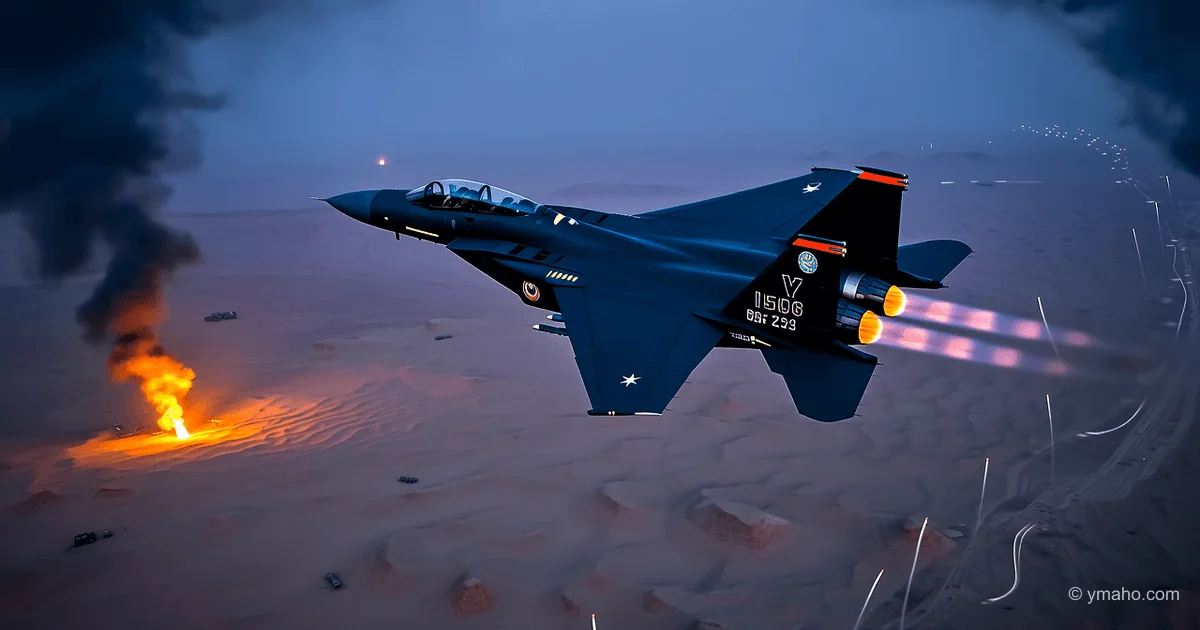
Reuters Data: Saudi Arabia Secretly Conducted Airstrikes on Pro-Iranian Shiite Militias in Iraq
It has emerged that during the conflict with Iran, Saudi fighter jets carried out covert strikes on facilities of Tehran-backed militias in Iraq, which were used to launch drones and missiles at Gulf countries.
What Reuters uncovered about the secret Saudi airstrikes on Iraqi territory is not just another frontline report. It is a look under the hood of the most dangerous phase of this conflict, which diplomats and officials on all sides tried to conceal. Iraq has become a shadow front where Saudi Arabia and Kuwait, fed up with Baghdad's inaction and cross-border attacks, began acting without regard for their neighbor's sovereignty.
The Essence: What Is Really Happening
This is not about isolated incidents but a systematic, covert campaign. Saudi fighter jets struck facilities of pro-Iranian Shiite militias in Iraq that were used to launch drones and missiles at targets in Saudi Arabia and Kuwait. Crucially, some of these strikes occurred around April 7—exactly when the US and Iran were trying to negotiate a ceasefire. This suggests Riyadh was acting on its own agenda, without waiting for Washington's green light and distrusting the diplomatic track.
Concurrently, missile strikes were launched from Kuwaiti territory into Iraq, destroying communication and drone control facilities of the Kata'ib Hezbollah group. Notably, it remains unclear who actually pulled the trigger—Kuwaiti military or the US contingent stationed there. This deliberate ambiguity creates a convenient gray area, allowing all parties to save face.
Timeline and Context
The roots of this escalation trace back to the early days of the conflict. Immediately after US and Israeli strikes on Iran on February 28, pro-Iranian forces in Iraq opened a "second front." According to The Wall Street Journal, over five weeks of fighting, they launched nearly a thousand drones, with up to half of all attacks on Saudi Arabia originating from Iraqi territory. Targets included oil fields in the Kingdom's Eastern Province, the Yanbu refinery on the Red Sea, Kuwait's only civilian airport, and even Bahrain.
Diplomatic efforts to resolve the issue failed. In March, Saudi Arabia and Kuwait warned Baghdad through diplomatic channels to rein in the militias. Kuwait summoned the Iraqi representative three times for explanations, and Riyadh invited the Iraqi ambassador on April 12. Meanwhile, Iraqi security forces attempted to intercept launch platforms—for instance, a launcher aimed at Saudi energy facilities was seized west of Basra. But none of this stopped the wave of attacks.
By mid-May, it became clear: official Baghdad either could not or would not control the Shiite militias, which number up to 250,000 fighters and have budgets in the billions of dollars. So Riyadh moved from warnings to action.
Who Wins and Who Loses
At first glance, Saudi Arabia achieved tactical success—destroying some of the infrastructure used for attacks and sending a signal to Tehran that it is ready to defend itself without regard for allies. But strategically, Riyadh finds itself in a vulnerable position. OPEC data shows Saudi oil production in April plummeted to 6.316 million barrels per day—the lowest since 1990, a 42% drop from February. Strikes on Iraq do not solve the main problem: the blocked Strait of Hormuz, which is choking Saudi exports.
Iraq is the biggest loser, with catastrophic consequences for its sovereignty. The country, whose output has already fallen 70% from pre-war levels, has effectively become a battleground for settling scores between Iran and the Arab monarchies. The government in Baghdad appears powerless, and the country risks returning to the worst days of sectarian bloodshed.
Iran, paradoxically, remains strategically ahead. Tehran has created a classic "proxy trap": the Saudis are spending resources fighting cheap drones and mobile groups in Iraq, while Iran's main infrastructure remains untouched. Militia reconnaissance drones are again patrolling along the borders with Kuwait and Saudi Arabia, gathering intelligence on damaged facilities and preparing for new strikes.
What the Media Is Not Saying
The first and most explosive insight concerns Kuwait's role. Reuters could not determine who actually launched the missiles from Kuwaiti territory—local military or Americans. But if it was the US acting under a Kuwaiti "flag," then the Trump administration is waging a secret war against pro-Iranian forces in Iraq without informing Congress. This directly contradicts the public narrative of seeking de-escalation and a ceasefire.
Second, it is no coincidence that Riyadh's strikes and covert operations from Kuwait occurred during US-Iran ceasefire talks. It appears that some Arab allies of the US deliberately tried to sabotage the truce, fearing it would leave them defenseless against Iranian proxies and freeze the conflict in an unfavorable configuration.
Third, the intelligence aspect. Reuters sources claim Iranian proxies continue to map targets, preparing for the "next strike." This means the pause in attacks was not a ceasefire but an operational pause for regrouping. The war is not over; it has simply entered an even dirtier and more opaque phase.
Finally, a fundamental point overlooked in the news: amid this chaos, the UAE announced its withdrawal from OPEC. Decades of established cartel balance are crumbling right now, and this will have longer-term consequences for the oil market than the conflict with Iran itself.
Forecast: Next 30 and 90 Days
Next 30 days (by June 16). I expect a new wave of drone attacks on Saudi and Kuwaiti facilities. Pro-Iranian groups in Iraq have already conducted reconnaissance of targets and are awaiting Tehran's go-ahead. Saudi Arabia and Kuwait will continue precision strikes on launch sites, but without a ground operation, they cannot fully eliminate the threat. This is a classic stalemate: neither side can win, but neither can exit the conflict without losing face.
90-day forecast (by mid-August). If the diplomatic track with China as mediator remains deadlocked, Iraq risks sliding into full-scale civil war between Sunni tribes backed by Riyadh and Shiite militias loyal to Tehran. In this scenario, Saudi ground forces might enter Iraq's Anbar province under the pretext of fighting militias—this "nightmare scenario" is discussed in Riyadh, albeit privately. For the oil market, this means the risk premium of $20-25 per barrel will persist at least until year-end. The era of cheap oil is receding further into the past.
— Editorial Team









