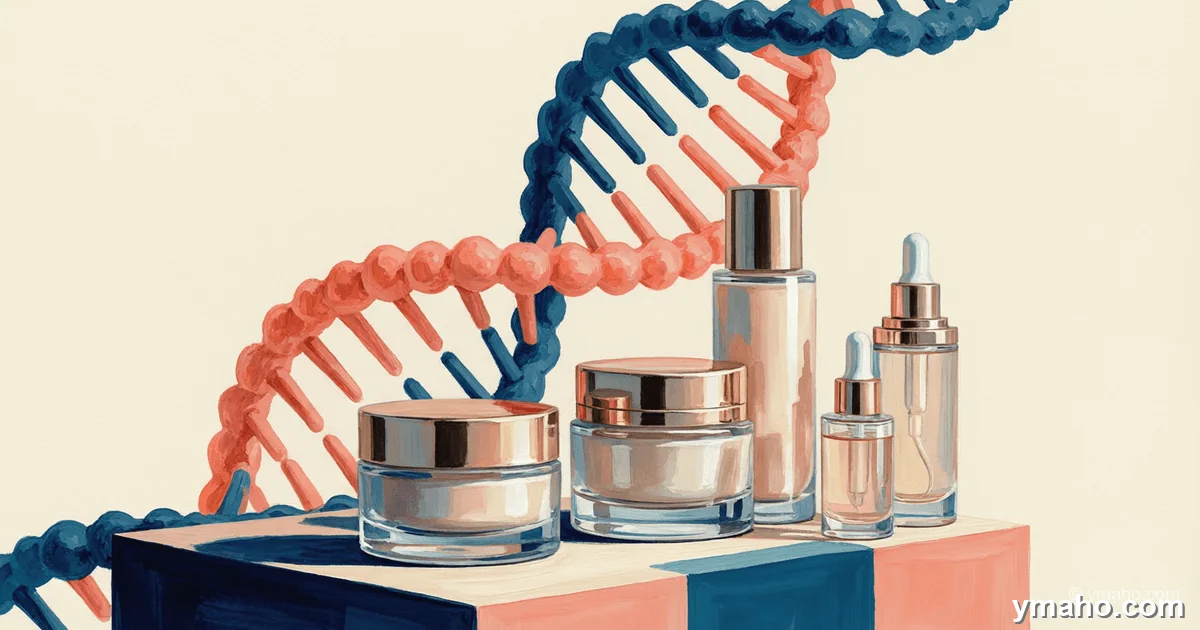
Korean Slow Aging Trend Replaces Aggressive Anti-Age
In skincare, the philosophy of gentle aging is gaining popularity over fighting age. The focus shifts to strengthening the barrier, SPF, and using PDRN ingredients without harsh acids.
Korean-style arms race: why "slow aging" is not a philosophy but a multi-billion dollar market reshuffle
While Western beauty giants kept pushing acid peels and "rejuvenation in 7 days" on women, a quiet but devastating revolution was brewing in Seoul's labs. On May 29, 2026, news that the Korean slow aging trend is finally replacing aggressive anti-age spread across industry publications. But if you think this is about "self-love" and "accepting wrinkles"—you've bought the most expensive package the beauty industry has ever sold.
As someone who has tracked the movement of billions of dollars in cosmetic conglomerates for 20 years, I see: slow aging is not philanthropy. It's an ideological cover for a shift to a new, monstrously expensive category of assets. Margins on "magical" retinoids and acids were falling (patents expiring, competition growing), and the industry urgently needed a new "Grail." And they found it. That Grail is called PDRN.
[The Gist]: What's Really Happening
According to an exclusive report by The Business Research Company from February 2026, the global PDRN ampoule market grew from $480 million in 2025 to $540 million in 2026 (growth rate 12.7%), and is projected to reach $860 million by 2030.
But that's just the tip of the iceberg. Looking broader, the PDRN skincare market in 2026-2033 is growing at a staggering 21.20% annually, approaching $4.3 billion. Numbers that make any investor drool.
What is PDRN? It's polydeoxyribonucleotides—DNA fragments traditionally extracted from salmon milt. They trigger tissue regeneration at the cellular level. Previously, this was an "injection gimmick" for Korean dermatologists. Now, in the slow aging era, PDRN is actively moving into home-use jars.
Why? Harsh acids damage the barrier. Slow aging offers to "restore" and "strengthen." Sounds humane? It sounds like a giant new market with premium pricing. A PDRN cream costs between $50 and $200. And the margin on it is astronomical.
Timeline and Context
The paradigm shift happened quietly but swiftly:
- End of 2024 — Retinol and acids dominated the market. Consumer fatigue from "peeling" and redness grows.
- Early 2025 — Spate (analytics platform) records an explosive 998.4% year-over-year increase in interest in PDRN. The hashtag #rejuran gains half a million views on TikTok weekly.
- Fall 2025 – Spring 2026 — The major in-cosmetics Global exhibition in Paris dedicates entire sections to PDRN and regenerative cosmetics. Vogue officially declares PDRN and exosomes the top trend of 2026.
- April 2026 — Spate (trend analysis platform) officially states: "PDRN is the fastest-growing ingredient in skincare right now."
The media presents this as a "victory of naturalness." Insiders know: it's a victory of bioengineering over reagent chemistry.
Who Wins and Who Loses
Winner #1 — Brands with PDRN patents (e.g., Medicube, Rejuran, Anua). In February 2026, Anua launches its PDRN Collagen Glow Serum Spray in the US with a splash in New York. Price: from $45 per bottle. Demand is so high that many items go on backorder.
Winner #2 — Suppliers of "vegan" and "synthetic" PDRN (Kalichem, Uniproma). In response to demand, bio-fermented and plant-based versions of DNA fragments emerge. This reduces production costs by 30-40% over 2-3 years, but sells at the same premium price. Margins skyrocket.
Winner #3 — Nutraceutical sector (oral PDRN supplements). According to IndexBox, the PDRN supplement market will grow 8.2% annually until 2035. 35% of demand is for anti-aging and skin health.
Loser #1 — Traditional "aggressive cosmetics." Sales of high-concentration acids and harsh retinoids are falling. Brands like The Ordinary or Paula's Choice, which built empires on "cheap and angry" actives, are forced to urgently launch "balancing" and "healing" lines.
Loser #2 — The consumer. Yes, you heard that right. You're being sold the idea of "saving on visits to the cosmetologist" by making you buy an expensive jar ($50-200) instead of a $15 tube of retinol. Studies on the effectiveness of oral and topical PDRN from cosmetic brands are still based on small samples and internal tests. You're buying "biotechnology of the future" at luxury prices, often without proven evidence.
What the Media Isn't Telling You
Here's the key insight. The entire slow aging concept is built on the Chinese (and Korean) cultural code of "reasonable sufficiency," packaged into a global marketing wrapper.
Vogue, in its slow aging guide, quotes experts saying: "Koreans see aging as a privilege." And right there in the article, they advertise:
- Aestura moisturizing cream for $40 (contains ceramides and amino acids).
- Torriden Dive In serum for $25 (hyaluronic acid and panthenol).
- CosRx retinol for $22 (0.1% concentration, almost homeopathic).
No one tells you the truth: slow aging is not a rejection of actives. It's a reduction in active concentration and an increase in prices for "safe delivery."
Companies simply stopped putting 1% retinol (which is cheap and strips the skin) into cream and started putting 0.01% retinol + 3% expensive PDRN in a complex liposomal capsule. The skin doesn't peel—so it "works." But does it work as well? A question no one asks out loud.
Forecast: Next 30 Days and 90 Days
30 days (end of June 2026)
Sephora and Ulta will dedicate separate shelves to "Bio-Regenerative Skincare." Collaborations between K-beauty brands and aesthetic medicine clinics will appear: "Home PDRN course after laser." The price of such a set is around $150-200. It will sell like hotcakes.
90 days (end of August 2026)
Regulatory agencies (FDA and European counterparts) will start looking into labeling. Questions will arise: is it legal to call cosmetics with PDRN "regenerating" if it doesn't penetrate deeper than the stratum corneum? A wave of skeptical reviews from beauty bloggers with chemistry backgrounds will begin: "Placebo for $200."
But the main thing: Western giants (L'Oréal, Estée Lauder) will start buying Korean PDRN startups or signing exclusive licensing agreements. By the end of August, we will see at least one major deal. This will signal that the trend is finally legitimized and monopolized.
Slow aging turned out to be a convenient smokescreen. Under the noise of "gentleness and care," the industry switched you from cheap gasoline to expensive biofuel. And you'll even be grateful that the engine rattles less.
— Editorial Team