Russia Develops 'Smart Drugs' for Cancer and HIV Based on Nucleic Acids
Novosibirsk scientists from the Institute of Chemical Biology and Fundamental Medicine SB RAS are creating a platform for synthesizing oligonucleotides that can be 'programmed' to attack the root cause of a disease.
'Smart Drugs' for Cancer and HIV: A Russian Platform Based on Oligonucleotides
Introduction
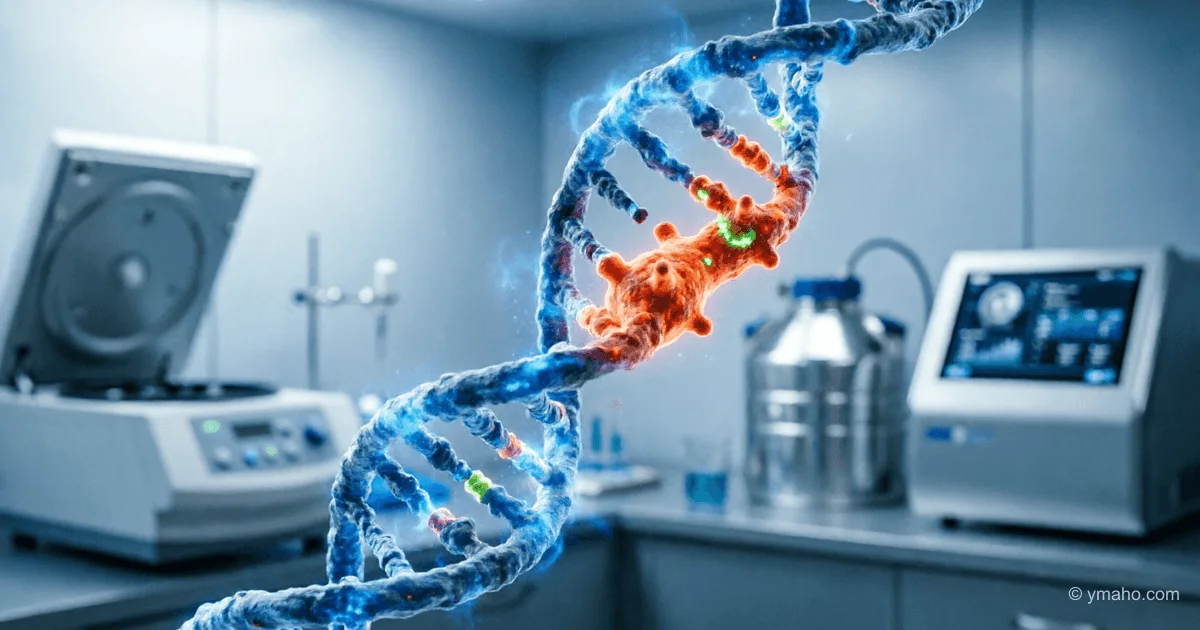
In April 2026, the scientific community took notice of a development by Novosibirsk scientists from the Institute of Chemical Biology and Fundamental Medicine of the Siberian Branch of the Russian Academy of Sciences (ICBFM SB RAS). The researchers are creating a platform for synthesizing oligonucleotides—fragments of nucleic acids that can be 'programmed' to precisely target the root cause of a disease.
These compounds are called 'smart drugs' due to their ability to recognize and bind to specific genetic sequences. Unlike traditional chemotherapy, which attacks all rapidly dividing cells, oligonucleotide drugs act selectively—only where there is a mutation or incorrect RNA splicing. Potential targets include cancer, HIV, tuberculosis, and genetic diseases such as Duchenne muscular dystrophy.
The development builds on a scientific school established back in the 1970s by Academician Dmitry Knorre, and today it gains new momentum thanks to the ICBFM scientists' own discovery—phosphorylguanidines, a class of compounds that promise to solve the key problem of all oligonucleotide drugs: instability in biological fluids.
Event Details and Timeline
What Are Oligonucleotide Drugs?
Oligonucleotides are synthetic short chains of nucleic acids (DNA or RNA) that are biocompatible, non-toxic analogs of natural molecules. Their basic principle of action is complementarity: knowing the genetic structure of a pathogen or mutant gene, one can create an agent that will bind exclusively to that target, much like a key fits a lock.
There are several mechanisms of action:
- Antisense — the oligonucleotide binds to messenger RNA (mRNA), blocking protein translation or triggering its cleavage by the enzyme RNase H.
- RNA interference (RNAi) — double-stranded RNA activates the RNA-induced silencing complex (RISC), leading to degradation of the target mRNA.
- Splice modulation — oligonucleotides alter the maturation process of pre-mRNA, 'correcting' incorrect exon assembly.
A historically significant breakthrough was the approval in the late 1990s of Vitravene (fomivirsen) for treating cytomegalovirus retinitis—the first antisense oligonucleotide approved for clinical use.
Key Developments at ICBFM SB RAS
Phosphorylguanidines — A Russian 'Know-How'
The main problem with therapeutic oligonucleotides is their rapid degradation. The human body has an arsenal of nuclease enzymes that destroy foreign nucleic acids. An unprotected molecule degrades in the bloodstream in about 20 minutes and is excreted by the kidneys.
International companies solved this problem through chemical modifications (phosphorothioate, 2'-O-methyl, and other derivatives), but such modifications are patented. ICBFM SB RAS took its own path, developing phosphorylguanidines—a class of compounds first described by Novosibirsk scientists.
| Property | Phosphorylguanidines |
|----------|----------------------|
| Stability in biological fluids | Absolute (according to test results) |
| Toxicity | Not demonstrated |
| Ease of synthesis | Easily synthesized on standard equipment |
| Cell penetration | Issues exist, work is ongoing |
| Intellectual property | Fully Russian |
As noted by Deputy Director of ICBFM SB RAS, Doctor of Chemical Sciences Dmitry Pyshny: 'There are still some problems with ensuring drug penetration into the cell, but there are also certain developments.'
Targeted Delivery Systems
Even the most perfect molecule is useless if it does not reach its target. ICBFM scientists are developing liposomal delivery systems based on cationic lipids—particles up to 100 nanometers in size that bind to the oligonucleotide, protect it in the blood, and facilitate cell entry.
Key features:
- Biodegradation — lipids break down in the body into natural non-toxic molecules.
- No immune response — the systems do not elicit a specific immune reaction.
- Targeting capability — adding a ligand (e.g., folic acid) allows directing the complex to tumor cells that overexpress folic acid receptors.
Collaboration with 'Vector' and International Partners
Oligonucleotide drugs are being tested in several areas:
| Target | Partner | Status |
|--------|---------|--------|
| HIV | State Research Center of Virology and Biotechnology 'Vector' | Activity analysis |
| Tuberculosis | ICBFM SB RAS (laboratory of D.A. Stetsenko) | Efficacy study |
| Duchenne muscular dystrophy | English scientists | Effectiveness analysis |
Other Achievements of the Institute
In parallel with oligonucleotide drugs, ICBFM SB RAS developed Russia's first antitumor drug based on a genetically modified oncolytic virus VV-GMCSF-Lact for breast cancer therapy. In May 2022, clinical trials began at the N.N. Petrov National Medical Research Center of Oncology. There are no direct analogs either in Russia or abroad.
Also created are test systems for detecting somatic mutations (including mutations in the KRAS gene) for selecting targeted anticancer therapy.
Timeline
- 1967 — D.G. Knorre and N.I. Grineva propose the concept of therapeutic drugs based on oligonucleotides.
- 1975 — first fundamental studies of modified nucleic acids in Novosibirsk.
- 2022 — clinical trials of the oncolytic virus VV-GMCSF-Lact.
- 2024–2026 — active development of the phosphorylguanidine platform, international collaboration.
- July 28–31, 2026 — All-Russian conference 'Engineering Biology and Biopharmaceutics' in Novosibirsk Akademgorodok, dedicated to the 100th anniversary of D.G. Knorre.
Impact and Significance
For Medical Science
Creating a platform for synthesizing oligonucleotide drugs is not about developing a single medicine but about a technological foundation for an entire class of therapies. As Marina Zenkova, head of the Laboratory of Nucleic Acid Biochemistry, explains: once the equipment producing such acids is built, there is no need to change the technological chain for a new drug—just reprogram the machine.
This means that when a new virus emerges or a new mutation is identified in a patient, the time from diagnosis to obtaining a personalized drug could shrink from years to weeks.
The principle 'target exists — there is a directed agent' makes oligonucleotides an ideal tool for the era of personalized medicine, where treatment is tailored to the individual genetic profile of the disease.
For the Russian Pharmaceutical Industry
Phosphorylguanidines are a fully domestic development, not using foreign patents. In the context of sanctions and the need for technological sovereignty, this is of strategic importance.
As Dmitry Pyshny notes: international companies have compiled a whole list of oligonucleotide compounds close to being realized as drugs, but 'we have no right to use a platform based on others' work, since it is not our intellectual property.' A proprietary platform removes this limitation.
Automated synthesis allows scaling production from milligrams to multi-kilogram batches, and the use of standard equipment lowers barriers to commercialization.
For Patients and Society
For patients with cancer, HIV, and genetic pathologies, 'smart drugs' mean:
- Targeted action — only affected cells are attacked, sparing healthy ones.
- Overcoming drug resistance — one mechanism of cancer cell resistance to chemotherapy involves overexpression of the multidrug resistance gene mdr1. Antisense oligonucleotides are already being created against this gene.
- Personalized treatment — the ability to adapt the drug to a specific mutation in a patient's tumor.
Reactions of Key Players
Dmitry Pyshny, Deputy Director of ICBFM SB RAS, Doctor of Chemical Sciences:
'Professor Altman himself calls such compounds based on oligonucleotides the antibiotics of the future.' According to him, such research is currently at a pre-revolutionary moment.
Regarding the project's status, Pyshny clarified: 'We currently have the most promising agents, but a number of works remain... We are now at the stage of approaching in vivo.' He also emphasized that the laboratory established under the leadership of Nobel laureate Sidney Altman will be preserved, and research will continue.
Marina Zenkova, Head of the Laboratory of Nucleic Acid Biochemistry at ICBFM SB RAS:
Without the creation of the nucleic acid chemistry school supported by Academician Knorre, 'smart drugs' of the future would not be developed in Novosibirsk now. She also noted that with excessive modification, the acid loses biological activity, so a balance is needed—modify only the degradation-prone regions.
International Collaboration:
The developers of phosphorylguanidines are in contact with colleagues from Moscow, Sweden, and the UK. Tests conducted 'by other hands' also confirm the presence of the desired properties.
Forecast and Conclusions
Near-Term Outlook (2026–2028)
The main tasks for scientists are to complete fundamental research, select the most promising candidates for preclinical trials, and move to in vivo testing on laboratory animals. For this, they plan to use ICBFM's own facilities and collaborate with the Federal Research Center Institute of Cytology and Genetics SB RAS.
In July 2026, the All-Russian conference 'Engineering Biology and Biopharmaceutics' will be held in Novosibirsk Akademgorodok, where these developments will be presented to the scientific community.
Realistic Assessment
It is important to understand: mass application is still far off. As Dmitry Pyshny honestly admits: 'We are approaching the end of the project, but not the end of the work.' Fundamental research lays the foundation, but the path to a registered drug includes:
- Preclinical studies in animals (efficacy, pharmacokinetics, toxicology)
- Phases I–III clinical trials in humans (safety, efficacy)
- Registration procedures
Under an optimistic scenario, this process could take 5–10 years.
Unresolved problems remain, primarily cell delivery. As Marina Zenkova notes, the most malignant tumors have few surface receptors—'identification marks'—so much more work is needed.
Key Conclusions
The Novosibirsk scientists' development is not a 'cure-all' but a fundamental technological platform that can give rise to a whole family of drugs against various diseases.
Phosphorylguanidines, created at ICBFM SB RAS, are a unique Russian development that is not inferior to foreign analogs in key characteristics (stability, non-toxicity, ease of synthesis) and is free from patent restrictions.
For Russian healthcare, building domestic expertise in oligonucleotide drugs is a matter of technological sovereignty in high-tech pharmaceuticals, comparable in significance to developing domestic mRNA vaccines.
As Professor Altman, Nobel laureate and head of the Russian-American laboratory, says, such compounds could indeed become 'antibiotics of the future.' And Russia has every chance to be among the leaders of that future.
— Editorial Team









