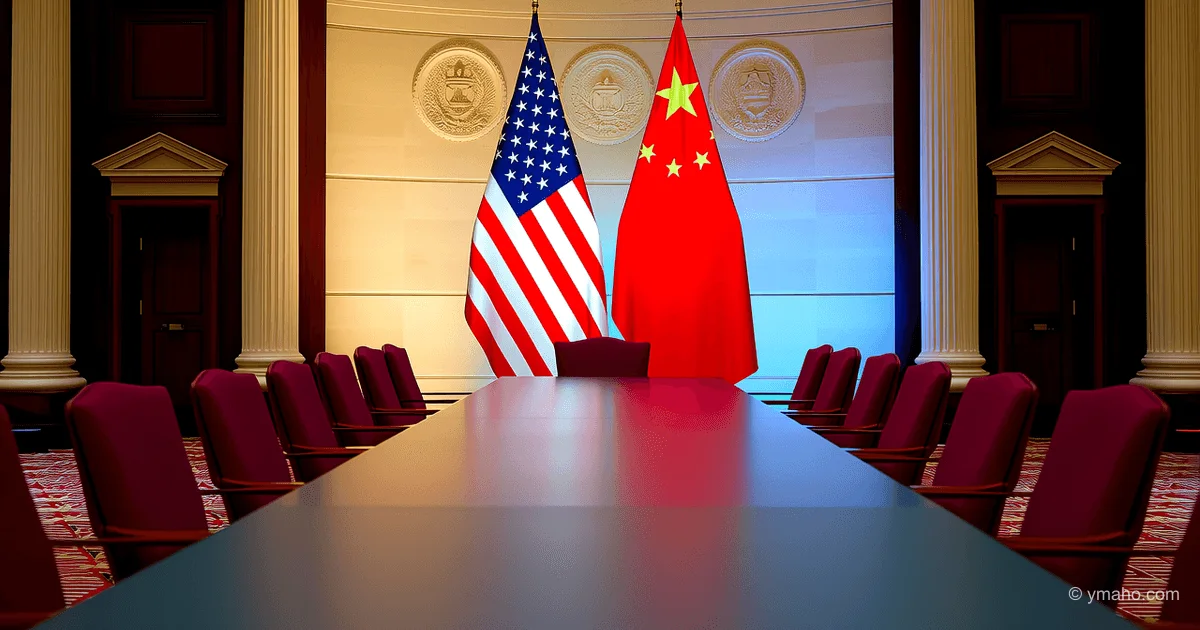
US and Chinese Presidents Meet Amid Iran Crisis and Trade Disputes
A summit involving Donald Trump and Xi Jinping has kicked off in Beijing. Earlier, preparatory meetings were held in Seoul, where the main topics included the war in Iran and bilateral trade.
The Essence: What Is Really Happening
Formally, the Trump-Xi summit has started in Beijing, preceded by preparatory meetings in Seoul where the Iran crisis and trade disputes were discussed. But the real agenda of this summit has nothing to do with what is published in official communiqués. Trump did not fly to Beijing to negotiate a truce in the trade war — he came to solve a problem he himself created: the US economy is choking on 3.8% inflation, the PPI has soared to 6.0%, Iranian oil is blocked in the Strait of Hormuz, and the Fed refuses to cut rates. Trump does not need peace with China; he needs Chinese leverage over Tehran — and he is willing to pay for it with trade concessions that six months ago he called unthinkable.
Timeline and Context
The entry point to this story was not the visit to Beijing itself, but the preparatory meeting in Seoul, where US Treasury Secretary Scott Bessent and Chinese Vice Premier He Lifeng held talks that one American participant described to me as "the most candid in three years." In these negotiations, for the first time since 2018, the US side did not demand that China reduce its trade surplus; instead, they discussed a specific mechanism whereby China would use its relations with Iran and, in part, Russia to de-escalate the situation in the Strait of Hormuz, and the US would in return suspend some tariffs on Chinese imports.
Context is critical here. Since May 3, 2026, Lloyd's has effectively paralyzed shipping through the Strait of Hormuz by declaring it a war zone and raising insurance premiums to 12% of the vessel's value. This has hit not only Europe and the US but also China, the world's largest oil importer. However, Beijing has a lever that Washington lacks: China remains Iran's largest trading partner, and a significant portion of payments for Iranian oil flows through Chinese banks. Trump knows that without Beijing, Tehran will not come to the negotiating table.
Who Wins and Who Loses
The biggest winner is China, which gains a rare opportunity to negotiate from a position of strength. Xi Jinping
— Editorial Team









