US Tries to Drag UAE into War, Demanding Capture of Iran's Lavan Island
Washington pressures the Emirates to become a proxy force and seize Iran's oil island, threatening to drag the entire Arab world into conflict. Experts hope the UAE leadership will not fall for this provocation, understanding the risk of a direct confrontation with Tehran.
"Go take 'em!" — that's how a former high-ranking Trump administration official phrased the new US strategy in the Persian Gulf, in the style of a street brawl. The Telegraph uncovered a sensational detail: Washington is privately pushing the United Arab Emirates to seize Iran's Lavan Island — Tehran's strategic oil hub. The idea is cynically simple: let Arab boots tread on Iranian soil instead of American ones.
This is not just another geopolitical intrigue. It is an attempt by the US to offload the dirtiest work onto a proxy force — and simultaneously drag the entire Arab world into a direct confrontation with Iran.
The Island That Has Iran's Oil by the Throat
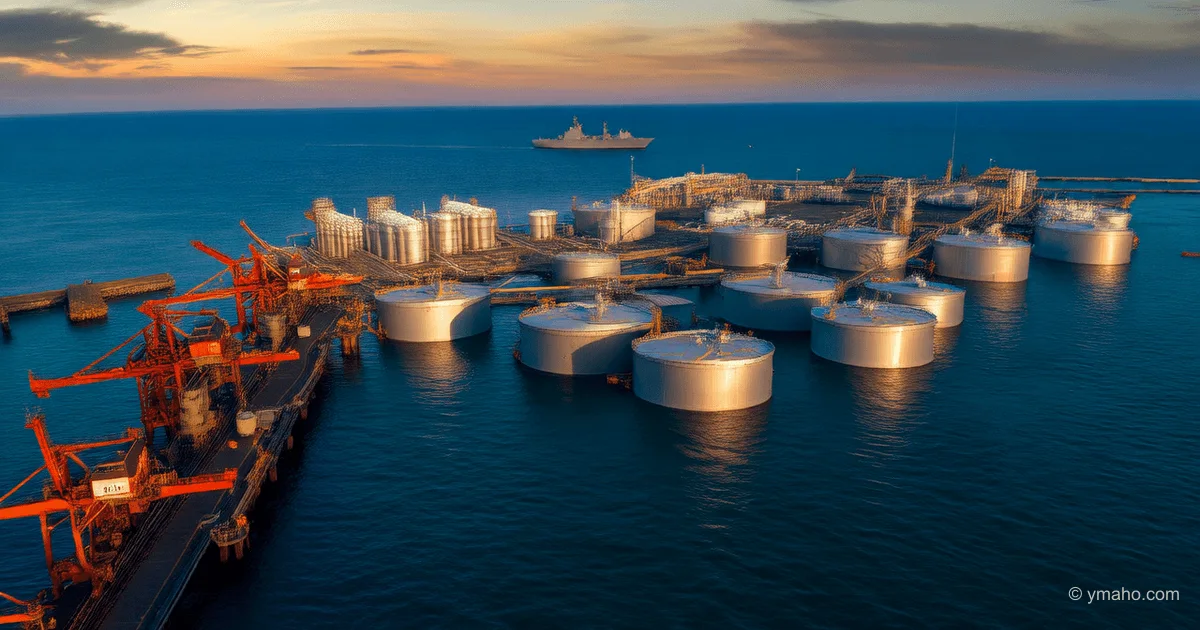
Lavan is not a resort atoll. It is an industrial fortress northwest of the Strait of Hormuz, one of Iran's four main crude oil export terminals. The plant on the island processes up to 60,000 barrels per day. Oil flows there via underwater pipelines from four major offshore fields.
Whoever controls Lavan cuts off the oxygen to Iran's oil exports. That is precisely why people from Trump's circle suggested the Emirates "take it." The wording of the former security official, quoted by The Telegraph, leaves no room for diplomatic evasion: "Let it be UAE ground forces, not US."
The Trump administration sees a double benefit. First, American soldiers do not die on Iranian soil. Second, a strike on Lavan tightens the space for Iranian blackmail — Tehran loses its leverage of threatening to block the Strait of Hormuz because it loses a key export hub itself.
Abu Dhabi Has Already Been Burned — and Keeps Leaping into the Fire
The Emirates are the most targeted country in the Gulf since the conflict began. According to The Telegraph, since late February, when the US and Israel began bombing Iran, the UAE has taken over 2,800 rockets and drones. This was a turning point for Abu Dhabi — the country is reassessing its defense strategy, alliances, and regional role.
UAE President Mohammed bin Zayed Al Nahyan took a hawkish stance from the start. As soon as the US and Israel launched the first strikes on February 28, he held a series of talks with Gulf leaders, including Saudi Crown Prince Mohammed bin Salman, and expressed readiness to cooperate with Washington and Jerusalem.
But neighbors did not support him. Saudi Arabia and Qatar rejected the UAE's proposal for a coordinated military action against Iran. Riyadh stated: "This is not our war." The result — worsening already strained relations between the UAE and Saudi Arabia.
The UAE did not stop. According to The Wall Street Journal on May 11, Emirati forces secretly struck an oil refinery on Lavan Island on April 8 — the operation was coordinated with Israel and caused a major fire that was expected to put the plant out of commission for months. Abu Dhabi has not publicly confirmed its role. But it has not denied it either.
The Israeli Factor: Abu Dhabi and Jerusalem Growing Closer by the Day
The war has accelerated the military alliance between the UAE and Israel to an unprecedented level. US Ambassador to Israel Mike Huckabee confirmed on May 12 at a conference at Tel Aviv University that Israel sent Iron Dome batteries and personnel to the UAE to protect against Iranian attacks. This is the first public acknowledgment by Israel of a military deployment on Emirati soil.
Israeli Prime Minister Benjamin Netanyahu stated that he made a secret visit to the UAE in March, which led to a "significant breakthrough." Abu Dhabi denies the visit itself. But intelligence data, coordination of targets on Iranian territory, and joint defense efforts speak louder than any denials.
Iran, of course, is furious. Foreign Minister Abbas Araghchi said on May 14 at a BRICS meeting in New Delhi: "The UAE directly participated in aggressive actions against my country. When this aggression began, they even refused to condemn it." Tehran is demanding compensation from Bahrain, Saudi Arabia, Qatar, the UAE, and Jordan for their involvement in the war on the side of the US and Israel.
The Arab World Is Divided — and That Is the Main Problem
The US attempt to drag the UAE into capturing Lavan exposes the deepest rift within the Gulf Cooperation Council. Sheikh Mohammed bin Zayed reminded neighbors that the organization was founded in 1981 precisely because of the threat from Iran after the 1979 Islamic Revolution. But historical memory did not work.
Saudi Arabia chose to distance itself. Riyadh turned to Pakistan as a mediator in US-Iran dialogue. Qatar, which suffered an attack on the Ras Laffan industrial zone in mid-March, also opted for de-escalation. Bahrain and Kuwait act in line with the Saudis. Oman traditionally stays away from military actions.
Abu Dhabi remains alone — or rather, in the company of Washington and Jerusalem. This is a toxic combination for the Arab street. Burcu Ozcelik from the Royal United Services Institute (RUSI) warns: deepening military cooperation with Israel could lead other Arab states to view the UAE as complicit in Israel's campaign in Gaza.
Who Wins, Who Loses
Israel wins. The military alliance with the UAE gives it operational depth in the Persian Gulf that Israeli strategists could not have imagined ten years ago. Iron Dome batteries on Emirati soil, joint intelligence, strike coordination — all of this changes the balance of power in the region.
American hawks win. The Trump administration achieves its goals through others' hands: pressure on Iran increases, the presence of US troops under fire is minimized. Political risks for the White House decrease — voters in Ohio do not see coffins draped with American flags.
The Emirates lose. They become hostages to an escalation they cannot control. Already, Abu Dhabi is the primary target of Iranian retaliatory strikes. If Emirati troops land on Lavan, Tehran will regard it as an act of war and respond with the full force of its missile arsenal. Iran, according to The Independent citing US intelligence, has retained at least 60% of its missile capability, and 90% of its launchers are partially or fully functional.
The unity of the Arab world loses. The rift between the UAE and Saudi Arabia deepens. Qatar, Kuwait, Bahrain, and Oman distance themselves. The Gulf Cooperation Council is cracking at the seams.
What's Next: Invasion or Retreat
A decision has not yet been made. The Emirates are balancing between Washington's pressure and the instinct for self-preservation. The risk of a direct clash with Tehran is obvious. The loss of Lavan would be an existential threat to Iran — and the response will not be long in coming.
Most likely, Abu Dhabi will continue covert strikes without public acknowledgment. A full-scale landing on the island is a scenario the Emirati leadership will probably try to avoid. The price is too high. The consequences are too unpredictable.
But Trump's pressure will not let up. "Time is running out," the US president repeats on his Truth Social. And if the UAE does not step forward, Washington will find another way to pressure Tehran. The Hormuz crisis is entering a new phase — where other people's hands replace one's own, and the risk of regional war grows with each passing day.
— Editorial Team









