Fed Official Calls Inflation Data 'Bad News'
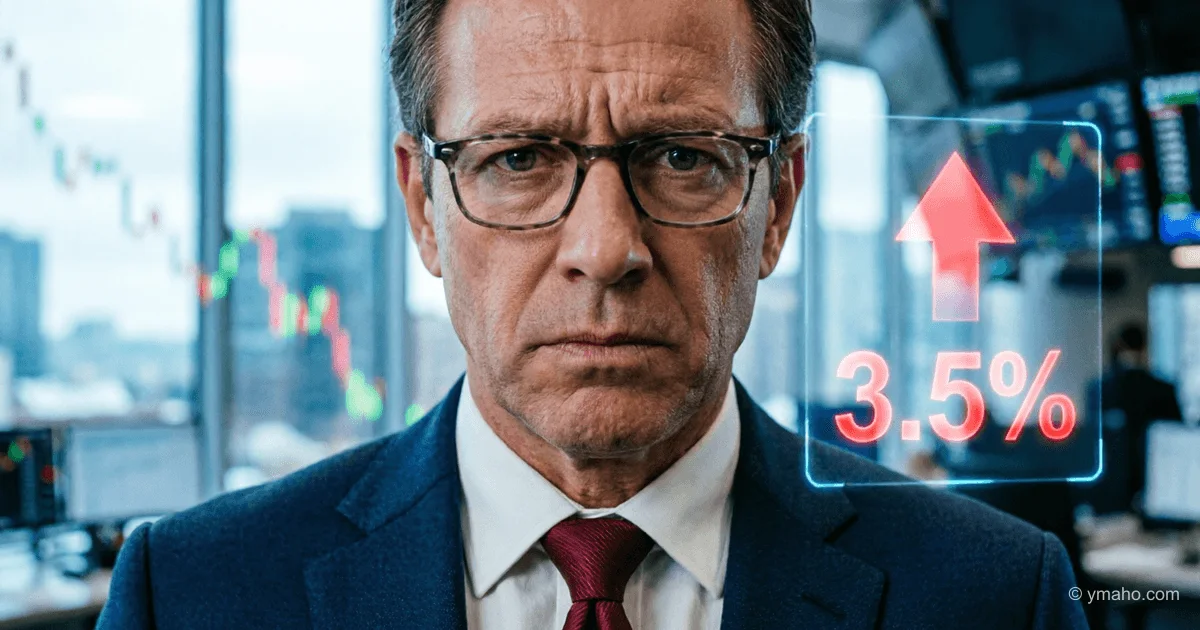
Chicago Fed President Austan Goolsbee said inflation remains above the 2% target, requiring caution on rate cuts. March PCE data showed an annual increase of 3.5%.
'Bad News' for the Fed: US Inflation Accelerates, Rates May Rise Despite Market Expectations
Introduction
The world was preparing for the long-awaited rate cuts in 2026, but reality is delivering harsh corrections. On May 2, 2026, Chicago Federal Reserve President Austan Goolsbee called the latest inflation data 'bad news' for the US central bank. This statement came as markets held their breath: annual PCE inflation in March reached 3.5%, exceeding February's 2.8% and moving further away from the 2% target. The trajectory of US monetary policy, which affects exchange rates, borrowing costs, and global financial flows, has reached a crossroads.
Event Details and Timeline
The trigger for Goolsbee's hawkish rhetoric was the March report from the US Department of Commerce, released on April 30. The core PCE price index (Core PCE), which the Fed traditionally tracks for policy decisions, showed a 0.3% monthly increase, fully in line with analyst expectations. However, the main concern was the headline PCE: a jump of 0.7% for the month, compared to 0.4% in February. On an annual basis, headline inflation surged from 2.8% to 3.5%—the sharpest acceleration in recent months.
Speaking on Fox News, Goolsbee was blunt: 'The composition of current inflation looks bad.' He noted a troubling trend: price increases are being recorded even in the services sector, which is usually shielded from external shocks (e.g., tariff wars). At the same time, the Chicago Fed president pointed to an external factor—a sharp rise in oil prices amid escalating conflict with Iran, which 'adds an additional layer of uncertainty.'
These comments were the most 'hawkish' in recent times. As recently as late March, Goolsbee had allowed for an optimistic scenario with rate cuts by the end of 2026. But by May 2, he effectively dashed those hopes, indicating that the current situation with oil prices comes at an 'unfortunate time' when inflation had only just begun to slow.
Impact and Significance
The situation described by Goolsbee creates a classic central bank trap. Annual PCE stands at 3.5%—this marks the fifth consecutive year that inflation has exceeded the Fed's target. Moreover, March data shows consumers are spending more, and the savings rate has fallen (dropped to 3.6%), signaling demand overheating.
Not only stock indices are under pressure, but also households. Rising gasoline prices (about 33% over recent weeks) directly hit Americans' wallets, as the average price per gallon has approached the $4 mark last seen in 2022. High energy prices, through the value chain, increase the cost of logistics, food, and services, fueling an inflationary spiral.
Economists are increasingly using the term 'stagflation' (a combination of stagnation and high inflation). GDP data for the fourth quarter of 2025 showed growth of only 0.5% after a strong surge of 4.4% earlier. Now, amid the Middle East war, this risk is becoming a reality. As noted by J.P. Morgan, the oil shock is hitting an already weakened economy, making monetary policy choices existentially difficult.
Reaction of Key Players
Market reaction was immediate. According to the CME Group's FedWatch tool, traders have virtually ruled out any rate cuts in 2026. The probability that rates will remain unchanged through year-end is now the base case, and some market participants have begun pricing in rate hikes as early as 2027.
The Fed itself is more divided than ever. At the March meeting, the rate was held at 3.5%-3.75%, but the 8-4 vote was the most fractured since 1992. The conservative wing, including Goolsbee, demands a pause and risk assessment, while other committee members still see room for dialogue on easing.
Notably, this drama unfolds against a backdrop of leadership change at the Fed. Current Chair Jerome Powell leaves office on May 15, making way for President Trump's nominee, Kevin Warsh. Goolsbee expressed enthusiasm about Warsh's arrival, citing his 'wisdom and insights.' However, Warsh is known as a proponent of lower rates, which will create an additional tangle of contradictions: if the new Fed leadership tries to stimulate the economy with rate cuts amid 3.5% inflation, it could ultimately undermine confidence in the dollar.
Forecast and Conclusions
J.P. Morgan's research department holds the most hawkish forecast: the Fed will remain on hold throughout 2026, with a 25 basis point hike occurring in the third quarter of 2027. BNP Paribas also does not rule out a rate increase as early as June 2026 if the Strait of Hormuz remains blocked and the labor market continues to show resilience.
The trajectory of events will depend on two variables:
- Geopolitics (Iran and oil). As long as energy prices remain high, inflationary pressure will persist. Once the conflict subsides, the Fed will have a 'window of opportunity.'
- Labor market. As long as the unemployment rate remains low (4.3%), the Fed has no reason to sacrifice inflation fighting to save jobs.
For businesses and individual investors, this means a simple conclusion: the era of cheap money is postponed indefinitely. Risks have shifted toward higher rates for a longer period (Higher for Longer). Goolsbee's comment—'inflation looks bad'—should be taken not as a fleeting news item, but as an official signal of a paradigm shift. The Fed is no longer waiting for a crisis; it is preparing for a prolonged battle with prices, even at the cost of slower economic growth.
— Editorial Team









