Crypto Wallets Explained: How to Choose the Right One
If you own cryptocurrency, your assets don't live in your wallet—they live on the blockchain. What a crypto wallet actually does is manage the cryptographic keys that prove you own those assets. Understanding how wallets work, the trade-offs between different types, and how to choose the right one is essential for protecting your digital assets from loss or theft.
What You'll Learn
By the end of this guide, you'll understand exactly how crypto wallets work, why the type you choose matters for security and convenience, and how to match a wallet to your specific needs. You'll be able to distinguish between custodial and non-custodial wallets, hot and cold storage, and walk away with a clear plan for securing your digital assets. Choosing the wrong wallet can mean losing your crypto entirely—so get this decision right.
What Is a Crypto Wallet and How to Choose One
Before you can choose the right wallet, you need to understand what a crypto wallet actually is. A crypto wallet is a digital tool—software, hardware, or even paper—that stores your private keys, which are the cryptographic codes that prove ownership of your cryptocurrency on the blockchain. Your assets themselves are always stored on the blockchain, not inside the wallet. This means anyone who controls your private keys controls your funds .
Public and Private Keys
Crypto wallets use a system called public-key cryptography. Every wallet has a private key (a secret code known only to you) and a public key that derives from it. The public key generates your wallet address—a string of characters you can share with others to receive funds. Your private key is what you use to sign and authorize transactions. The blockchain verifies your signature using your public key without ever exposing your private key .
⚠️ Your private key is your crypto. Anyone who obtains it can access and transfer your funds with no way to reverse the transaction. Never share your private key or seed phrase with anyone.
Google AdInline article slot
The Seed Phrase (Recovery Phrase)
When you set up a non-custodial wallet, you'll be given a seed phrase—a sequence of 12 to 24 words that acts as a master backup for your wallet. This phrase can regenerate all your private keys if you lose access to your device. It is not a password; it is the master key to your entire wallet. Write it down on paper and store it in a secure, offline location .
Custodial vs. Non-Custodial: Who Controls Your Keys
The single most important distinction between wallet types is who controls the private keys .
Custodial Wallets
With a custodial wallet, a third party—most commonly a centralized exchange (CEX) like Coinbase, Binance, or Kraken—holds your private keys on your behalf. You log in with a username and password, and the exchange manages the security behind the scenes. This is convenient, especially for beginners, and offers account recovery if you forget your login .
The trade-off is that you don't truly own your crypto. The exchange can freeze your account, restrict withdrawals, or be hacked. If the exchange becomes insolvent (as happened with FTX in 2022), you may lose your funds. In such cases, you become a creditor in bankruptcy proceedings .
Non-Custodial (Self-Custody) Wallets
A non-custodial wallet gives you full control over your private keys. You are solely responsible for security and backups. This model offers maximum autonomy, eliminates counterparty risk, and is required to interact with decentralized applications (dApps) and Web3 platforms .
The responsibility is absolute: if you lose your seed phrase, your crypto is gone forever. There is no "password reset" option. This is a common beginner pitfall, and it underscores the phrase: "Not your keys, not your coins" .
Hot Wallets vs. Cold Wallets
Another key distinction relates to whether your private keys are stored online or offline .
Hot Wallets
Hot wallets are connected to the internet. They include software wallets like mobile apps, desktop applications, and browser extensions. They are free, convenient for daily transactions, and allow you to seamlessly interact with DeFi protocols and NFT marketplaces. Examples include MetaMask, Trust Wallet, and Phantom .
Because they are always online, hot wallets are more vulnerable to online threats like phishing attacks, malware, and hacking. They are recommended for storing small to medium amounts that you need for active use .
Cold Wallets
Cold wallets are kept offline, which makes them immune to remote hacking attempts. They come in two main forms: hardware wallets and paper wallets.
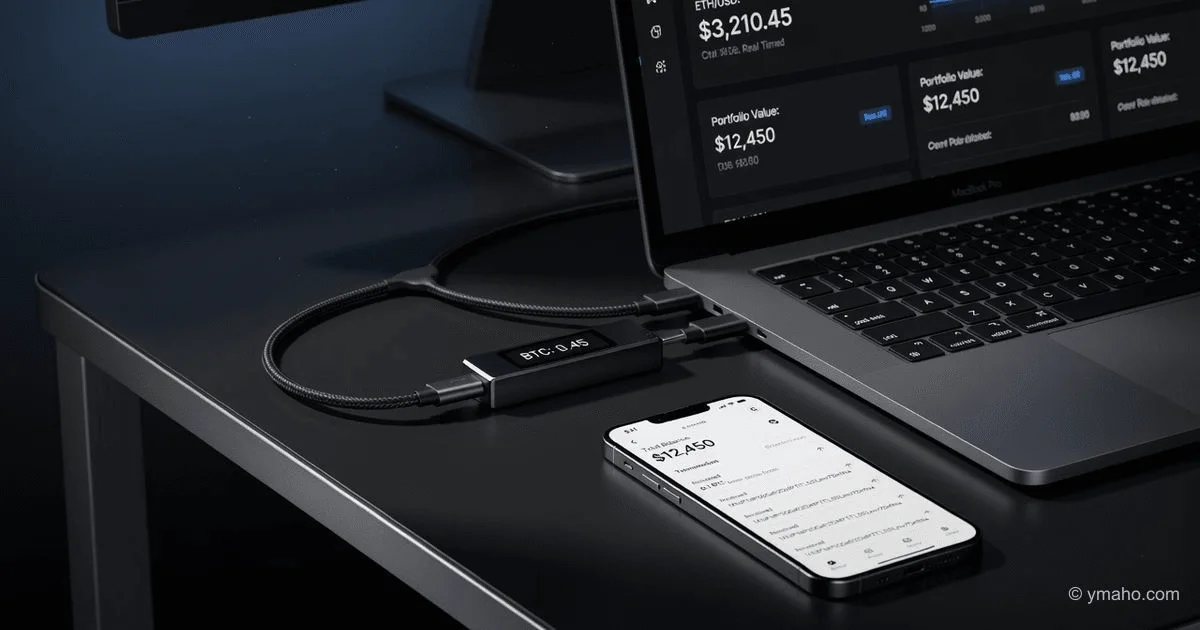
Hardware wallets are physical devices (like Ledger or Trezor) that generate and store private keys on a secure chip. Transactions are signed physically on the device, even when connected to a computer. This provides the highest level of security for long-term holdings and large amounts .
Paper wallets are an older form of cold storage where keys are printed on paper. While free and offline, they are fragile, prone to physical damage, and not recommended for modern use .
⚠️ In 2024, nearly $2.2 billion worth of cryptocurrency was stolen, often from online wallets. For any significant amount, using cold storage is strongly recommended .
How to Choose the Right Wallet
There is no single "best" wallet—only the right one for your specific needs. Here's a framework for making your choice :
1. Evaluate Your Use Case
- I'm a beginner with a small amount: Start with a user-friendly, self-custody hot wallet like Coinbase Wallet or Trust Wallet. Learn the basics before moving to more complex setups .
- I'm a long-term investor (HODLer): A hardware wallet (e.g., Ledger, Trezor) is your best choice for maximum security .
- I actively trade or use DeFi: A browser extension hot wallet (e.g., MetaMask, Phantom) is essential for interacting with dApps. For added security, pair it with a hardware wallet to sign transactions offline .
- I'm an institution: You need multi-sig authorization, role-based access, and regulated custody infrastructure. Qualified custodians like BitGo offer these capabilities to meet compliance and governance requirements .
2. Compare Security Features
| Feature | Hot Wallet | Hardware Wallet | Custodial Exchange |
|---|---|---|---|
| Private Keys | Stored on your device | Stored offline on a secure chip | Controlled by a third party |
| Vulnerability | Malware, phishing, hacks | Physical theft or loss | Exchange insolvency or hacks |
| Recovery | Seed phrase | Seed phrase | Password reset / KYC |
| Best For | Small amounts, active use | Large amounts, long-term storage | Convenience, trading |
3. Consider the Cost
Hot wallets are generally free. Hardware wallets require an upfront purchase (typically $50–$200+). Custodial wallets are often free to create, but you pay transaction fees. Some wallets also charge fees for in-app swaps .
4. Check Supported Assets
Ensure the wallet supports the specific cryptocurrencies you hold. Most wallets support Bitcoin and Ethereum, but support for other altcoins varies. For institutional use, check ERC-20 and multi-chain support .
5. Adopt Security Best Practices
- Never share your seed phrase with anyone. No legitimate support team or dApp will ask for it .
- Test your backup. Before storing large amounts, test your recovery phrase by restoring the wallet on a new device .
- Enable 2FA and biometrics. Use authenticator apps (not SMS) to protect your accounts .
- Verify addresses. Check every character of a wallet address before sending funds to avoid scams .
Frequently Asked Questions
What is a crypto wallet and how to choose one for the first time?
A crypto wallet is a tool that stores the private keys needed to access your cryptocurrency on the blockchain. For a first-time user, the best choice is often a user-friendly self-custody hot wallet (like Trust Wallet or Coinbase Wallet) or a custodial exchange wallet if you prioritize convenience and recovery options over complete control .
Can one wallet store multiple types of cryptocurrency?
Yes, many wallets support a wide range of cryptocurrencies. Software wallets like Exodus and Trust Wallet support Bitcoin, Ethereum, and many altcoins. Hardware wallets like Ledger and Trezor also support hundreds of assets. However, not every wallet supports every coin, so it's important to check compatibility before committing .
Which is safer: a hardware wallet or an exchange wallet?
A hardware wallet is significantly safer for long-term storage because it keeps your private keys offline, making it immune to remote hacking. An exchange wallet is custodial; the exchange controls your keys, making your assets vulnerable to platform insolvency, hacks, or account freezes. For large or long-term holdings, hardware wallets are strongly recommended .
What should I do if I lose my seed phrase?
If you lose your seed phrase and your wallet becomes inaccessible, there is no way to recover your funds. This is the critical risk of self-custody. Always store your seed phrase in a secure, offline location (like a safe or bank deposit box) and consider making multiple copies .
Is it okay to keep all my crypto in a single wallet?
Yes, but it's often better to use a combination. A common strategy is to keep a small amount in a hot wallet for daily transactions, while the bulk of your long-term holdings are stored in a hardware wallet for maximum security. For institutions, a mix of hot and cold storage is a standard practice .
Sources
- USDC, "Understand the Types of Crypto Wallets: A Complete Guide"
- Outlook Money, "Crypto Wallets: How to Pick One That’s Right for You"
- BitGo, "What are Crypto Wallets?"
- BitMEX, "Crypto Wallets Explained"
- Ledger, "What Are the Different Types of Crypto Wallets?"
- Mercuryo, "Crypto Wallets Explained: Security & How to Choose in 2026"
- KuCoin, "What Is a Crypto Wallet, and How to Choose the Best One for You?"
- BitGo, "Digital Asset Wallets: Types, Security, and Infrastructure"
— Editorial Team