Blockchain Explained: How It Works In 5 Minutes
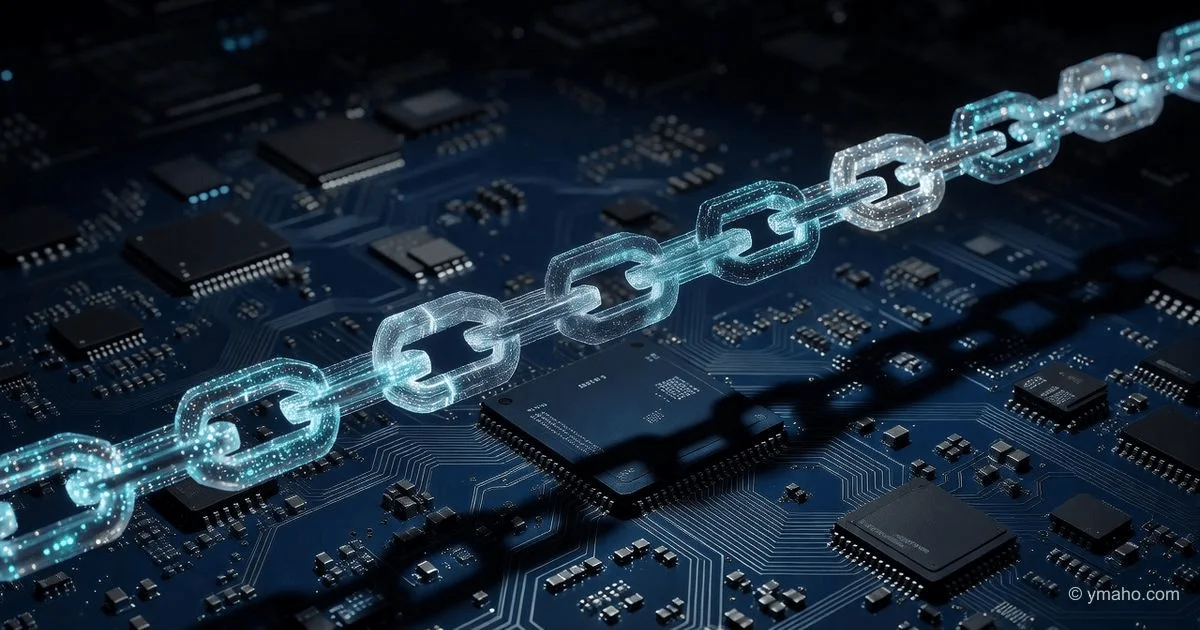
Imagine a shared, digital notebook that thousands of computers around the world update simultaneously. Every time a transaction occurs—sending money, logging a vote, tracking a shipment—it’s written on a new page in this notebook. Once a page is full, it's sealed with a unique digital fingerprint and linked to the previous page, creating an unbreakable chain. That is the core of what is blockchain technology and how does it work: a distributed ledger that provides a transparent, tamper-proof record of data without needing a central authority.
What You'll Learn
You'll grasp the inner workings of blockchain from the cryptographic hashes that secure it to the consensus mechanisms that keep it honest. By the end, you'll not only define the technology but also understand its real-world impact, from finance to supply chains, and be able to separate the genuine innovation from the hype. You'll walk away with a clear understanding of why this technology is considered a foundational shift in how we transfer and verify value and information online.
How It Works: The Mechanistic Explanation
To truly understand what is blockchain technology and how does it work, we must break it down into its four core components: the transaction, the block, the chain, and the consensus mechanism.
1. The Transaction: It all starts with an action. This could be sending cryptocurrency, recording a property deed, or logging a patient's health record. This transaction is grouped with other transactions that occurred in the same timeframe.
2. The Block: This group of transactions forms a candidate "block." Before it can be added to the chain, it must be validated. A crucial part of this process is the creation of a cryptographic "hash"—a unique, fixed-length digital fingerprint generated by a one-way mathematical function. This hash is a complex alphanumeric string that is highly sensitive to changes in the input data. Even a single comma in a single transaction inside the block would completely change the hash, making it easy to detect tampering.
3. The Chain: The block also contains the hash of the immediately preceding block. This is the critical link that creates the "chain." If someone tries to alter a transaction in Block 100, its hash changes. Because Block 101 contains the hash of Block 100, it would now see a mismatch, alerting the network to the tampering. This cryptographic link is why the blockchain is considered immutable. As the National Institute of Standards and Technology (NIST) explains in their foundational review of blockchain technology, the use of cryptographic hashing and a linked structure provides a verifiable and tamper-evident record (Yaga et al., 2018).
4. The Consensus Mechanism: How does the network decide which block to add when thousands of computers are working simultaneously? This is the "consensus mechanism." The most famous is "Proof of Work" (PoW), used by Bitcoin. In PoW, computers called "miners" compete to solve a complex mathematical puzzle. The first to solve it gets the right to add the block to the chain and is rewarded. This process requires significant computational effort (and energy), making it expensive and impractical to attack the network—an attacker would need more computing power than the rest of the network combined. The U.S. Securities and Exchange Commission (SEC) and other financial regulators frequently reference the security provided by such mechanisms in their analysis of digital assets.
A helpful analogy is to think of a blockchain as a shared Google Doc that records transactions. Unlike a traditional doc, every participant has a copy. When someone makes an edit, everyone's copy updates simultaneously. However, unlike a Google Doc, the blockchain uses cryptographic rules to ensure that no one can go back and alter an old entry. This decentralized, transparent, and secure record-keeping is the heart of how it works.
Why It Matters: Concrete Impact on Lives and Decisions
The profound impact of blockchain stems from its ability to establish trust in trustless environments. It removes the need for a central intermediary (like a bank or a government) to verify and validate transactions. This has several concrete implications:
- Financial Inclusion: According to the World Bank (2021), nearly 1.4 billion adults remain unbanked. Blockchain-based financial services (DeFi) can offer access to savings, loans, and payments using just a smartphone, bypassing traditional infrastructure requirements.
- Supply Chain Transparency: Companies like Walmart and IBM have used blockchain to track produce from farm to shelf. In the event of an E. coli outbreak, the source of contamination can be identified in seconds, rather than days, potentially saving lives (IBM, 2018). This demonstrates the practical power of traceability that is the foundation of what is blockchain technology and how does it work in logistics.
- Secure Data Ownership: Instead of a single entity holding all user data, blockchain enables decentralized identity and data storage. Patients, for example, could control access to their medical records, granting permission to researchers or doctors as needed, aligning with principles discussed in frameworks from the Mayo Clinic and other healthcare leaders exploring data privacy.
By the Numbers: Key Stats and Milestones
| Metric / Milestone | Detail | Source / Year |
|---|---|---|
| Global Blockchain Market Size | Projected to reach $163.8 billion by 2029 | Statista (2023) |
| Bitcoin's First Block | Mined on January 3, 2009 (Genesis Block) | Nakamoto (2008) |
| Total Bitcoin Energy Consumption | Estimated annual consumption comparable to that of Argentina (~121 TWh) | Cambridge Bitcoin Electricity Consumption Index (2024) |
| Ethereum's Transition | Shifted from Proof-of-Work to Proof-of-Stake in Sept 2022, cutting energy use by ~99.95% | Ethereum Foundation (2022) |
| Active Users | Estimated ~420 million cryptocurrency users globally by 2023 | Statista / Triple-A |
| Transaction Speed | Visa processes ~24,000 transactions per second (TPS); Bitcoin processes ~7 TPS (a key limitation) | Visa / Blockchain.com |
Common Myths vs. Facts
| Myth | Fact |
|---|---|
| Blockchain = Bitcoin. | Bitcoin is merely the first and most famous application of blockchain technology. The underlying "what is blockchain technology and how does it work" concept is a general-purpose tool for any kind of secure record-keeping. |
| Blockchain is completely anonymous. | Most public blockchains are pseudonymous. Transactions are linked to a public address, not a person's name. However, the entire transaction history is public, making it possible to trace and link activity through sophisticated forensic analysis (often used by agencies like the IRS and FBI). |
| Blockchain is unhackable. | While the underlying cryptography is robust, the applications (wallets, exchanges, smart contracts) are often vulnerable. Hacks that steal millions from crypto exchanges exploit code flaws, not the blockchain itself. |
| All blockchains consume massive energy. | Only Proof-of-Work blockchains (like Bitcoin) do. Many modern blockchains use Proof-of-Stake (like Ethereum), which is vastly more energy-efficient, comparable to running a regular server network. |
| A blockchain is just a database. | While it's a type of database, its key differentiators are decentralization, immutability, and transparency. Traditional databases are centralized and can be altered by a single administrator. |
| Blockchain transactions are free. | No, there are network fees ("gas fees") paid to the validators or miners who process and secure the network. These fees vary wildly based on network congestion. |
What You Should Do With This Knowledge
- Look Beyond Crypto: When you hear about blockchain, don't just think of volatile digital currencies. Consider the underlying principle: a shared, immutable, and transparent ledger. Ask how this could disrupt industries you interact with, from supply chains to voting.
- Differentiate the Technology from the Hype: Avoid blanket statements. Recognize that "blockchain" is a spectrum of technologies with different trade-offs in speed, security, and energy use. Understanding this nuance will help you make better decisions, whether as an investor, a consumer, or a professional.
- Become an Informed Participant: As blockchain-based services become more common, understanding "what is blockchain technology and how does it work" will empower you. You'll be able to evaluate claims critically and know the difference between a genuine utility and a speculative bubble. If you're considering using a crypto wallet, take time to understand how to secure your private keys—the ultimate responsibility for security lies with the user.
Sources
- Yaga, D., Mell, P., Roby, N., & Scarfone, K. (2018). Blockchain Technology Overview. National Institute of Standards and Technology (NIST). https://nvlpubs.nist.gov/nistpubs/ir/2018/NIST.IR.8202.pdf
- Nakamoto, S. (2008). Bitcoin: A Peer-to-Peer Electronic Cash System. https://bitcoin.org/bitcoin.pdf
- The World Bank. (2021). The Global Findex Database 2021. https://www.worldbank.org/en/publication/globalfindex
- IBM. (2018). IBM Food Trust: A new era for the world's food supply. https://www.ibm.com/blockchain/solutions/food-trust
- Cambridge Centre for Alternative Finance. (2024). Cambridge Bitcoin Electricity Consumption Index (CBECI). https://ccaf.io/cbnsi/cbeci
- Ethereum Foundation. (2022). The Merge. https://ethereum.org/en/upgrades/merge/
— Editorial Team