Aksakov Urges Ministry of Digital Development to Include All Banks in 'White List' for Fair Competition
The head of the State Duma Committee on the Financial Market stated that banks outside the Ministry of Digital Development's list are losing to competitors due to inconveniences for customers. The Central Bank of the Russian Federation has already supported the initiative to extend the list to all credit institutions.
Anatoly Aksakov's public appeal to the Ministry of Digital Development may appear as a technical dispute between regulators over website lists. In reality, it is the culmination of a struggle for survival of the entire regional banking system in Russia and an attempt to prevent an artificial market redistribution that has already begun.
The Core: What Is Really Happening
Formally, the discussion revolves around 'white lists'—lists of internet resources that continue to operate even under mobile internet restrictions imposed for security reasons. Currently, this list includes only five banks: VTB, Alfa-Bank, PSB, MTS-Bank, and Gazprombank. To the average person, this looks like technical bureaucracy. But for the banking system, it is a matter of life and death.
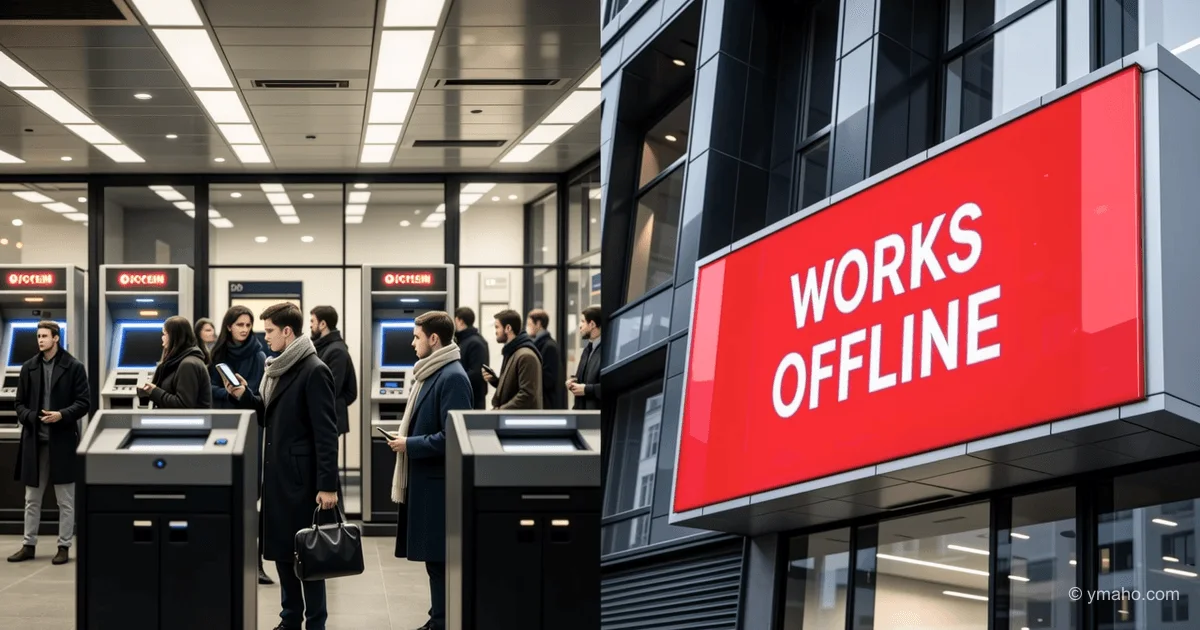
When mobile internet is shut down—which happens increasingly often in several regions—the apps and payment services of banks not on the list simply stop working. Payment terminals in stores, courier apps, online cash registers—everything grinds to a halt. For small businesses, this means direct revenue loss. For a bank, it means an instant loss of customer trust and a mass exodus of depositors to the 'chosen' five institutions.
Central Bank Governor Elvira Nabiullina acknowledged this as a 'serious problem' back in March, stating that being on the white list provides a 'significant competitive advantage' and violates the principles of fair competition.
Timeline and Context
The drama escalated rapidly from early May 2026. On May 7-8, amid confirmed communication outages in Moscow and St. Petersburg, the problem ceased to be regional and became federal. It was during these days that Aksakov publicly announced his intention to appeal to the Ministry of Digital Development and stated that he had already sent proposals to Prime Minister Mikhail Mishustin and the Central Bank Governor.
Meanwhile, the Association of Banks of Russia (ABR) had already appealed to the Central Bank in April, requesting assistance in including all banks participating in the deposit insurance system on the list. On May 8, information emerged that the ABR had sent an official appeal to Mishustin. On the same day, Senator Vadim Dengin stated that a 'detailed process' and possibly amendments to the law were needed.
By May 10, the situation had escalated to the limit: five banks had de facto obtained 'untouchable' status and began aggressively poaching clients, promising uninterrupted access. The remaining 300 banks, including 214 with universal licenses, found themselves in the second tier, losing business to the chosen few.
Who Wins and Who Loses
Winners:
The five banks on the 'white list' gain exclusive access to the customer base during outages. Their apps and services remain the only working channel for payments—this is not just a competitive advantage but an artificial monopoly. Anatoly Aksakov directly called this 'an injustice to citizens.'
Losers:
Regional and small banks, including those handling a significant share of payments in federal subjects. For them, an internet outage is equivalent to a forced closure for several hours with a complete loss of transaction revenue.
Small businesses: coffee shops, pharmacies, mobile phone stores, pickup points—anyone reliant on fast cashless payments. A few hours without payment acceptance means not just lost revenue but a cascading failure in accounting and logistics.
Customers of second-tier banks: they cannot pay for purchases, transfer money, or use other financial services when mobile internet is restricted.
What the Media Is Not Saying
On the surface, it all boils down to a dispute between 'Aksakov vs. the Ministry of Digital Development.' But the real reason for the ministry's resistance lies in the non-public demands of security agencies.
First insider insight: The Ministry of Digital Development cannot include all banks at the snap of a finger, not because of bureaucracy, but because the FSB insists on it. To be included in the 'white list,' a bank's networks must be equipped with SORM equipment (System of Operational-Investigative Measures), allowing intelligence services to monitor traffic in real time. Many small regional banks still lack this equipment in full—not due to unwillingness, but due to a simple lack of funds and technical specialists.
Second non-obvious fact: The real battle is not for customers but for control over key digital services. The full 'white list' includes not only banking apps but also internet banking, mobile apps, and 'payment platforms.' Including all banks means that payments could be processed through any credit institution even during cyberattacks or emergencies. This fundamentally changes the country's financial security architecture, and the Ministry of Digital Development fears opening a 'window' for potential vulnerabilities.
Third point: Behind the public scandal lies a lobbying struggle between two influence groups. On one side are state-owned banks and quasi-state structures (VTB, PSB, Gazprombank), which are already on the list and do not want to lose exclusivity. On the other is the Association of Banks of Russia, representing the interests of hundreds of medium and small players, including regional banks, which are doomed to die without access to digital infrastructure.
Forecast: The Next 30 Days and 90 Days
Next 30 days (until June 10, 2026):
Under pressure from the State Duma and the Central Bank, the Ministry of Digital Development will be forced to announce specific timelines and technical criteria for including new banks. A compromise is likely: a phased expansion of the list. The first phase will include banks with universal licenses that are already equipped with SORM and have their facilities located in the Russian Federation. This will cover 80% of the customer base but leave out about 90 banks with basic licenses, which precisely serve the 'last mile' in the regions.
I expect a draft resolution to appear by the end of May, fixing the inclusion order and infrastructure requirements. The issue will not be fully resolved—rather, the sharpness of the public scandal will be blunted.
90-day horizon (until August 2026):
The key fork is the FSB's position. If the security agencies agree to recognize standard security solutions as sufficient for all banks, the expansion process will accelerate. In this scenario, by the end of summer, about 100-150 banks will be on the list, and the remaining ones will receive a clear plan for retrofitting with specific deadlines.
If the FSB maintains a hardline stance, the list will expand only slightly—to 20-30 organizations 'verified' for security. Then regional banks will begin to lose customers en masse, triggering a second wave of complaints to the Central Bank and a new round of sector consolidation.
I estimate the probability of a compromise expansion at 70%, full inclusion of all banks at no more than 10%, and maintaining the status quo at 20%. However, in any scenario, the artificial two-tier system, where customers of different banks are in unequal positions in the face of state restrictions, will persist at least until autumn. This is a structural shift that will redefine the landscape of Russian banking for years to come.
— Editorial Team









