AI Visualization Is Transforming the Invasive Cosmetology Market by Boosting Patient Confidence
According to a study, 84% of consumers feel more confident before Botox or filler injections if they can preview the result using artificial intelligence technology.
Digital Mirror: How AI Visualization Turned Injections into a Guaranteed Product and Killed the Art of the Doctor
The Gist: What's Really Happening
When a Perfect Corp study shows that 84% of consumers feel more confident before injections if they can preview the result with AI, journalists write: "technology boosts trust and reduces fear." That's true, but it's just the tip of the iceberg.
In reality, the 84% figure isn't a comfort statistic. It's a market diagnosis. A market where 45% of respondents have already had procedures, and 44% are seriously considering them, yet a third (33%) regretted their choice. And that's where the real story lies.
84% say, "Yes, AI visualization boosts my confidence." But what are they really saying? They're saying: "I don't trust the doctor. I don't trust my own taste. I don't trust portfolio photos because they can be Photoshopped. I want to see the result on my face before I pay money and suffer from swelling for two weeks."
This isn't about technology. It's about a crisis of trust in aesthetic medicine, which for decades operated on the principle of "trust me, I'm a doctor." Patients no longer believe. They want proof. And AI simulation is the first legitimate proof they can get before the needle.
The global AI customization market in beauty is valued at $6.2 billion in 2026 and is projected to reach $28.5 billion by 2034 (CAGR 21%). The key growth driver is precisely the virtual try-on and procedure result simulation segment.
But the insider knows what reports don't mention: AI visualization isn't a service for patients. It's a market reshaping tool, where the winners aren't clinics or doctors, but technology platforms that become mandatory intermediaries between patient and injection.
Timeline and Context
January 2026 — Paris, IMCAS World 2026 Congress (28th anniversary, 20,000 participants from 136 countries). Organizers put artificial intelligence in aesthetic medicine center stage for the first time. Sessions cover AI-assisted diagnostic systems, treatment outcome prediction, and advanced image analysis. This isn't just a conference — it's an industry signal: the era of "manual" aesthetic medicine is ending.
February 2026 — Perfect Corp announces a partnership with True Beauty Lashes to launch LashLovr, a personalized selection and virtual try-on for false eyelashes using its API. The company is paving the way for total AI visualization adoption across all beauty segments, from lashes to fillers.
March 2026 — Moscow, IX Eurasian Congress on Aesthetic and Laser Medicine ECALM 2026. The program includes a panel discussion "Diagnostic Tools in Aesthetic Medicine: Data Objectification" featuring FotoFinder ATBM (AI in skin cancer diagnosis), Antera 3D (3D skin visualization), and Apache (ultrasound scanner). A separate report: "Artificial Intelligence in Dermatology and Aesthetic Medicine: From Algorithms to Clinical Solutions." The trend has reached Russia.
April 2026 — The market notes: the global AI customization market in beauty is $6.2 billion in 2026. Stratistics MRC publishes a report forecasting $28.5 billion by 2034.
May 2026 — Meiwu Technology raises $15.65 million through a private placement to develop an AI platform for skincare management. Chinese players enter the game. Early May sees the release of CRC Press's "Mastering the Art of Facial Soft Tissue Fillers with Artificial Intelligence" — the first academic work on how AI predicts hyaluronic acid injection outcomes.
May 20, 2026 — Perfect Corp publishes a report combining a survey of 300 consumers and data from Spate (Google search queries, TikTok and Instagram views). Key figures: searches for "micro-injections" up 859.7% year-over-year, 80% of respondents support injection procedures, 84% feel more confident with AI visualization, 87% say AI would increase their trust in the practitioner.
April-May 2026 — The first free simulation apps like Botox & Face Filler Simulator by DedalDev appear on Google Play. In 7 weeks: 510 downloads, 380 in the last 30 days. The app promises to "see accurate Botox and filler results on your face using advanced AI."
May 26, 2026 — News about AI visualization as the main trend in invasive cosmetology spreads across media. But the economic and legal implications remain off-screen.
Who Wins and Who Loses
Winners:
- Perfect Corp (PERF) and AI visualization API developers. Their business model: selling APIs to clinics, brands, and platforms. Perfect's projected 2028 revenue: $93.9 million. The cost of one API request is pennies. Clinics pay thousands of dollars per month for a license. Margins are astronomical.
- Large tech platforms (Amazon, Google, Meta). They own the infrastructure and data. Every request to an AI simulator trains their models on your face. Free for you, priceless for them.
- Hardware diagnostic manufacturers (FotoFinder, Antera, DermLite). Their equipment (3D visualization, AI-powered dermatoscopes) becomes mandatory for any clinic wanting to be "modern." A FotoFinder ATBM costs €30,000 to €60,000. Clinics line up.
- Anxious and perfectionist patients. They finally get a tool that reduces the fear of "what if it doesn't turn out right?" 84% feel more confident.
Losers:
- "Old school" injectors — doctors who work by eye. Harley Street Journal writes: "AI doesn't replace the injector's artistic vision but enhances it with analytical capabilities." In practice, this means a patient with an AI simulation will come to the doctor with a screenshot and say, "make it look like this." All creative freedom for the doctor dies. They become an operator, not an artist.
- Clinics without AI visualization. They can no longer compete. A patient who saw a simulation at a neighboring clinic won't go where they're told "trust me." Competition shifts to technology.
- Impulsive patients. Simulation works both ways: it not only boosts confidence but also sets realistic expectations. For the 33% who regretted their procedure, simulation could have been a deterrent. Clinics lose these impulsive clients.
What the Media Isn't Saying
Non-obvious Insight #1: The real beneficiary of AI visualization isn't clinics — it's insurance companies.
84% of patients feel more confident — meaning the number of lawsuits over unsatisfactory results should drop. Simulation becomes proof of informed consent. The patient signs a document: "I saw the simulation, I understand the actual result may differ, but I agree."
Insurance companies are already analyzing the possibility of reducing premiums for clinics that use certified AI simulators before every injection procedure. Preliminary estimates suggest a 15–25% reduction from current rates. That's hundreds of thousands of dollars in savings for a large clinic. And this factor is one of the main drivers of AI adoption that technology vendors keep quiet about.
Non-obvious Insight #2: AI visualization creates a legal trap for doctors.
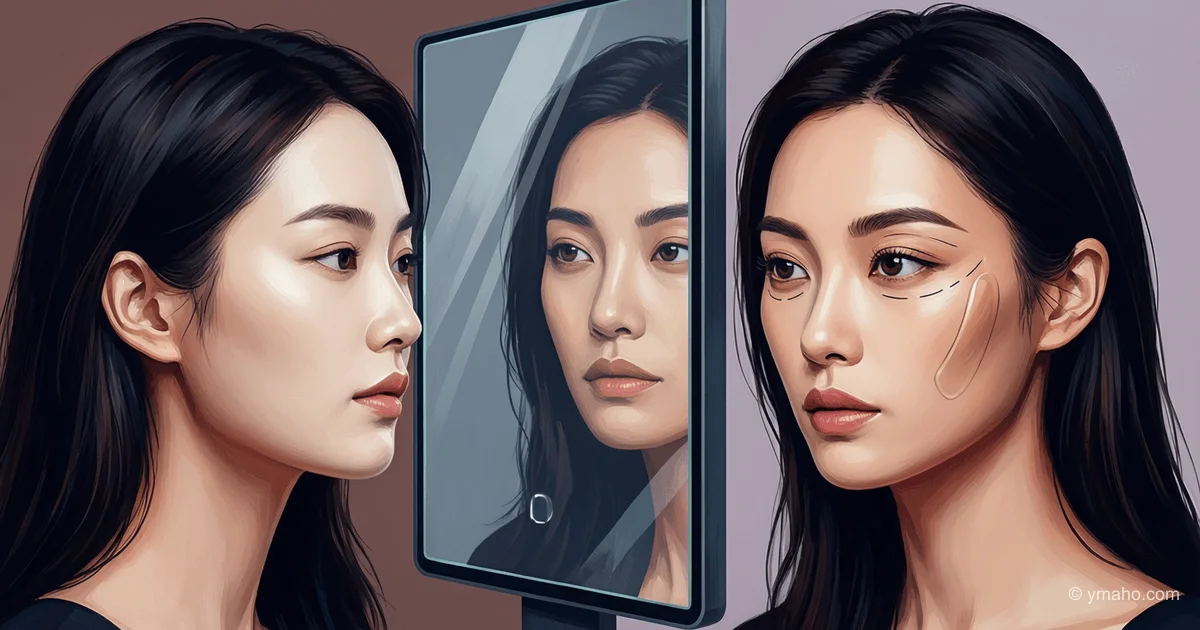
Harley Street Journal describes the technology: 3D imaging creates a detailed multidimensional map of the face, AI analytics process it, and the simulator shows the patient a realistic preview of potential results.
Now imagine: the patient sees a simulation, the doctor performs injections, the result differs. The patient goes to court with a screenshot and says, "you promised this, but you did that."
Clinics already include a clause in informed consent: "simulation is an artistic representation, not a guarantee of results." But courts in the US and Europe are increasingly siding with patients in "unreasonable expectations" cases. The first lawsuit under this scenario is a matter of the next 6–12 months. And when it happens, the industry will shudder. Lawyers are already preparing.
Non-obvious Insight #3: AI visualization is a Trojan horse for biometric data collection.
Every time you upload your face to an AI simulator (Perfect Corp, Botox Simulator App, FotoFinder), your biometric data goes somewhere. Perfect Corp, for example, builds its platform as a set of APIs for B2B partners. This means your face is processed on the company's servers, not locally on your device.
What happens to this data next? Officially — anonymization and aggregation to improve models. In reality — creation of the world's largest database of faces linked to aesthetic preferences. Insurance companies are already showing interest: can a face predict the likelihood of seeking cosmetic procedures? Can wrinkle dynamics estimate biological age?
Regulators (GDPR in Europe, CCPA in California) are asleep. And the market is reaping the harvest.
Forecast: Next 30 Days and 90 Days
30 Days (end of June 2026):
- One of the major clinic chains (likely an Evolus or Allergan partner) will announce the integration of an AI simulator across all its locations. This will become the standard. Clinics without AI will start losing clients from July.
- The first comparative study on AI simulator accuracy will be released — how well the predicted result matches the real one after 2 weeks and 3 months. The result will likely disappoint: 70–80% accuracy at best, with large deviations in the lip and cheek area. But marketing will ignore these numbers.
- A major filler manufacturer (Galderma, Allergan, Teoxane) will launch its own simulator app. Free for patients, but with a condition: by uploading your face, you consent to data use for research. Thus, the manufacturer gets real-time feedback on its products' performance.
90 Days (end of August 2026):
- The American Society of Plastic Surgeons (ASPS) will issue an official position on AI visualization. It will say: "the tool is useful but cannot replace clinical judgment." In practice, this is an attempt to slow adoption so doctors don't lose control.
- The first lawsuit will emerge from a patient who got fillers based on an AI simulation and received a different result. The case will be widely covered. The outcome will determine whether clinics mass-adopt AI or hold back until legal risks are clarified.
- Perfect Corp will announce a new product: an AI simulator that predicts not just the result of a single procedure, but how the face will age 1, 3, and 5 years after injections. This will be a breakthrough: selling long-term patient management plans, not one-off injections. The price for such predictive analytics: from $5,000 per clinic per month.
- The AI customization market in beauty will reach $7.2 billion by the end of Q3 2026. Growth rates will accelerate because insurance companies will start requiring documented informed consent (read: simulation screenshot) for claim coverage.
Insider's Bottom Line: AI visualization isn't about technology. It's about redistributing power in aesthetic medicine. Power shifts from the doctor (who used to decide how the result would look) to the patient (who now comes with a picture) and to the platform that generated that picture. The doctor becomes an executor, not a creator. The 33% of patients who regretted their procedure finally get a tool to help them avoid mistakes. But the 84% who feel more confident are actually buying an illusion of control. Because no AI can predict how your skin will react to a filler on the third day after the procedure. Technology sells hope. Reality remains reality. And in that gap lies the biggest business of 2026.
— Editorial Team