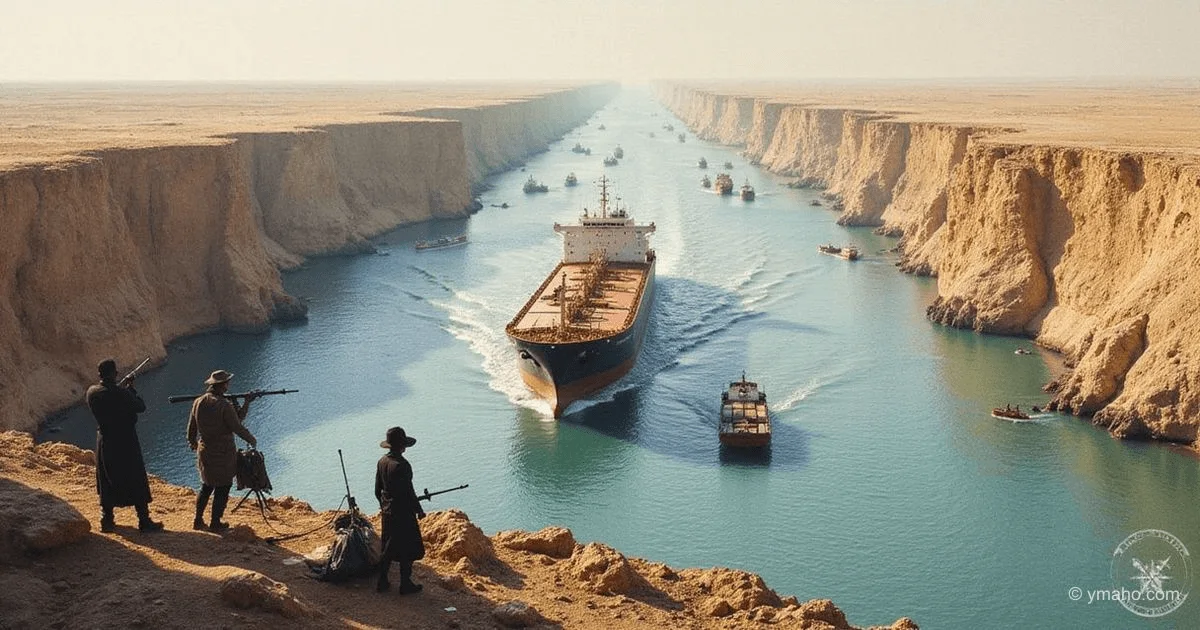
What Happens If a Key Global Shipping Lane Closes?
If Iran-backed forces shut the Bab al-Mandeb strait—a narrow waterway between Yemen and Africa—it could send shockwaves through global trade, energy prices, and everyday life. This isn’t just about faraway politics; it’s about the cost of fuel at your local gas station and the price of goods on supermarket shelves.
Where Is the Bab al-Mandeb—and Why Does It Matter?
The Bab al-Mandeb is a slim stretch of sea linking the Red Sea to the Gulf of Aden, which then flows into the Indian Ocean. At its narrowest point, it’s only 18 miles wide—about the distance of a long bike ride. Despite its size, it’s one of the world’s busiest maritime chokepoints.
Think of it like a major highway interchange: if it jams, traffic backs up for hundreds of miles. Every day, massive cargo ships carrying oil, electronics, clothes, and food pass through here on their way from Asia to Europe and beyond.
In 2024 alone, this strait handled about 5% of the world’s oil and refined fuels—roughly 4.1 billion barrels. That might sound abstract, but it translates to millions of gallons of gasoline, diesel, and jet fuel that keep planes flying, trucks moving, and homes heated.
How One Pipeline Became a Lifeline
With Iran effectively restricting access to the Strait of Hormuz—the usual exit route for Persian Gulf oil—Saudi Arabia has rerouted much of its crude through an inland pipeline to its Red Sea port of Yanbu. From there, tankers sail out through the Bab al-Mandeb.
This East West Pipeline, normally moving less than 1 million barrels per day, recently surged to full capacity: 7 million barrels daily. That’s like switching a garden hose to a firehose overnight. It shows how fragile global supply chains are—and how quickly alternatives get maxed out under pressure.
Key shifts in Saudi exports include:
- Increased use of Red Sea ports instead of Persian Gulf terminals
- Greater reliance on the Bab al-Mandeb as Hormuz access shrinks
- Higher shipping insurance costs due to regional instability
Who Controls the Strait—and How Could It Close?
The Bab al-Mandeb sits near Yemen, where the Houthi movement—backed by Iran—holds sway along parts of the coast. The Houthis have already demonstrated their ability to disrupt traffic. During the Gaza conflict, they attacked ships they linked to Israel or the U.S., causing insurers to pull coverage and many companies to reroute vessels around Africa—a detour adding weeks and millions in costs.
A senior Iranian adviser recently warned that the “Resistance front” (a term for Iran-aligned groups) sees Bab al-Mandeb as equally strategic as Hormuz. If tensions escalate—especially with U.S. threats against Iran—the Houthis could resume attacks, not necessarily to sink ships, but to scare them away.
All it might take is a few missile strikes near commercial vessels. Even near-misses can trigger panic among shipping firms, leading to voluntary halts or soaring insurance premiums that make passage unaffordable.
What Does This Mean for Regular People?
If both the Strait of Hormuz and Bab al-Mandeb face serious disruptions, up to 25% of the world’s oil and gas supply could be blocked. That doesn’t mean immediate shortages, but it does mean higher prices.
- Gasoline and heating oil would likely become more expensive, hitting household budgets.
- Imported goods—from smartphones to sneakers—could cost more or arrive later due to longer shipping routes.
- Air travel might see ticket price increases as jet fuel costs rise.
While governments hold emergency oil reserves, those are short-term fixes. Prolonged closures would strain economies already dealing with inflation and slow growth. For most people, the impact wouldn’t be dramatic overnight—but it would be felt in subtle, persistent ways at the pump, in stores, and on utility bills.
Key Takeaways
- The Bab al-Mandeb is a critical shortcut for global trade, especially oil heading from the Middle East to Europe and Asia.
- With the Strait of Hormuz partially closed, this Red Sea route has become even more vital.
- Iran-aligned groups like the Houthis have both the motive and means to disrupt traffic there.
- A full closure wouldn’t stop all trade, but it would force costly detours and push up prices worldwide.
- Everyday consumers would feel the effects through higher transportation and goods costs—not as a crisis, but as added financial pressure.
— Editorial Team









