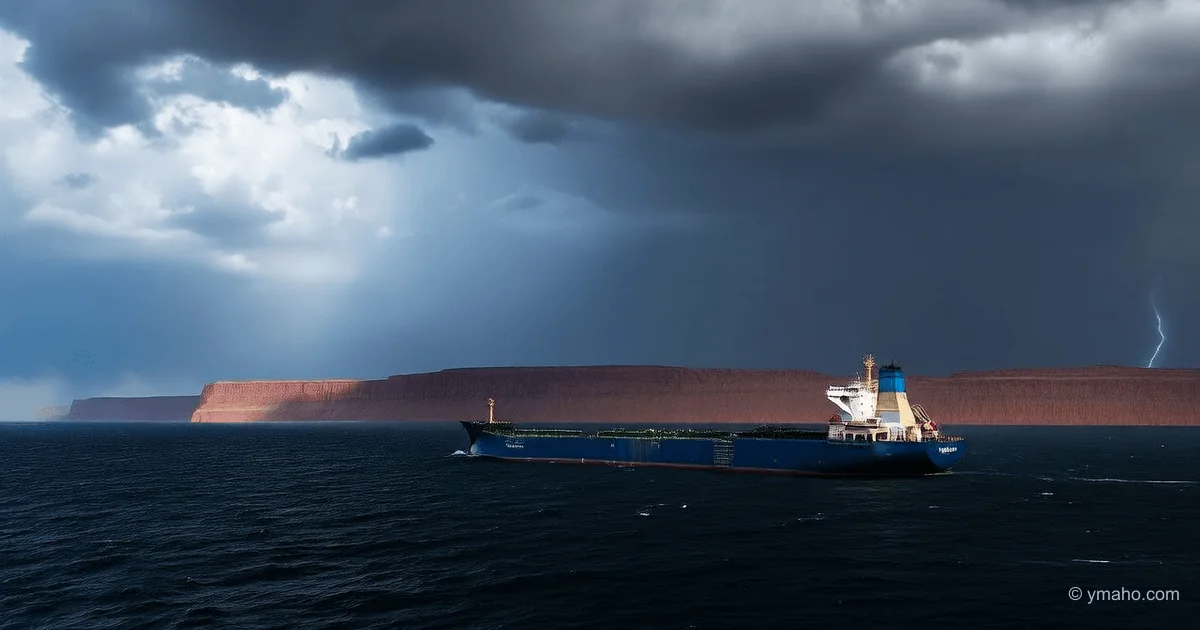
Oil Prices Dip but Stay Above $100 Amid Iran Crisis
Brent crude fell to $106.3 after three days of gains, but remains above $100 as the Strait of Hormuz blockade persists and US-Iran talks collapse.
Analytical Note
Topic: Oil Market in the Grip of Hormuz — Why the Brent Correction Is Deceptive and the 'Geopolitical Premium' Is the New Normal
Date: May 13, 2026
Author: Independent Analyst
The Gist: What's Really Happening
When Brent briefly dips $1.22 to $106.55 per barrel, it's tempting to chalk it up to profit-taking after a wild rally. But that's just surface ripple. Beneath it lies an anomalous market where fundamental valuations no longer work. The global economy is now losing about 100 million barrels of oil per week due to the Strait of Hormuz blockade. We are witnessing not just a price spike, but the largest gap between physical supply and demand since World War II.
The market is frozen in an unnatural equilibrium: on one hand, traders fear missing the moment a deal is struck and prices crash; on the other, the fear of being left without supplies outweighs everything. The May 13 correction is a technical reaction to rumors of a 'fragile truce,' which instantly shatter against reality: Iran rejected a 20-year moratorium on uranium enrichment, and Trump called the truce 'on artificial life support.' In such conditions, any price drop is not a trend reversal, but an entry opportunity for major players who understand this perfectly.
Timeline and Context
The conflict escalated into a hot phase in late February 2026, when the US and Israel launched coordinated attacks on Iranian infrastructure. Tehran's response was asymmetric and devastating for the market: instead of direct military escalation, Iran effectively shut down the Strait of Hormuz — the narrow chokepoint through which about a fifth of the world's oil and liquefied natural gas supplies pass.
By May 11, 2026, Brent had soared to $107 on news of collapsed talks and Iran's categorical refusal to dismantle nuclear facilities. Trump's reaction was immediate: 'ABSOLUTELY UNACCEPTABLE!' A meeting with national security advisors on May 12 confirmed: the administration is considering a return to bombing the remaining 25% of targets that the Pentagon had previously designated but not attacked.
Against this backdrop, OPEC cut production to its lowest level in two decades, and Saudi Aramco CEO Amin Nasser warned that a return to market stability could drag on until 2027. Meanwhile, JPMorgan revised its forecast: Brent will average $96 per barrel in 2026, peaking at $104 in Q3 — even assuming the strait opens in June.
Who Wins and Who Loses
Winners:
Oil exporters not dependent on Hormuz. The US is ramping up releases from the Strategic Petroleum Reserve (SPR): the administration has already announced lending 53.3 million barrels, and the first tanker is headed to Turkey. American shale producers are experiencing a rebirth. Russia is also reaping a huge rent premium.
Losers:
The global economy as a whole. With Brent above $100, aviation, logistics, and agriculture face immense pressure. Iran loses about $500 million daily due to the US Navy blockade of its ports. Asian importers, especially India and China, pay a double price: US sanctions on companies from Hong Kong, UAE, and Oman for facilitating Iranian supplies to China have complicated 'gray' imports.
But the biggest hidden loser is the European economy. EU industry, barely recovered from the 2022-2023 energy crisis, faces a new shock. Iran's seizure of the tanker Ocean Koi in the Gulf of Oman on May 8 confirms that chaos is spreading far beyond the Persian Gulf.
What the Media Isn't Saying
First. The current 1.1% drop in Brent is not a market reaction to fundamental factors, but the result of algorithmic trading on news headlines. When Reuters reports a 'fragile truce,' bots buy put options, but physical oil traders aren't selling a single barrel. This is a classic gap between paper and physical markets.
Second (key hidden insight). The real problem is not the Strait of Hormuz itself, but the global tanker fleet crisis. JPMorgan points out that even after the strait opens, the 'bottleneck' will shift to tanker availability and refinery restart times. Lloyd's insurers have imposed war surcharges, making freight 4-5 times more expensive. A significant portion of the global tanker fleet is idle, waiting for military convoys or mine clearance of the fairway. This means that even with a ceasefire, physical supplies will resume with a lag of 6-10 weeks.
Third. The Trump administration is playing a double game. Publicly, a peaceful settlement is discussed, but simultaneously, special forces are being built up in the region. Axios reports plans to seize Iran's enriched uranium stockpiles — a mission Trump has not yet authorized, but which Israel is actively lobbying for. Netanyahu publicly stated: 'You go in and take it.' If this operation happens, Brent will instantly break $130.
Fourth. Commercial oil inventories in OECD countries are approaching critical operational levels. JPMorgan warns: even if the strait opens on June 1, seasonal summer demand and massive withdrawals from storage in March-May will leave tanks at critical levels by August. This is not rhetoric — it's physical reality, where any new supply disruption will trigger a gasoline crisis.
Forecast: Next 30 Days and 90 Days
30 days (to mid-June 2026):
The key inflection point will be the Trump-Xi summit in Beijing on May 13-14. If China agrees to pressure Iran (in exchange for US trade concessions), a realistic truce framework could emerge. But given Tehran's stance and Israeli pressure, the baseline scenario is the status quo. Brent will stay in the $105-115 range. Any tanker incident or summit failure will send prices to $120.
JPMorgan forecasts Brent averaging $103 in Q2, which looks conservative given current dynamics. Goldman Sachs allows for a retest of all-time highs if escalation occurs.
90 days (to mid-August 2026):
Here, the 'nightmare scenario' described by Saudi Aramco plays out. If the strait remains closed through the end of summer, tanker shortages and depleted OECD inventories by August will create a physical gasoline deficit in the US and Europe. Brent could move to $130-140. A return to stability would be delayed until 2027, as Amin Nasser warned.
An alternative, less likely scenario: the strait opens in June-July. But even then, JPMorgan warns that logistical constraints will keep prices in the $100-105 range until autumn.
Unexpected forecast: The Israeli factor will be decisive. If Trump, weary of negotiations, goes for a 'partial deal' leaving Iran with part of its nuclear program, Israel may take unilateral action. An operation to seize uranium stockpiles or strike facilities the US agreed not to bomb — such a scenario would instantly send oil above $150.
Final conclusion: The Brent correction to $106 is not a reason for optimism, but a reminder of how fragile the current balance is. The geopolitical premium of $20-25 has become a structural component of the price. The market has entered an era where the peaceful scenario means Brent at $95, and the military scenario means $130 and above. The 'normal' we knew before 2026 will not return until at least the end of the decade.
— Editorial Team









