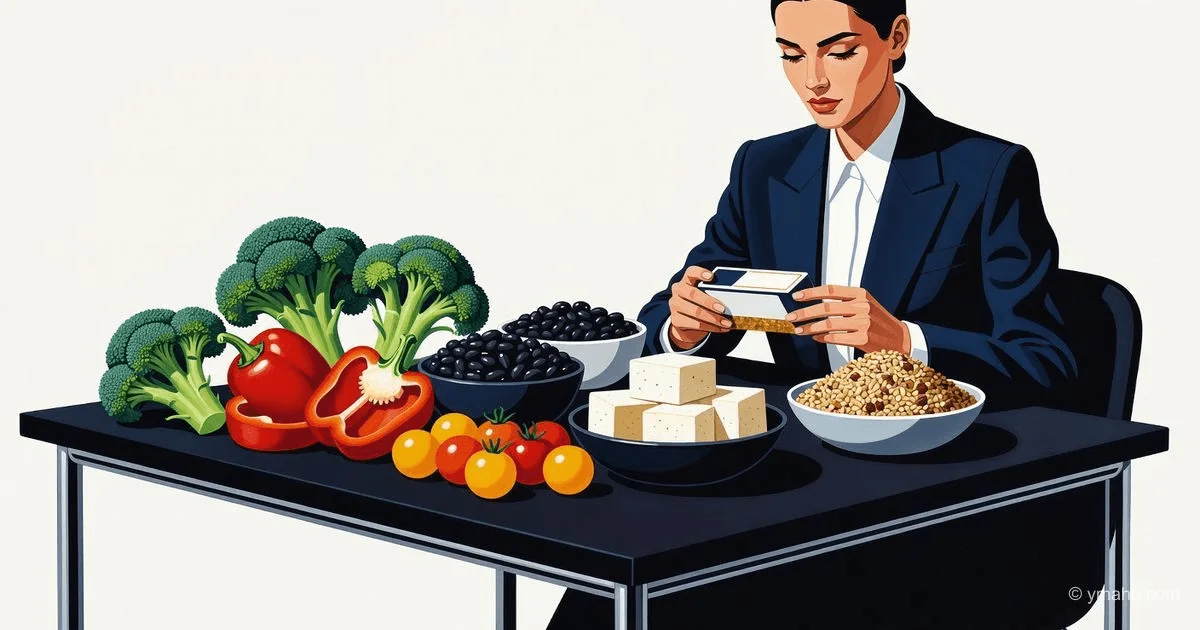
Clean Eating Officially Crowned the Top Dietary Trend of 2026
According to the What’s Trending in Nutrition survey, clean products with short ingredient lists have overtaken anti-inflammatory and plant-based diets. The push for minimally processed foods and the rejection of additives is going mainstream.
The End of Diets as Ideology: Why Clean Eating Won but No One Noticed the Shift
You might have assumed the news that clean eating has been named the leading dietary trend of 2026 is just another round of wellness hysteria—an overhyped fad that will give way to keto or paleo within a year. That view misses the point.
What is happening is not one diet replacing another. It is the death of dieting as an ideology. People no longer define themselves as “I’m keto” or “I’m vegan.” They say: “I avoid ultra-processed foods.” This marks a fundamentally different level of awareness, and it is reshaping the entire food industry—from supermarket shelves to the strategies of Coca-Cola and Nestlé. The What’s Trending in Nutrition report captured the shift in hard numbers: clean products with short ingredient lists surpassed anti-inflammatory and plant-based diets. Most telling, intermittent fasting dropped out of the rankings entirely. This is not a simple change of leader. It is a tectonic realignment.
[The Core]: What Is Really Happening
Consumers have grown tired of two things: complexity and guilt. Diets like keto, paleo, and low-carb require constant calculations, tracking, and exclusions. They turn eating into a math problem and create a culture of “cheating” when someone feels they have failed their diet.
Clean eating is a philosophy, not a diet. It does not say “avoid carbs.” It says “choose foods with three ingredients instead of thirty.” Euromonitor International’s 2025 survey found that 34% of consumers worldwide are actively limiting added sugar, 29% are avoiding preservatives, and 28% seek “fully natural” products. Twenty-seven percent now consciously restrict processed foods.
The key insight the media overlook is this: clean eating in 2026 is not about organic or gluten-free labels. It is about transparency and trust. Consumers no longer assume “organic” automatically means “healthy.” They want to know where every ingredient comes from. An FMCG Gurus survey showed that 58% of global consumers have become more diligent about reading labels in the past year. Synergy research adds that beans have become the main driver of innovation in the plant-based category, accounting for 41% of new launches.
A less obvious insight: clean eating is killing veganism—not the idea, but the brand. Consumers are fed up with plant-based “meat substitutes” that carry long lists of emulsifiers, stabilizers, and isolates. They are returning to whole foods: tofu, tempeh, beans, and lentils. Sales of tofu and tempeh rose 37% year-over-year, while the brand Better Nature grew 51%. Consumers are saying: “I don’t want my food pretending to be something else. I want real food.”
Timeline and Context
The clean eating trend did not appear overnight in 2026. It had been building for years and only now reached critical mass. Here are the key milestones.
2014: Brazil became the first country to incorporate the NOVA classification (degree of food processing) into national dietary guidelines. This provided the academic foundation for the trend, though mainstream adoption was still far off.
2020–2023: The pandemic and post-COVID syndrome sparked widespread interest in functional nutrition. People began linking food to immunity and energy.
Fall 2025: The United Kingdom introduced restrictions on advertising foods high in fat, salt, and sugar (HFSS) before 9 p.m. This marked the first major regulatory strike against ultra-processed products.
January 2026: Whole Foods Market released its annual trends report, spotlighting “minimally processed foods” and the return of animal fats (including beef tallow) as alternatives to vegetable oils. Sonya Gafsi Oblisk, Chief Commercial Officer at Whole Foods, stated: “Curiosity, creativity, and mindful choices are shaping how people eat and shop.”
May 2026: The What’s Trending in Nutrition report named clean eating the top trend for the first time, overtaking anti-inflammatory and plant-based diets. Intermittent fasting fell out of the top rankings completely.
June 2026 (now): The trend has gone mainstream. Twenty-seven percent of global consumers now consciously limit processed foods. Brands worldwide are reformulating to shorten ingredient lists.
Winners and Losers
Winners:
- Whole-food and legume producers. Brands such as Bold Bean Co, Merchant Gourmet, and Biona are posting double-digit growth. Biona recorded an 18.93% rise in legume sales between 2024 and 2025. Consumers are choosing a can of beans over a pack of vegan nuggets.
- Companies making functional beverages with transparent formulas. The market for drinks supporting digestion, immunity, and cognitive function is expanding. Energy drinks still dominate (global market $86.5 billion in 2024), but gut-health and cognitive-support beverages are the fastest-growing segments.
- Countries with strong food cultures and strict regulation. Japan and South Korea, where ultra-processed foods account for roughly 25% of calories (versus 57% in the United States), benefit because their national cuisines already align with clean eating principles. Exports of their food concepts—fermentation, seaweed, tofu—will rise.
Losers:
- Major ultra-processed food manufacturers. Nestlé, Unilever, and Kraft Heinz. Their portfolios are 60–80% ultra-processed. They cannot quickly overhaul supply chains. Some are trying “clean” sub-brands, but consumers remain skeptical that a large corporation can truly be “clean.”
- Plant-based meat brands (Beyond Meat, Impossible Foods). Their products are textbook ultra-processed foods with long ingredient lists, isolates, and emulsifiers. Demand is falling as consumers shift to whole plant foods. Beyond Meat has been unprofitable for two years, and the clean eating trend adds further pressure.
- Diet programs built on restrictions and tracking (WW, older Weight Watchers models). When people stop identifying as “on a diet” and simply choose clean products, subscription diet apps lose relevance. WW is pivoting toward a wellbeing app, but the transition takes time.
What the Media Are Not Saying
Media coverage celebrates the “victory of clean eating,” the “rejection of chemicals,” and the “return to nature.” Yet no one mentions the trend’s darker side: a class and education divide.
First, clean eating is expensive. Research shows ultra-processed foods cost 30–50% less per calorie than whole foods. In the United States, 57% of calories come from ultra-processed products—not because Americans lack intelligence, but because lower-income households cannot afford fresh produce and quality chicken. The clean eating trend is an elite trend, available mainly to those with above-average income, time to cook, and access to quality ingredients. Media stay silent because this is an inconvenient truth.
Second, a regulatory gap. In Brazil, where ultra-processed foods make up only 20% of calories, the outcome stems from years of government policy: incorporating the NOVA classification into official guidelines, restricting marketing of ultra-processed foods to children, and clear front-of-pack labeling. In the United States, where ultra-processed foods account for 57% of calories, there is still no federal definition of the category. The FDA and USDA only began gathering data in 2025. Until government steps in, “clean eating” remains a marketing term rather than a health standard. Any manufacturer can label a product “clean” even if it contains twenty ingredients.
Third, a technological paradox. Creating a short-ingredient product with a shelf life beyond three days requires either expensive technology (HPP—high-pressure processing), local supply chains, or shorter shelf life. Small clean brands can manage this by selling within a limited radius or via subscription. Large corporations cannot. Their model relies on global logistics and 12–18 month shelf lives. They cannot simply “remove preservatives.” They will either lose shelf space or continue to stretch the truth about cleanliness.
Outlook: The Next 30 and 90 Days
Next 30 days (July 2026):
Consumer panels (Nielsen, SPINS) will release Q2 2026 data. Sales of frozen meals and ready-to-eat snacks are expected to drop another 5–7% from Q1. This will shock investors, and shares of major ultra-processed food producers (Kraft Heinz, General Mills) could fall 10–15%. At the same time, brands such as Daily Harvest and Hungryroot, built on clean convenience foods, will report 20–25% subscription growth.
Retailers will launch a “label war.” Chains (Target, Walmart, Tesco) will introduce their own “clean” private-label lines with color coding. Walmart is likely to call its line “Clean Choice.” Consumers will face confusion, but that serves retailers: more “clean” options increase private-label share and deliver the highest margins.
Next 90 days (Fall 2026):
The European Commission will present a draft unified “clean” labeling standard for all 27 member states. It will be a compromise between France’s Nutri-Score (which scores nutritional value) and Brazil’s NOVA system (which scores processing). A hybrid is likely: color coding for nutrition plus a “minimal processing” icon for short-ingredient products. Italy (which opposes Nutri-Score because it penalizes olive oil) will resist but is expected to yield by year-end.
In the United States, the Federal Trade Commission will open investigations into brands using the term “clean” without evidence. This marks the first step toward regulation. Formal standards will not appear before 2027, but FTC warnings will unsettle many green marketers.
Finally, and most importantly, normalization of ultra-processed foods will begin. Consumers will realize not all processed foods are equally harmful. Frozen peas are processed (they were frozen). Canned beans are processed. Yet both are nutritious. The market will segment ultra-processed foods into “bad” (trans fats, emulsifiers, artificial colors) and “acceptable” (minimal processing, freezing, fermentation). Canned and frozen producers will benefit; chip and sweetened yogurt makers will lose.
The final note of fall 2026: one global giant (Nestlé is the likely candidate) will announce the separation of part of its business into a standalone “CleanCo” focused solely on short-ingredient, fermented, and alternative-protein products. This will be an attempt to distance the “sinful” ultra-processed portfolio from the “clean” future. If it happens, other corporations will follow. At that point we will finally understand: clean eating is not a trend. It is the new industrial reality.
— Editorial Team