Why Russia Can’t Spend Its Confiscated Cryptocurrency—and What That Means for the Budget
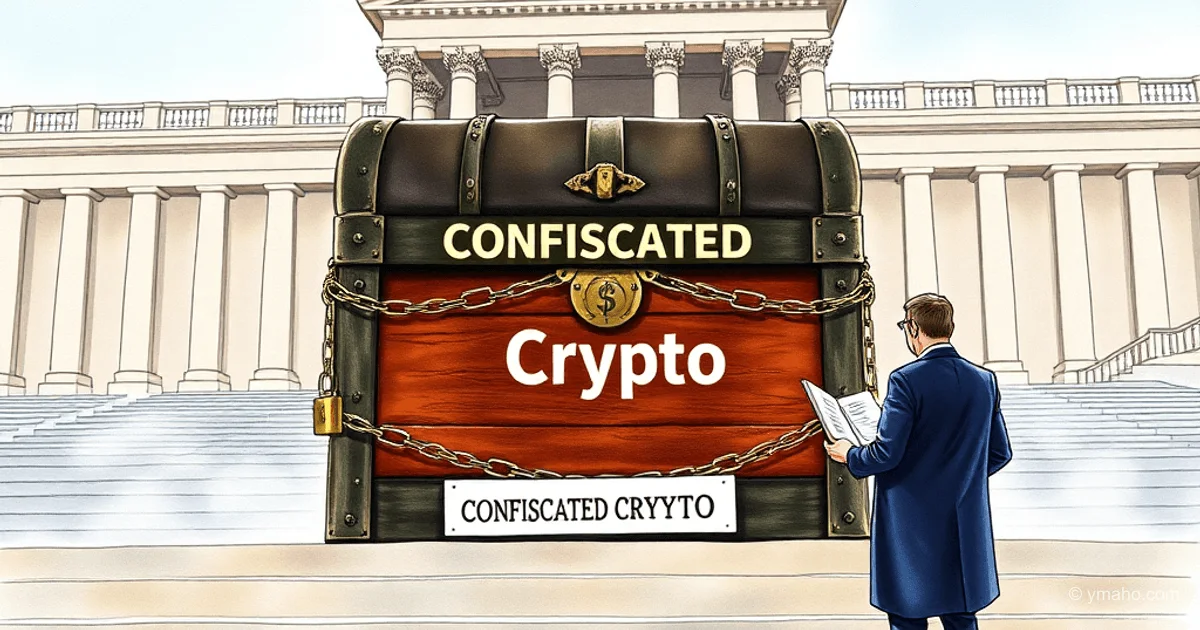
Russia has officially recognized cryptocurrency as property, yet it still can’t convert seized Bitcoin and other digital assets into real money for the state budget. It’s like if the police found a chest of gold coins but had no key to the bank to exchange them.
At a roundtable discussion in the Federation Council, Senior Prosecutor Madina Dolgieva from the Prosecutor General’s Office confirmed that despite a law passed in February, the government simply lacks a mechanism to sell confiscated cryptocurrency and transfer the proceeds to the national treasury. The first court ruling ordering the confiscation of such an asset was issued back in 2021—and it remains unenforced to this day.
Why Can’t Cryptocurrency Just Be Sold?
The problem isn’t that the government doesn’t want to sell cryptocurrency. The issue is that, under the law, this task falls to the Federal Bailiff Service (FSSP). However, the FSSP has neither the technical tools nor the legal authority to securely store, transfer, or sell digital assets.
Imagine the FSSP as a warehouse for confiscated items: cars, paintings, jewelry. Now picture a digital wallet containing Bitcoin being brought to that warehouse. The staff have neither the password nor any understanding of how to access it, nor do they have permission to hand it over to someone who knows what to do. The law explicitly prohibits simply “transferring” such an asset to another agency without a clear procedure in place.
How Much Money Is Stuck?
Exact figures remain undisclosed, but Dolgieva noted that the value of confiscated cryptocurrency has risen significantly since 2021. Back then, one Bitcoin was worth roughly $30,000–50,000; today, it’s worth over $70,000–80,000. This means the government formally owns assets that could generate billions of rubles in revenue—if only they could be liquidated.
Here’s what we know:
- The first court decision to confiscate cryptocurrency dates back to 2021.
- Since then, more such rulings have been issued.
- None of them have been carried out due to the lack of a sales mechanism.
- Cryptocurrency is increasingly being used in criminal schemes—not just Bitcoin, but other digital assets as well.
What’s Preventing the Creation of Such a Mechanism?
Legislation is moving slowly. Although a law was passed in February 2026 equating digital currency with property and allowing its seizure, it didn’t address the “realization” phase. In other words, the government can seize cryptocurrency, but it can’t sell it.
To make this possible, additional amendments are needed: defining who will hold the private keys, specifying which platforms should be used for sales, and outlining measures to minimize the risk of hacking or loss of funds. Without these changes, the FSSP remains a “warehouse without a lock.”
Key Takeaways
- Cryptocurrency is recognized as property, but it can’t be sold by the government due to gaps in the law.
- The first confiscation ruling came in 2021, yet it has never been enforced.
- The FSSP lacks the tools to handle digital assets.
- The value of these assets has surged, leaving the budget to miss out on potential revenue.
- Cryptocurrency has become part of the criminal economy, while regulatory frameworks continue to lag behind.
What Does This Mean for Ordinary Citizens?
If the government can’t utilize confiscated assets, it forfeits income that could have funded social programs, road construction, or healthcare initiatives. Moreover, the absence of clear rules creates legal uncertainty: even bona fide cryptocurrency holders may face risks if their assets become entangled in an investigation. Ultimately, this situation underscores that Russia is not yet equipped to manage digital assets effectively—either from a criminal justice perspective or an economic standpoint.
— Editorial Team









