NEJM: Groundbreaking Base-Editing Therapy VERVE-102 Slashes Cholesterol After One Shot
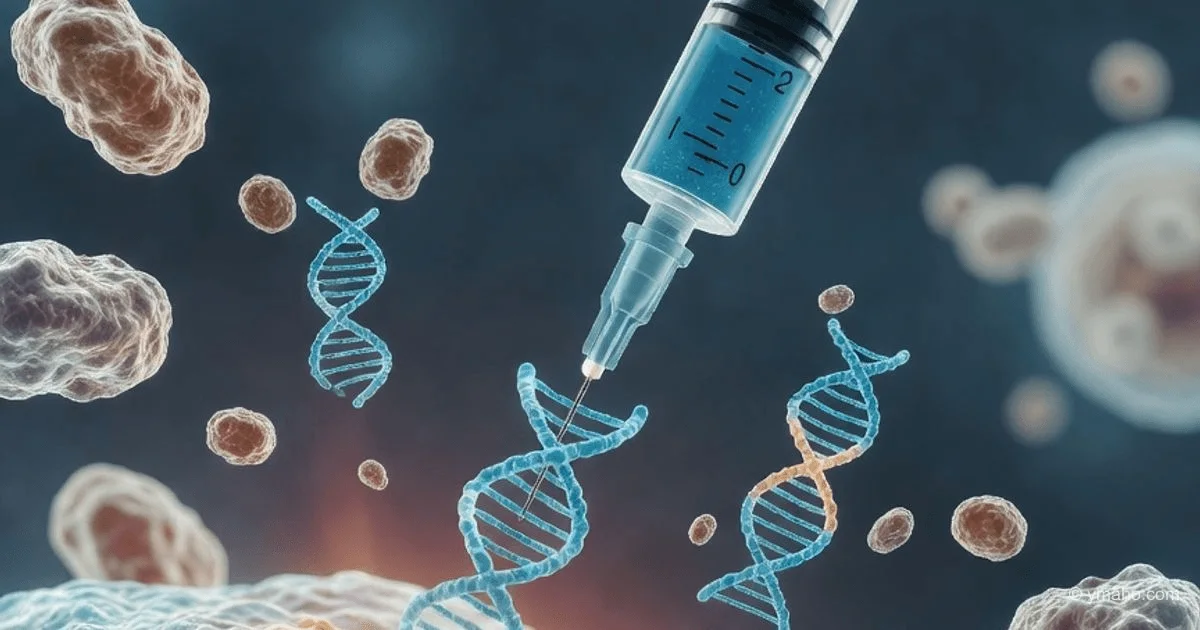
Results from the first-in-human trial of VERVE-102—an in vivo base-editing therapy that switches off the PCSK9 gene in the liver—have been published in NEJM. A single infusion cut LDL cholesterol by 62% and PCSK9 protein by 88%, with the effect holding steady for up to 18 months and no serious side effects.
The Death of Chronic Therapy: Why VERVE-102 Is a Slow-Motion Bomb Under the Pharma Business Model
[The Core]: What Actually Happened
Let’s cut straight to it. On 25 May 2026, at the European Atherosclerosis Congress (EASC), Eli Lilly unveiled interim Phase 1b Heart-2 data for VERVE-102. The results appeared in NEJM. The numbers are the kind that should trigger quiet panic inside companies raking in billions from lifelong statins and injectable PCSK9 inhibitors. A single intravenous infusion lowered LDL cholesterol by 62% in the highest-dose cohort and PCSK9 protein by 88%. The reductions have now held for up to 18 months with no sign of waning.
I’ve been in this field long enough to recognize that this is not just “another gene-therapy success.” It is the first credible candidate for a true “one-and-done” solution for high cholesterol. The word “years” matters. Current follow-up reaches 18 months, and LDL reduction remains rock-steady. No drift, no resistance—the liver has simply stopped making PCSK9.
One detail most coverage misses: VERVE-102 is not classic CRISPR. It uses base editing from Verve Therapeutics, which Lilly acquired for $1 billion in June 2025. Base editing changes single nucleotides without breaking both strands of DNA, making it potentially far safer than CRISPR-Cas9. That safety profile is why the FDA granted Fast Track designation back in April 2025.
Timeline and Context
March 2025: FDA cleared Verve’s IND to start the Phase 1b Heart-2 trial. Early data from three dose cohorts (0.3, 0.45, and 0.6 mg/kg) already showed an acceptable safety profile after just 28 days. April 2025: first LDL reductions reaching 69% at the top dose. May 2025: Fast Track designation. June 2025: Lilly buys Verve for $1 billion—a 113% premium. May 2026: final interim readout on 35 patients across six dose cohorts, including the new 1.0 mg/kg group.
The key buried figure is median follow-up. At the 27 February 2026 data cutoff it stood at roughly nine months, with 15 patients having at least one year of data. The 62% LDL drop in the 1.0 mg/kg cohort is therefore not a temporary dip—it is a durable metabolic reset. No more lifelong pills required.
Winners and Losers
Biggest loser #1: the statin market. The U.S. lipid-lowering drug market is worth $25 billion a year; statins still dominate. Lipitor’s patent expired long ago, and generics are low-margin volume plays. VERVE-102 targets patients with heterozygous familial hypercholesterolemia (HeFH) and premature coronary disease—about 1.3 million people in the U.S. If the safety data hold, the addressable population expands to the 70–80 million Americans at elevated cardiovascular risk. One $50–100 k infusion replaces decades of $500-a-year tablets.
Biggest loser #2: injectable PCSK9 inhibitors. Evolocumab (Repatha) and alirocumab (Praluent) cut LDL by 60–70% but cost ~$14,000 per year and demand lifelong adherence; half of patients stop within 12 months. VERVE-102 solves both problems with a single shot. Its GalNAc-LNP delivery system lets the lipid nanoparticle reach hepatocytes via either LDLR or ASGPR—dual uptake pathways that improve efficiency and lower the required dose.
Quiet winner: Eli Lilly. The $1 billion acquisition bought not just one drug but an entire in vivo base-editing platform. Lilly already has a second candidate, VERVE-201, aimed at ANGPTL3 and now in Phase 1b Pulse-1. The company is betting that the future of cardiology is one-time cures, not chronic management—and it placed that bet two to three years before the data went public.
What the Media Aren’t Saying
First insight no one else has highlighted: look at the dose-response table. LDL reductions were 9% at 0.3 mg/kg, 44% at 0.45 mg/kg, 45% at 0.6 mg/kg, 33% at 0.7 mg/kg, 51% at 0.8 mg/kg, and 62% at 1.0 mg/kg. The dip at 0.7 mg/kg is not random; it hints at nonlinear pharmacokinetics or, more likely, an immune response to the lipid nanoparticles in a subset of patients. Future trials may need individualized dosing or corticosteroid premedication.
Second insight: no patient has yet been followed beyond 18 months as of February 2026. For any gene therapy that is far too short. We do not know whether the effect fades at year three or whether delayed oncogenic events appear. Base editing is theoretically safer than CRISPR-Cas9, yet even a single off-target edit in a tumor-suppressor gene could cause cancer years later. That is why the company has committed to 15 years of follow-up.
Third insight: price and access. Analysts are already floating $500 k–$1 million per treatment. Lilly needs to recoup its platform investment from a narrow HeFH population. Payers, however, will compare one $500 k shot against 10–15 years of Repatha (~$150 k). Add the cost of prevented heart attacks, stents, and bypasses (up to $200 k per event) and the math turns positive. I expect a final U.S. price in the $300–400 k range—still a shock to the system.
Outlook: Next 30 and 90 Days
Next 30 days (June 2026): fight for the full protocol. We currently have only the press release and EASC slides. The full NEJM or Circulation paper will include patient-level data, including non-responders. Within 30 days we should learn how many patients developed neutralizing antibodies to the LNP or the base editor. If 5–10% of people prove non-responsive—as is typical in gene therapy—that becomes a real commercial issue.
Lilly must also submit its long-term follow-up plan to the FDA. Following precedents set by Zolgensma and Hemgenix, the agency will almost certainly require a 15-year registry. That infrastructure work begins now.
Next 90 days (August–September 2026): Phase 2 start and competitor moves. The company has said it aims to begin Phase 2 before the end of 2026—an aggressive timeline. The study will need 100–200 patients; first enrollments could occur as early as September. Phase 2 must also identify the Phase 3 dose; the 0.7 mg/kg anomaly suggests the sweet spot may lie between 0.8 and 1.0 mg/kg.
Amgen and Regeneron are scrambling. Their chronic-injection PCSK9 franchises are suddenly at risk. Expect announcements of their own in vivo editing programs within 90 days—Amgen possibly acquiring a CRISPR platform such as Beam Therapeutics, Regeneron doubling down on antisense oligonucleotides. Both are already two to three years behind. Lilly is now the frontrunner.
One final point no one is discussing: co-founder Sekar Kathiresan, now a senior vice president at Lilly, has said the goal is to “mimic the naturally occurring cardioprotective PCSK9 variants.” People born with PCSK9 loss-of-function mutations enjoy lifelong low cholesterol, yet they also carry an elevated risk of hemorrhagic stroke and, in some datasets, type 2 diabetes. Whether VERVE-102 patients will face the same risks at five or ten years remains unknown. We will only find out after the first thousands of patients have been treated. That is Lilly’s real wager.
— Editorial Team