IRGC Threatens to Open 'New Fronts' Over Israel's Actions in Lebanon
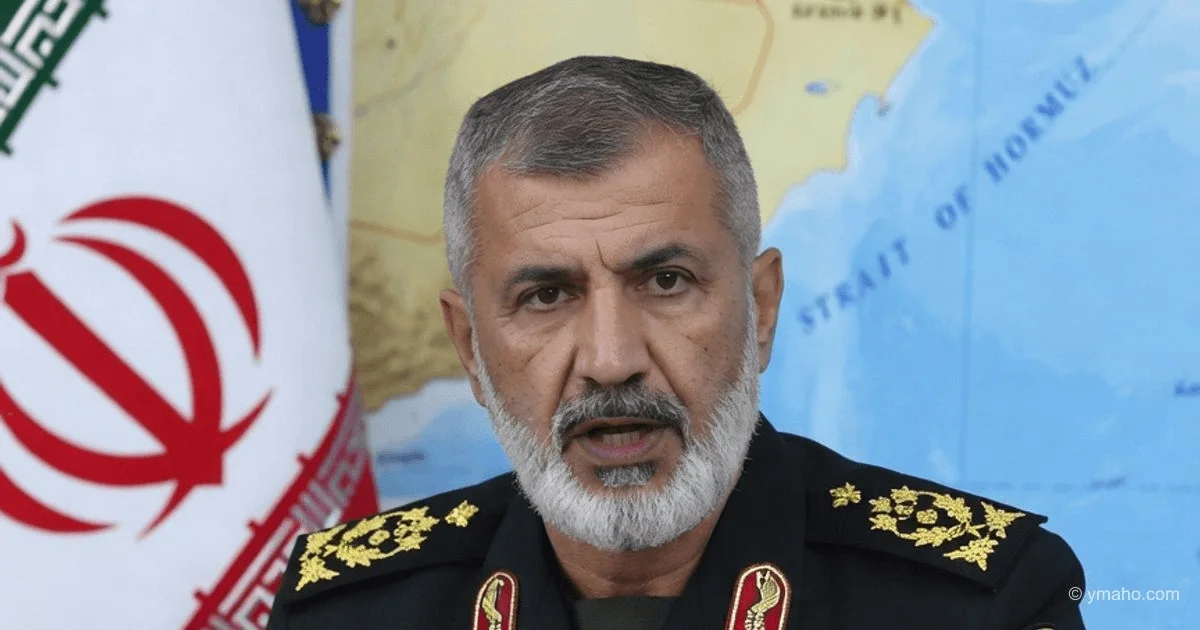
Quds Force Commander Ismail Qaani warned the US and Israel about the possibility of opening new fronts. He stated that shipping in the Bab el-Mandeb Strait could mirror the situation in the Strait of Hormuz, which is effectively closed.
Threat to Bab el-Mandeb: Why Iran Is Playing Offense While Markets Have Yet to Grasp the Scale
[The Core]: What Is Really Happening
Quds Force Commander Ismail Qaani's statement threatening to close the Bab el-Mandeb Strait is not mere rhetorical escalation. It is a strategic chess move prepared over the past three months and now synchronized with the full closure of the Strait of Hormuz. Markets treated the news as just another headline, pushing oil up 4-7% in a day. But the real picture is far more dangerous than "just another strait under threat."
The key nuance missed by 99% of analysts: Bab el-Mandeb is not merely an alternative to Hormuz. It is the only sea route for Saudi oil exports to Europe and America if Hormuz is shut. Saudi Arabia, the world's largest oil exporter, physically cannot deliver crude to Western buyers without this strait. Some 4-6 million barrels of Saudi oil pass through Bab el-Mandeb daily. If Qaani follows through, Riyadh would face an economic blockade despite its formal neutrality.
The main insight no one is discussing: Iran does not plan to close the strait with its own navy. It will do so through the Yemeni Houthis, who already have experience attacking vessels in the Red Sea in 2023-2025. The Houthis, according to CNN, inflicted roughly $20 billion in annual damage to global trade at the peak of their attacks. They have now received the "green light" from Tehran and likely more advanced anti-ship missiles. Houthi Deputy Information Minister Mohammed Mansour stated in March 2026 that closing Bab el-Mandeb is "a realistic option, and the consequences will fall on the American and Israeli aggressors."
Why does this matter now? Because the US and UK, which ran Operation Prosperity Guardian in 2024-2025 to protect Red Sea shipping, have shifted their main naval forces to the Strait of Hormuz and the Persian Gulf. The USS Gerald R. Ford carrier strike group is off the UAE coast, shielding American bases from Iranian missiles. Only token forces remain in the Bab el-Mandeb Strait. Iran and the Houthis know this and are striking where defenses are thinnest.
Timeline and Context
May 31, 2026, marked a turning point. That day, Iran's Tasnim agency published Qaani's statement, the first official linkage of the Bab el-Mandeb situation to Israel's actions in Lebanon and Gaza. Tehran effectively declared that every IDF strike on Beirut or Hezbollah targets would be mirrored by disruptions to Red Sea shipping.
The same day, Lebanon announced that Hezbollah is ready for an immediate ceasefire on US-proposed terms. This is not a contradiction but part of the plan. While Hezbollah signals diplomatic openness, Iran keeps pressure on Washington through the Houthis. Division of labor: one proxy plays the "good guy," the other the "bad guy."
On June 1, markets reacted instantly. Brent crude jumped to $97.79 per barrel, up 4.24% in a day. WTI reached $93.03, gaining 6.5%. Traders recalled 2023, when Houthi attacks forced container lines to reroute around Africa, adding 10-14 days and tripling freight costs. Back then it was about containers; now Europe's energy security is at risk.
By the evening of June 1, prices eased slightly. The reason: Trump posted on Truth Social denying rumors of halted talks with Iran, saying dialogue continues. Yet traders who had positioned on the "talks collapsed" narrative (the real driver of the initial spike) closed short positions at heavy losses. Call-option volume on July-expiring Brent rose 45% in a single day. This is "smart money" betting on a prolonged crisis.
An important contextual fact rarely mentioned: OPEC+ will meet on June 7 to discuss raising output by 188,000 barrels per day. That is a drop in the bucket against a projected 2.6 million barrel daily shortfall. The cartel's move is symbolic, meant to show it is "doing everything possible." In reality, it cannot offset lost Iranian supply (about 1.5 million barrels per day) or Saudi supply if Bab el-Mandeb is closed. The market understands this and is already pricing oil above $100 by mid-June.
Winners and Losers
Primary beneficiary: US oil producers and LNG exporters. With both Hormuz and Bab el-Mandeb under threat, US crude exports are hitting records. In May 2026, the US exported 5.6 million barrels per day, an all-time high. Asian and European refiners are willing to pay any price to secure feedstock. The WTI-Brent spread reached $20.69 per barrel in March, making American crude highly competitive.
Second beneficiary: China, with a caveat. China continues buying Iranian oil via the shadow fleet at a $25-30 per barrel discount. But if Bab el-Mandeb closes, Chinese tankers heading from Iran to Shanghai would be trapped and forced around Africa, adding 15-20 days. China's oil imports already fell 66% in April versus February due to logistics issues. Beijing's strategic reserves are depleting at record speed.
Biggest loser: Europe. European LNG imports from Qatar transit the Strait of Hormuz. European oil imports from Saudi Arabia transit Bab el-Mandeb. If both straits are blocked, Europe would be left with limited Norwegian crude, expensive American LNG, and unstable Libyan supply. German power prices have already risen 18% in a week, and industrial giants BASF and Siemens Energy are cutting output.
Japan stands alone as a catastrophic loser. Its oil imports plunged 66% in April. Strategic reserves hit historic lows. Japan received Iranian "guarantees" for safe passage through Hormuz, but those guarantees are worthless. The IRGC does not control every missile-boat captain. The Tokyo Stock Exchange has lost 12% since early March, and any fresh escalation knocks the Nikkei down another 2-3%.
What the Media Is Not Saying
The biggest unreported story is the insurance and reinsurance panic already underway in London and Bermuda. Lloyd's of London unilaterally raised war-risk premiums for vessels entering the Red Sea and Bab el-Mandeb by 400% last week. Some reinsurers have refused coverage entirely.
This is not merely "more expensive to insure a ship." It means many operators cannot obtain coverage at all, and without it no port will accept the vessel. As a result, tanker freight rates from the Persian Gulf to Europe have surged from $3 million to $9 million per voyage in just two weeks. These costs will be passed to consumers at the pump and in heating bills.
A second unreported angle is Egypt's hidden role. The Suez Canal, which connects to the Red Sea via Bab el-Mandeb, loses $13-15 million in revenue for every day of closure. For an Egypt already near default, this is catastrophic. Cairo has sent secret messages to Tehran via Omani intermediaries, offering guarantees of non-aggression toward Iranian interests in exchange for keeping shipping open. Egypt is ready to de facto recognize Iran's sphere of influence in the Red Sea just to keep the canal running.
A third overlooked factor is the vulnerability of US military bases in Djibouti. Camp Lemonnier hosts about 4,000 American troops plus drones and reconnaissance aircraft, only 30 kilometers from the Bab el-Mandeb Strait. If the Houthis receive longer-range missiles from Iran, the entire US presence in Djibouti would be directly threatened. The Pentagon is already drafting evacuation plans while publicly denying any concern.
Outlook: Next 30 Days and 90 Days
30 days (June 2026). The most dangerous window runs from June 7 to 15. After the June 7 OPEC+ meeting, which markets are likely to view as disappointing, and ahead of the June 15 talks in Muscat, the Houthis will probably stage a symbolic strike on a commercial vessel in Bab el-Mandeb within the next 7-10 days to prove the threat is real. The goal is not to sink a ship but to damage one and create precedent. Market reaction: Brent could break $105-107, WTI $100. Repeated strikes would push prices toward $110.
90 days (July-September 2026). The US will likely respond to Houthi attacks with strikes on Yemen, only worsening the situation. The "Axis of Resistance" will see this as validation. By August, global commercial oil inventories could fall to a critical 1.2 billion barrels, 400 million below the five-year average. US gasoline prices could exceed $5.50 per gallon, creating a political headache for Trump ahead of the midterms. By September, Brent is expected to trade between $110-125, and even a hypothetical deal with Iran would not quickly lower prices; restoring logistics would take two to three months.
Editorial Forecast
Asset and direction: Brent crude — firm gains over the next 48-72 hours.
Key levels: Current range $97.50-$99.00. A break above $99.50 targets $103.00-$105.00. Support sits at $94.00 (prior local high). A close above $100 would psychologically lock in the new trading range.
Confidence level: High. The Bab el-Mandeb threat expands the geography of the conflict rather than merely escalating it. Markets have not yet fully priced in the risk of simultaneous closure of both straits. Record US exports and the drawdown of Japanese and Chinese strategic reserves add structural tightness.
Main risk: A sudden diplomatic breakthrough between the US and Iran (for example, a memorandum signed on June 15 in Muscat) could trigger a $10-15 drop in a single session. Even then, reopening the straits would take weeks and restoring market confidence would take months.
Editorial opinion, not investment advice.
— Editorial Team