Eating by the Clock and Fat as Fuel: How Views on Nutrition Have Changed Over 10 Years
Women's Health magazine sums up the decade: from the total demonization of fats and carbs in 2016 to complex interactions with biorhythms and "food for the microbiome" in 2026. Today, experts value "good fats" and periodic carb loading.
Headline: The Decade-Long War on Fat Is Lost: How Chrononutrition and "Smart Carbs" Are Rewriting the Rules of Eating
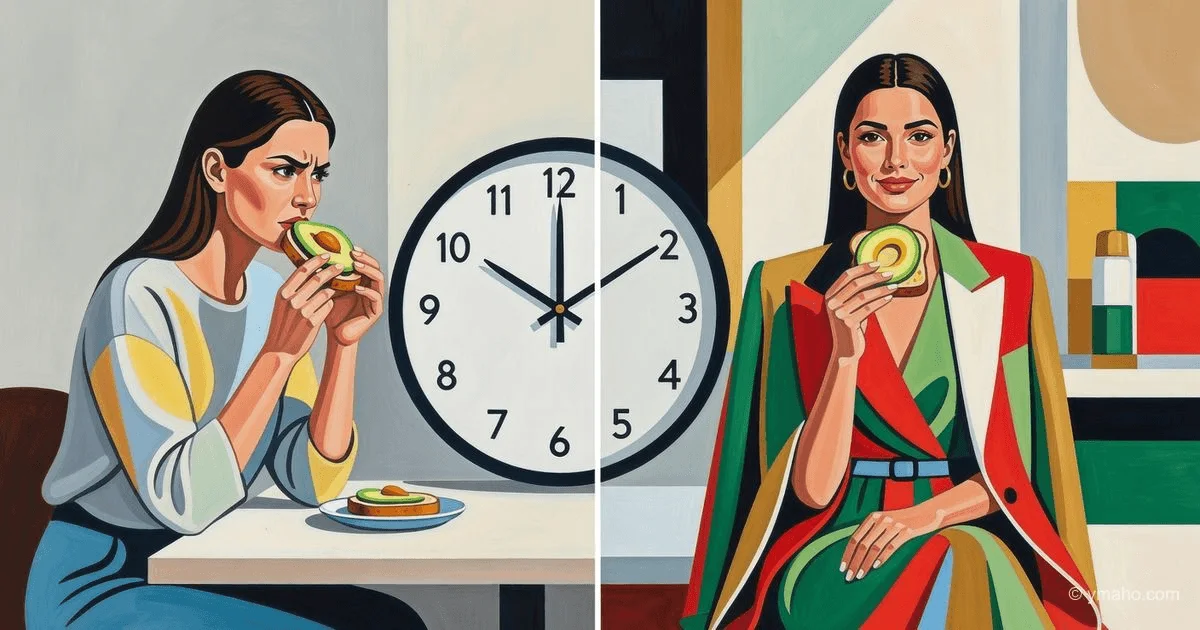
Remember 2016? Back then, every self-respecting fitness blogger swore that fat was poison and breakfast was the most important meal of the day. We drank fat-free yogurts loaded with tons of sugar, feared egg yolks, and ate six small meals a day to "boost our metabolism." Looking back now, it's cringe-worthy. Over ten years, nutrition science has undergone a Copernican revolution. And it's not just about "fats being allowed again" — that's too simplistic.
In reality, we've moved from the linear mechanics of "calories in, calories out" to a complex dynamic system of managing biological clocks and the microbiome. Women's Health magazine has captured this shift. But the key non-obvious insight that often gets overlooked is this: we are on the verge of the collapse of the "diet food" industry (fat-free, low-calorie, "fitness" bars), because the new rules of the game make them not just useless but harmful from a circadian biology perspective. "Real food" wins, along with the timing of its consumption and, surprisingly, the proper functioning of fats as "fuel" to synchronize internal clocks.
[The Core]: What's Really Happening
What's really happening is the convergence of three scientific revolutions that have finally buried the old paradigm. The first is the recognition that fats were never the main villain. The demonization of saturated fats, which lasted 40 years, turned out to be based on selective data and lobbying by the sugar industry. The new US Dietary Guidelines (2025-2030) and the updated position of the American Heart Association in April 2026 clearly distinguish between "natural" fats (in eggs, meat, whole milk, avocados) and "industrial" fats — refined oils and trans fats. Butter and fatty fish have returned to tables with official blessing.
The second, much deeper revolution is the triumph of chrononutrition. A vast body of research, including recent publications in ScienceDirect and peer-reviewed reviews (April-May 2026), convincingly proves: when you eat is just as important as what you eat. Time-restricted eating (TRE), i.e., intermittent fasting, has moved from a fringe diet to a recognized method for synchronizing peripheral biological clocks (in the liver, gut, adipose tissue). Incorrect meal timing (late dinner, skipping breakfast) leads to desynchronosis and metabolic diseases regardless of calorie intake.
The third and most interesting is the understanding of "smart carb loading." We've moved from demonizing all carbs to synchronizing their consumption with the circadian rhythm. In the morning and afternoon, when insulin sensitivity is highest, the body efficiently uses carbs as fuel. In the evening, when sensitivity drops, the same carbs are more likely to be stored as fat. Therefore, modern experts (and Women's Health captures this) don't advocate fearing carbs but rather "loading up" on them in the first half of the day and early evening to maintain energy balance without blood sugar spikes.
Timeline and Context: How We Got Here Over Ten Years
This decade has been a period of systematic myth-busting. The starting point was realizing that "fat makes you fat" is a marketing gimmick, not science.
2016-2018: The Fat-Free Sugar Epidemic. We ate "light" products, but the obesity and diabetes epidemic worsened. Scientists began sounding the alarm: the focus on fat diverted attention from the real enemy — refined sugar and ultra-processed foods.
2019-2023: The Era of Intermittent Fasting. A revolution in popular literature and the first serious TRE studies. Research showed that an 8-10 hour eating window improves cardiometabolic health and may extend healthspan. Around the same time, the first studies linking chronotype ("larks" vs. "owls") to diet effectiveness appeared.
2024-2026: Total Science. By early 2026, enough evidence had accumulated to revise government recommendations. In January, the new Dietary Guidelines for Americans were released, and in April, the AHA issued its "response" to the administration, clearly stating: protein is best from plants, but if meat, then lean; dairy should be whole, not fat-free; fats should be unsaturated. A crucial milestone was the April review in the journal Food Science and Nutrition, which officially recognized chrononutrition as a "hidden epidemic of modern times" and called for the implementation of AI monitoring of circadian rhythms.
Who Wins and Who Loses
Winners (1): Producers of "clean" ingredients and whole foods. Companies that sell real food: meat, fish, eggs, vegetables. The market for packaged products labeled "whole30," "paleo," "keto-friendly" continues to grow because consumers seek complex carbs (quinoa, buckwheat) and quality fats (ghee, avocado), not vitamin-fortified cereals. Rising prices for these products signal their scarcity as "medicine."
Winners (2): Tech startups focused on personalized nutrition. Once "time" became a parameter, the need for monitoring emerged. Startups using AI to analyze glycemic curves (CGM — continuous glucose monitoring), chronotype, and microbiome are receiving billion-dollar valuations. Apps that say not "eat 1500 kcal" but "eat carbs now, before 4 PM, because your chronotype is 'dove'" are the future.
Losers: Giants of "diet" products. Lean Cuisine, fat-free puddings, diet cookies. Their business model was built on the formula "low-calorie = healthy." The new paradigm says: "healthy = real food at the right time." If a product is ultra-processed and contains emulsifiers and fat replacers, it's harmful, even if it has 50 calories. These companies can't quickly retool production, and they face the fate of tobacco giants — years of legal battles for misleading consumers.
What the Media Isn't Saying: Dangers of Time Restrictions and the Quiet War of Recommendations
While lifestyle publications happily write about "circadian diets," they omit serious warnings from scientific literature.
First (most important): The U-shaped risk curve. An April study in the journal Food Chemistry (ScienceDirect) showed that the relationship between fasting window duration and mortality risk is not linear. Yes, chaotic eating is harmful. Yes, a 12-hour window is beneficial. But too narrow a window (less than 8 hours) is associated with increased risk of death and accelerated biological aging! This means that extreme intermittent fasting (20:4) or multi-day fasts, if practiced without supervision, can be dangerous for longevity. The media stays silent because it would ruin the business of popular gurus.
Second: The conflict between AHA and MAHA recommendations. In April 2026, the American Heart Association issued a "firm rebuttal" of the "Make America Healthy Again" (MAHA) recommendations promoted by the new administration. The AHA says: "protein from plants, not animals; dairy — low-fat, not whole." MAHA says: "eat natural meat and fat." This means there is no consensus at the highest political level. Doctors and experts argue, and the average person is caught in the crossfire. The market is torn: some studies praise the Mediterranean diet, others praise the carnivore diet.
Third: The difficulty of implementation in real life. An academic study from the University of Surrey (UK) directly states: even knowing all the principles of chrononutrition, turning them into a daily routine is incredibly difficult. People can't have dinner at 6 PM because of work. Social life ("breakfast with colleagues," "late dinner with friends") is a powerful desynchronizer. Until there are apps and wearables that gently and intelligently adapt recommendations to the chaotic schedule of modern people, most of this knowledge will remain theory for the elite who have a personal chef and a flexible schedule.
Forecast: The Next 30 Days and 90 Days
Next 30 Days (June 2026): Expect the first wave of consumer gadgets and apps that "live" integrate chrononutrition. Apple will likely announce an Apple Health update that tracks not just steps but a "circadian score" based on the time of the last meal. The CGM (continuous glucose monitoring) market for "healthy" people will continue its explosive growth, despite resistance from doctors.
Next 90 Days (Late Summer 2026): A wave of labeling revisions will begin. The FDA, under public pressure, will be forced to introduce mandatory "ultra-processed product" (UPF) labeling. This will lead to the collapse of major food conglomerates' portfolios. Producers of "real food" (meat, dairy, vegetables) will get indirect advertising. People will start mass-discarding sugary yogurts and instant cereals from their refrigerators.
We are entering the era of "fourth-dimension nutrition," where time becomes the main macronutrient. It's complex, expensive, and requires self-discipline. But there is no other path to healthy longevity.
— Editorial Team