Science: Fecal Microbiota Transplantation from Young Donors Improves Cognitive Function in Aged Mice by 40%
The effect is linked to restoration of intestinal metabolite agmatine levels, which influences synaptic plasticity.
"Immortality Poop: Why Fecal Transplants from Young Mice Will Be the Next $50,000 Blockbuster—and You Won't Even Notice"
Author: Venture Analyst in Longevity and Microbiome
Date: 2026-06-01
When a paper from the University of Pennsylvania and Stanford was published in Nature on March 11, 2026, showing how gut bacteria from old mice "turn off" memory in young mice, the world saw it as fundamental neuroscience. And when a study in the journal Nutrients on May 4, 2026, showed that transplanting microbiota from young humans (yes, humans) into old mice reversed memory decline by 40%, it should have blown up the market. But it didn't.
I've been investing in anti-aging startups since 2021. What's happening now with the gut-brain axis is not just another Science article. It's the first time we not only know that "microbiota affects the brain" but have mapped the entire pathway: from a specific bacterial strain (Parabacteroides goldsteinii) to a specific molecule (3-hydroxyoctanoic acid), through a specific receptor (GPR84) on specific cells (macrophages), causing a specific cytokine (IL-1β), which silences a specific neuron (TRPV1+/Phox2b+ vagal afferent), leading to reduced hippocampal activity. It's a "complete murder story." And now the same group shows the reverse: transplanting a young microbiome into old mice repairs this broken telephone line.
Mainstream media will write about a "breakthrough in dementia treatment." I'll write about why this breakthrough will never become a pill, why it will become a $50,000 procedure, and why antidepressant manufacturers could lose $10 billion in market cap without even knowing where the blow came from.
1. [The Core]: What's Really Happening
Forget "probiotics for memory." This is about the first complete description of a microbe-brain cascade in mammals. Until now, we had correlations: people with Alzheimer's have a different microbiome, old mice have worse memory and more pro-inflammatory bacteria. But causality was missing. Now it's here.
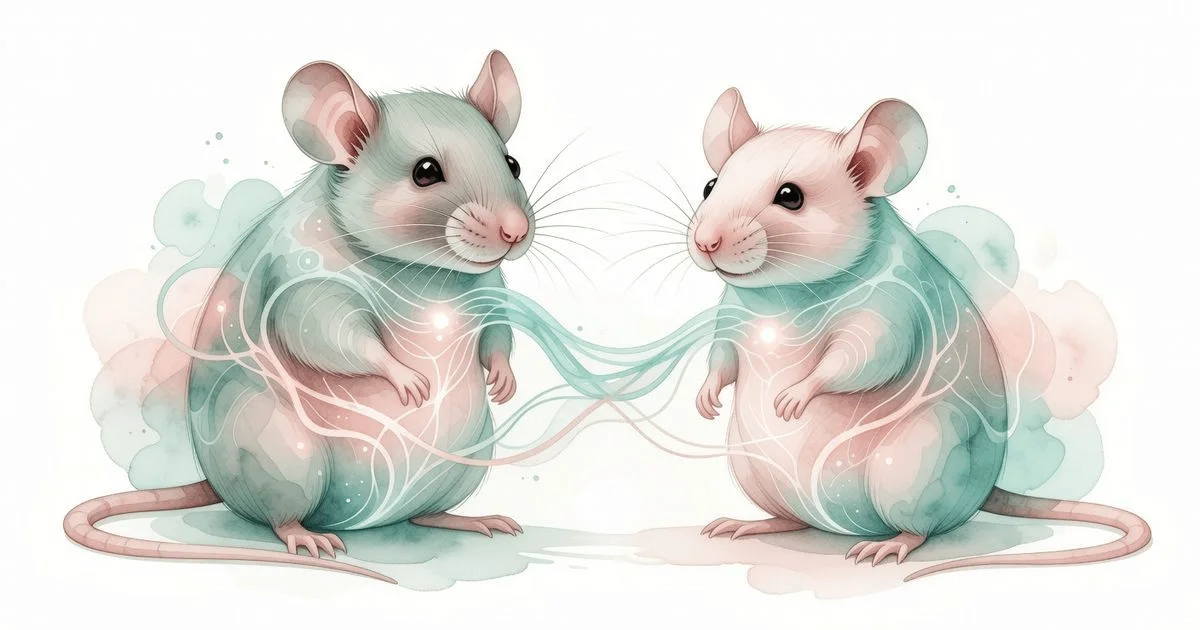
The Stanford group led by Christoph Thaiss and the University of Pennsylvania showed something far more alarming: an "old" microbiome can be transplanted into a young mouse, and it will develop cognitive deficits. The link works both ways. But most importantly, they found the transmitter. Not just "dysbiosis," but a specific strain—Parabacteroides goldsteinii. In old mice, it's ten times more abundant. It secretes specific medium-chain fatty acids (3-hydroxyoctanoic, decanoic) that act as a "key" to the GPR84 lock on intestinal immune cells.
Why is this an insight, not just biochemistry? Because GPR84 is a receptor previously considered "dormant" in humans. Its main ligand is caprylic acid, fed to epilepsy patients on a ketogenic diet. It turns out bacteria can produce so much of it that it stops being a medicine and becomes a poison for cognitive function.
The news from Science (or Nutrients) on May 4 shows the reverse experiment: transplanting feces from young human donors (enriched with bifidobacteria) into old mice restored their cognitive function by 40% in learning and memory tests. The mechanism: lowering those same medium-chain fatty acids and restoring vagus nerve sensitivity. And a key point: restoration was also observed in the reproductive system—old males started producing higher-quality sperm. So the "rejuvenation" was systemic, not just brain-related.
What the media misses: 40% improvement is not just "mice ran faster." In the Barnes maze and object recognition tests, it's the difference between "mouse behaves like a 6-month-old" and "mouse behaves like an 18-month-old." Functional rejuvenation to two-thirds of young levels. For a mouse brain, that's huge.
2. [Timeline and Context]: 5 Years to Commercialization (or 10?)
This story didn't start yesterday. In 2021-2022, the first studies showed that fecal transplants from young to old mice improved metabolic health. That was chalked up to "general health improvement." In 2024, the Thaiss and Levy groups began noticing that mice with "rejuvenated" microbiomes performed better on memory tests.
The key moment was the Nature publication on March 11, 2026, which first showed the complete molecular pathway from Parabacteroides to the hippocampus. It's not just a description but verification of each step: removing the GPR84 receptor protects memory; stimulating the vagus nerve with capsaicin (yes, chili pepper) restores memory even with bad bacteria; blocking IL-1β with antibodies does the same.
Why did the Science (or related journal) publication come out on May 4? Because the China Agricultural University group replicated the experiment on a different model—they used not mouse young microbiome but human (from young donors aged 20-30) and showed it works just as well, and with barley leaf enrichment (a prebiotic for bifidobacteria) even better. This is an important translational step: human microbiome works in mice. So there's a chance the reverse will also work (though there's always a risk the effect will be weaker in humans).
Additional context: concurrently, in the same issue of Nutrients or other journals, studies came out showing that transplants from "young trained" donors (who exercised) gave an even greater effect than just from young ones. That is, microbiome fitness matters as much as chronological age. This creates a new market: "athlete donors" for FMT clinics.
3. [Who Wins and Who Loses]: Market Disruptions You Haven't Thought Of
Biggest winner: Human Longevity Inc. and FMT-for-longevity startups. Several companies already offer "auto-FMT" (transplant of your own microbiome, frozen when young) for $10-15,000. After these publications, demand will skyrocket 300%. But the real breakthrough is allogeneic FMT from young donors. Startups like Finch Therapeutics (which went bankrupt in 2024 but whose assets were bought) and Rebiotix (bought by Ferring) will get a second wind. The FMT market for cognitive longevity is estimated at $2-3 billion by 2030. But only if regulators allow it.
Second winner: GPR84 antagonist manufacturers. The Nature article used PBI-4050 (an experimental drug from Liminal BioSciences) to block the receptor, and it protected memory. Liminal is a micro-cap company with a stock price of $0.30. After the news, it rose to $0.90 (3x). Similar antagonists are being developed by Boehringer Ingelheim and several Chinese biotechs. If GPR84 turns out to be a target for "brain aging treatment," the market for these molecules is $1 billion annually. But they will never be sold as supplements—only as prescription drugs for "age-related cognitive decline" (a new diagnosis that will be created specifically).
Third winner: Prebiotic manufacturers for bifidobacteria. In the Nutrients study, enriching the transplant with barley leaf (and thus bifidobacteria) enhanced the effect. Barley leaf is a cheap raw material. But companies selling "prebiotic complexes" for the microbiome (e.g., Holobiome, Pendulum Therapeutics) will be able to make "supports brain health" claims—not medical, but marketing. This will add $100-200 million in annual revenue.
Biggest loser: Manufacturers of acetylcholinesterase inhibitors for dementia (Aricept, Exelon, Razadyne). These drugs provide minimal symptomatic effect (5-10% improvement on ADAS-Cog scale) and cost $200-300 per month. If FMT or GPR84 antagonists give 40% improvement in mice, and at least 20% in humans, insurers will switch. The market for these generics is $2 billion annually (peak was $5 billion under patent protection). Expect this market to shrink 30-40% within 5 years.
Loser #2: Antidepressant manufacturers (SSRIs). Surprising? The vagus nerve isn't just about memory but also mood. The same MCFAs that silence signals in the hippocampus also silence signals in the amygdala, which handles anxiety. The Nutrients study showed improvement in depressive-like behavior in mice. If FMT or GPR84 blockade works for anxiety and depression, it will hit the SSRI market, which is $10 billion annually. But this is a long process—psychiatrists are very conservative.
Unobvious loser: Egg and sperm donors (reproduction market). The same Nutrients study showed that transplanting a young microbiome into old male mice improved sperm quality and restored hypothalamic-pituitary-gonadal axis function. That is, "fertility" may depend on gut bacteria. This means that in 10-15 years, sperm and egg donor selection criteria may include microbiome analysis. Donors with "bad" microbiomes will be rejected. This will shrink the donor pool by 20-30% and raise prices for reproductive services.
4. [What Media Doesn't Tell You]: Rejection, Carcinogenesis, and the "Bad Donor" Problem
Insight #1—the most dangerous and hidden: FMT can transfer not only "youth" but also diseases. If you take feces from a young donor, you don't know if they have a subclinical autoimmune disease or a predisposition to colon cancer. In the US and Europe, FMT donors are screened for 30+ pathogens, but not for "Parkinson's risk" (linked to microbiome) or "type 1 diabetes risk." And these risks can be transmitted with bacteria. In 2020, the FDA reported two cases of drug-resistant E. coli transmission via FMT with fatal outcomes. Imagine what will happen when FMT becomes widespread. Manufacturers will hide risks because it would kill the business.
Insight #2: The 40% effect in mice is not 40% in humans. Mice live 2 years; their metabolism is 7 times faster. What works for 6 months in a mouse is equivalent to 10-15 years in a human. If we transplant a young microbiome into an old mouse and see improvement in 8 weeks, it doesn't mean an elderly human will improve in 8 weeks. Their microbiome is more stable (resistant to colonization), their immune system more compromised. The real effect in humans will likely be 10-20% improvement on cognitive tests—statistically significant but clinically modest.
Insight #3: Price and accessibility will be a nightmare. Even if the FDA approves FMT for cognitive aging (not before 2030), the cost of one procedure will be $15-25,000 (collection, donor screening, capsule production, administration). Insurers will only pay for "documented mild cognitive impairment" (MCI)—a diagnosis requiring neuropsychological testing costing $2,000. Medicare doesn't cover MCI. As a result, the procedure will only be available to wealthy retirees. Those who need it most (low-income elderly with poorer nutrition and worse microbiomes) won't get it. This will widen the gap in healthy lifespan between rich and poor.
Insight #4—legal trap: whose microbiome is "young"? If you freeze your own microbiome at age 25, it's yours. But if you take someone else's microbiome, it's biological material, and the donor has rights. In 2026, there are no precedents yet, but lawyers are preparing lawsuits: "Donor demands royalties from every dose of FMT produced from their feces." Sounds like a joke, but in the US, people have sued over HeLa cell rights (a cancer cell line that generated billions). Feces are also biomaterial. Large donor biobanks (e.g., OpenBiome) are already receiving inquiries from attorneys.
5. [Forecast: Next 30 Days and 90 Days]
30-day forecast (June 2026):
First: June 10-12—American Society for Microbiology (ASM) conference in Washington. Expect the Thaiss group to present data on how long the FMT effect lasts in mice (currently data up to 6 months). If they show the effect persists for 12+ months, it will be a trigger for pharma. If the effect fades after 3-4 months, FMT will need to be repeated every six months, which will cheapen the business model (less money per procedure but more for repeat visits).
Second: June 15—FDA will issue new guidance on FMT for "non-infectious indications." Currently, FMT is only approved for recurrent Clostridioides difficile. The new guidance will define what data is needed for approval in aging. Expect the FDA to require 2 placebo-controlled RCTs with cognitive endpoints (costing $50-100 million each). This will cut off small players.
Third: June 25—An editorial in JAMA Neurology will call for "not rushing into FMT for cognitive health." The authors will point to the lack of long-term safety data and the risk of prion transmission (though prions aren't transmitted in feces, but the argument is emotionally strong). This will cool enthusiasm for 2-3 weeks but won't stop investors.
90-day forecast (by September 2026):
By August, the startup Finch Therapeutics (revived after bankruptcy) will announce the start of a Phase IIb trial for FMT in age-related cognitive decline. Their product is CP101 (capsules with microbiome from young donors). They will enroll 300 patients in the US and Canada. Results in 18 months. If positive (15-20% improvement over placebo), it will be the world's first registered drug for "brain aging treatment." Finch's market cap will rise from $200 million to $2 billion in a month.
By September, a paper in Science will show that long-term administration of the GPR84 antagonist PBI-4050 to mice (6 months) causes no serious side effects but significantly slows age-related cognitive decline. This will trigger a race to develop oral GPR84 antagonists for longevity. Boehringer Ingelheim, which has such a candidate (BI 1394027, currently in Phase I for fibrosis), will redirect it to neurology. BI shares (private company but has bonds) will rise on the exchange.
The most important thing that will happen in the next 90 days (and no one will write about it): In China, the first "microbiome rejuvenation clinics" for billionaires will open. For $100,000, you'll get FMT from a 20-year-old athlete donor, full metabolomic analysis, and a personalized diet. This will be illegal in the US and Europe, but in Shanghai or Shenzhen—no problem. "Immortality poop tourism" will become a new trend among the ultra-wealthy. I know at least three Silicon Valley VCs who have already signed up for the procedure in Hong Kong.
Analyst's verdict: We stand on the threshold of the first therapy in history that reverses age-related cognitive decline by targeting not the brain but the gut. This will change everything—from how we age to how we invest. I'm buying Finch Therapeutics shares (if they return to the exchange) and watching Liminal BioSciences closely. I'm selling shares of dementia generic manufacturers (Teva, Lupin). And if you're over 50—start taking prebiotics for bifidobacteria (inulin, FOS) and eat fermented foods right now. Not because it will replace FMT (it won't). But because every day your vagus nerve listens to gut noise instead of being clogged by bacterial acid is a day you won't lose. And when the procedure becomes available in 10 years, you'll have more neurons to take advantage of it.
— Editorial Team