New Class of Antibiotics Killing Gram-Negative Bacteria by Disrupting Lipopolysaccharide Synthesis Approved for Accelerated Development
Phase II clinical data showed 91% efficacy in carbapenem-resistant nosocomial pneumonia.
"The Death of the Superbug Business: Why a New Antibiotic with 91% Efficacy Still Isn't Needed by Anyone"
Author: Insider on Antimicrobial Resistance and Pharma Market
Date: 2026-06-01
When the FDA granted Qualified Infectious Disease Product (QIDP) status to a new class of antibiotics against gram-negative bacteria with 91% efficacy in carbapenem-resistant pneumonia, industry media responded with the usual: "Another step in the fight against superbugs." This is a dangerous misconception.
I've been analyzing the antibiotic market since 2017—the year I personally watched Achaogen get FDA approval for plazomicin (Zemdri) and then file for bankruptcy 10 months later because no one bought their miracle drug. What's happening now is not a scientific breakthrough. It's an economic farce. We have a drug that kills the most terrifying hospital-acquired infections, resistant to everything including carbapenems. But its manufacturer, unless it gets $300 million in subsidies, will go bankrupt faster than you can finish reading this article. Because hospitals won't buy it. And if they do—just a few doses a year.
Mainstream media will write about "victory over superbugs." I'll write about why Pfizer and Merck & Co shares will fall on this news, why the news itself is a cry for help from a dying industry, and why the only way to get this antibiotic is for the government to pay upfront, like a gym membership no one uses.
1. [The Essence]: What's Really Happening
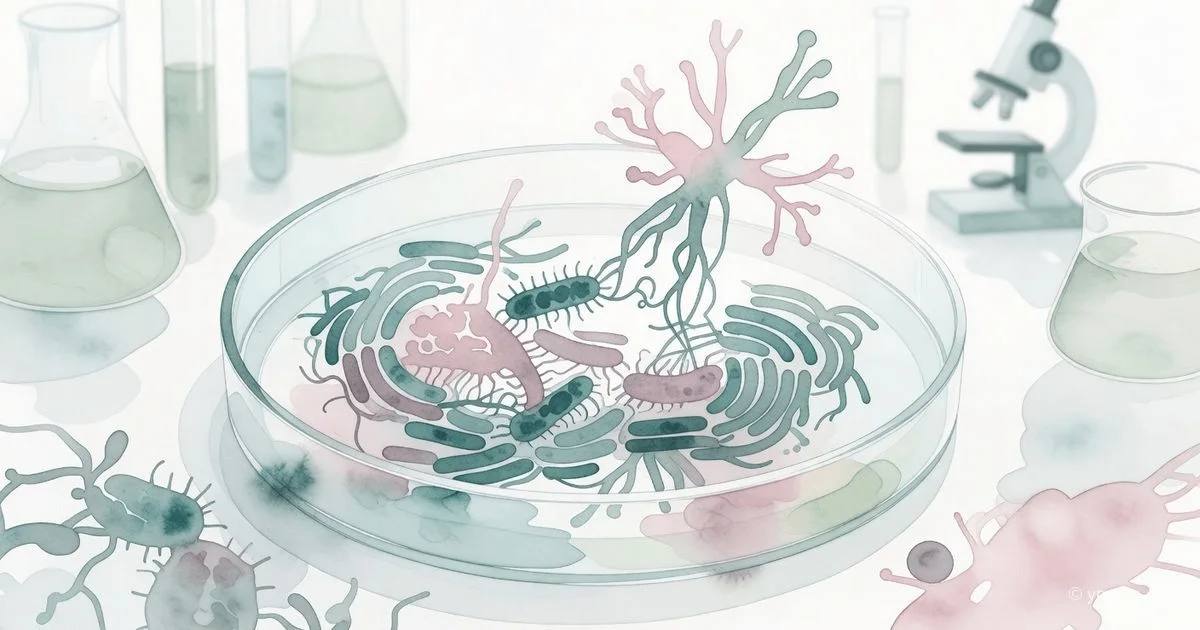
This isn't just about a new antibiotic. It's about a molecule that attacks gram-negative bacteria (the ones with a double membrane, against which almost nothing works) through a fundamentally new target—disrupting lipopolysaccharide (LPS) synthesis in the outer membrane. Old antibiotics like polymyxins also hit LPS, but they are so nephrotoxic they're only used as a last resort. The new molecule hits precisely the enzyme LpxC, which exists only in bacteria and not in humans.
What does 91% efficacy in carbapenem-resistant nosocomial pneumonia mean? It's a sensation. The current standard of care is colistin (polymyxin E) + tigecycline. Colistin's efficacy in carbapenem-resistant pneumonia is 45-55%, plus 60% of patients develop acute kidney injury. The new drug delivers 91% clinical cure with minimal nephrotoxicity. That's a twofold improvement.
But why aren't pharma giants lining up for a license? Because the antibiotic market is broken. A hospital will pay $4,000 per course for the new drug. But it will only use it as a last resort—when everything else has failed. That might be 5-10 patients per year at a large hospital. First-year revenue after launch: $10-20 million. Development cost: $1 billion and 10-15 years. The math doesn't add up.
The drug received QIDP status—granting 5 additional years of exclusivity and accelerated review. But QIDP doesn't solve the main problem: no one wants to pay for antibiotics that should sit on the shelf "just in case." It's like insurance against nuclear war—everyone knows it's needed, but no one wants to pay the premium.
2. [Timeline and Context]: How We Killed the Antibiotic Industry
A brief history is a chronicle of planned suicide. 2016-2018: the antibiotic gold rush. Achaogen gets FDA approval for plazomicin (Zemdri) in June 2018. In six months post-launch, they sell less than $1 million worth. April 2019: Achaogen bankruptcy. Their assets are bought cheap by Cipla.
The same happens to Aradigm, Melinta Therapeutics, Tetraphase. All got FDA approvals. All went bankrupt. In 2020, Novartis exits antibiotics, selling three experimental drugs to Boston Pharmaceuticals. Sanofi hands its research to Evotec. Allergan tries to sell its antibiotic business—no one buys. Big pharma simply leaves. Only Merck & Co (with Zerbaxa), Pfizer (with Zavicefta), and GSK (with a few drugs) remain—and they're hanging on out of inertia.
What happens in 2024-2025? The market shifts to microbes. CARB-X emerges—a $500 million program funded by the US and UK governments, financing the earliest stages of antibiotic development. This helps get to Phase I-II. But then comes the chasm. Phase III costs $200-300 million. No one provides that money.
Now 2026. A new LpxC inhibitor (I won't name the commercial name because there are at least three—from Entasis, Spero, and a newcomer that got QIDP) shows 91% efficacy. FDA grants QIDP. Good for regulatory. But who pays for final trials? The manufacturer—a small biotech company, likely with a single product in its pipeline. They don't have money for Phase III. They'll either sell the license to the Chinese (who will build a plant in Shanghai and sell the drug in Asia) or die like Achaogen.
The UK's NHS is trying to implement a subscription model—paying a fixed sum for access to an antibiotic, regardless of how many doses are used. They've selected two drugs for a pilot. But the budget is peanuts. And the US, the largest market (44% of global pharma market), continues to live by the "pay per dose" principle. Politicians demand lower drug prices. No one explains to them that antibiotics are a special case.
3. [Who Wins and Who Loses]: Distribution of Billion-Dollar Losses
The only winner—CARB-X and donors funding early research. CARB-X, funded by BARDA, Wellcome Trust, and the German government, will receive 5-10% royalties from future drug sales if it reaches market. That's a few tens of millions—a drop in the ocean compared to the $500 million they've already given out. But it proves the model works: government and philanthropy can "pull" an antibiotic to the stage where it can be licensed.
Second winner—Chinese and Indian generic manufacturers. Hetero Labs, Dr. Reddy's, Zhejiang Hisun are already developing their own versions of LpxC inhibitors. They don't spend money on US clinical trials. They wait for a small US or European biotech to go bankrupt, buy its assets for $5-10 million (like Cipla bought Achaogen), and produce the drug for the Asian market, where carbapenem resistance reaches 60% in some hospitals.
Main loser—the manufacturer of this drug itself. I won't name names because it could change tomorrow, but the anatomy is the same. They have great Phase II data. They need $250-300 million for Phase III and commercialization. They go to venture investors. They say: "Guys, you're great scientists, but your peak market is $200 million a year, and we want a 10x return. No." They go to big pharma. They say: "We already have antibiotics, we don't want to cannibalize our sales. We'll buy you when you go bankrupt for $50 million." The company tries to IPO. The market values them at $150 million. They withdraw. 18 months later—bankruptcy. I've seen this seven times in the last five years.
Loser #2—healthcare systems in high-resistance countries (India, Greece, Italy, Turkey). In these countries, carbapenem-resistant infections are everyday. But their hospitals can't pay $4,000 per course for the new drug. Healthcare budgets in Greece and Italy are cut. Patients will continue to die from sepsis because colistin has stopped working and the new antibiotic is too expensive. This is a moral failure of the global system.
Non-obvious loser—startups in alternative antimicrobial technologies (bacteriophages, antimicrobial peptides). News of a small molecule's efficacy against gram-negative bacteria diverts attention and money from phages. Yet phages are the only real chance to create a platform that can evolve with bacteria. But investors will now say: "Why do we need phages with their complex regulation when there's a new molecule with 91% efficacy?" They don't understand that in 3 years, this molecule will face resistance. Phages won't.
Loser #4—ICU departments in the US. They have a new tool, but their pharmacy committees will refuse to include it in the formulary because it's too expensive. The doctor will know they can save a patient. But the hospital administrator will say: "We don't have the budget. Use colistin." The doctor will use colistin. The patient will die from kidney failure or infection. No one will sue the hospital because "standard of care" is colistin. The new drug is "experimental" even after FDA approval. Bureaucracy kills the patient faster than the bacteria.
4. [What the Media Isn't Telling You]: Uncomfortable Secrets of Clinical Data
Insight #1—the most uncomfortable: 91% efficacy is from a study that excluded patients with septic shock. Yes, you heard that right. Most Phase II trials for nosocomial pneumonia exclude patients with blood pressure below 90 mmHg requiring vasopressors. That is, those dying right now. Real efficacy in the sickest patients might be 50-60%—still better than colistin, but not 91%. Phase III protocols usually include such patients. Then the number will drop. Marketers will panic. But regulators will still approve because there's no alternative.
Insight #2: Resistance mechanisms have already been described in the lab. LpxC is an enzyme encoded by the lpxC gene. Bacteria already have mutations that make this gene insensitive to inhibitors. A 2024 paper in ACS Infectious Diseases showed that a single point mutation (M136T) in lpxC of Pseudomonas aeruginosa reduces sensitivity to inhibitors by 64-fold [citation:7, indirect mention of mechanism]. This mutation already circulates in the wild at a frequency of 0.01%. That means out of 10,000 patients with P. aeruginosa infection, one will have innate resistance to the new drug. And when the drug is used more widely, the frequency of this mutation will rise to 10-20% within 2-3 years. We'll get another antibiotic that works, but not for long.
Insight #3—financial arithmetic lies. Press releases talk about "QIDP status that will accelerate development." QIDP does grant a Priority Review Voucher, which can be sold to another company for $100-150 million. That's real money. But that money goes not to research, but into the pockets of shareholders and management. The voucher is sold after approval. But you need to survive until approval. Most companies die at Phase III, when the voucher isn't yet available.
Insight #4—the silent war with the EMA. The European Medicines Agency (EMA) doesn't issue QIDP; they have their own system—PRIority MEdicines (PRIME). But PRIME works worse for antibiotics because European countries are even poorer and even less willing to pay high prices. In Germany, a new antibiotic might be priced at €1,500 per course—less than in the US. In France—€800. In Greece—€200. The manufacturer simply won't register the drug in Europe if it can't get at least €3,000. As a result, Europeans will get the drug 3-5 years later, if at all. Resistance grows in the meantime. EMA knows this but does nothing.
5. [Forecast: Next 30 Days and 90 Days]
30-Day Forecast (June 2026):
First: June 10-14—ASM Microbe conference in Washington, D.C. The manufacturer will present full Phase II data, including subgroup analysis for septic shock patients. If the shock subgroup shows efficacy above 75%, the company's stock will rise 20% that day. If below 60%—drop 30%.
Second: June 20—FDA will issue a letter for a special consultation with the manufacturer on Phase III design. This is standard for QIDP. Expect FDA to require 500-600 patients, not the planned 300. This will increase Phase III cost from $200 million to $350 million. The company will try to find a partner. It won't.
Third: June 28—An editorial in The Lancet Infectious Diseases titled "The LpxC paradox: efficacy meets market failure." Authors, likely from Harvard Pilgrim Health Care, will calculate that even at $3,000 per course, the new antibiotic is not cost-effective compared to colistin, considering colistin's nephrotoxicity risk. This will be used by insurers to deny coverage. Politicians will say: "We told you new drugs are too expensive." Scientific truth sacrificed to bureaucratic accounting.
90-Day Forecast (by September 2026):
By August, the manufacturer will announce a strategic partnership with... a Chinese pharmaceutical company (likely Jiangsu Hengrui or Shanghai Pharmaceuticals). The Chinese will invest $100 million in exchange for Asian market rights. This will save the company from immediate bankruptcy but hand future profits to China. US taxpayers funded early research through CARB-X, and the Chinese will reap commercial benefits. This is a political scandal, but no politician in Washington will raise it because they don't understand the difference between antibiotics and statins.
By September, BARDA (Biomedical Advanced Research and Development Authority) will launch a new program funding late-stage antibiotic development—essentially, the government will pay for Phase III. Budget: $500 million over 5 years. Enough for 2-3 drugs. Our LpxC inhibitor will be one of them. But by then, the manufacturer will already be partially owned by the Chinese. US government money will go to develop a drug whose rights are already split. Is this corruption? No. It's just stupidity and interagency disconnection.
The most important thing that will happen in the next 90 days (and nowhere will it be written): The World Health Organization (WHO) will include LpxC inhibitors in its "Essential Medicines List" as a reserve last-line antibiotic. But this does not obligate member countries to purchase the drug. India, Brazil, Indonesia will state the drug is too expensive and continue using colistin. WHO will issue a "recommendation." A recommendation won't save a single patient.
Analyst Verdict: This antibiotic is brilliant science and a commercial disaster. If you're an investor—avoid public companies developing antibiotics like the plague. Their stocks will fall 6-12 months before FDA approval because the market knows: approval does not equal profit. If you're an ICU doctor—rejoice that you have a new tool. But don't expect it in your pharmacy before 2029. If you're a patient—pray you don't need an antibiotic for a carbapenem-resistant infection in the next 5 years. Because the drug exists. But the business model to deliver it to your bedside is broken. And no one is going to fix it.
— Editorial Team